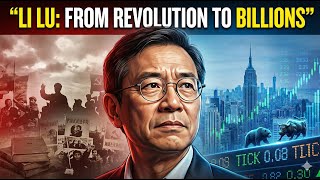
저자: LiLu · 외국인
요약 보기
리루는 1989년 톈안먼 시위 학생 지도자였다가 망명 후 미국에서 교육을 받고, 찰리 멍거 멘토링을 통해 가치투자 철학을 형성했다고 소개. 영상은 그의 삶 서사와 원칙(독립적 사고, 장기 비전, 도덕적 용기, 인내, 윤리성)을 설명하며 특정 자산에 대한 가격 예측 발언은 없음.
다듬은 글
All right, let's dive into a truly incredible story. We're talking about a journey that starts on the front lines of a student protest in Tianaan Square and ends up in the absolute highest echelons of Wall Street. Seriously, it's a story that will completely change how you think about what it means to be a revolutionary.
I mean, it sounds like something out of a spy movie, right? But for one man, Leelu, this is his actual life. So, how on earth does a government's most wanted student dissident become a legendary investor respected by pretty much everyone on Wall Street? That is the big question we're going to unpack today.
So, our story doesn't begin on a trading floor. Not at all. It starts in the politically charged world of 1980s China. This is where the ideals that would shape his entire life were first forged. So, to get this, you have to go back to 1966. Leelu was born right in the thick of the cultural revolution.
I mean, a period of just massive social upheaval. You can imagine how that would shape a kid's worldview. Fast forward to the late8s and he's this brilliant student at one of China's best universities. But his head wasn't just buried in textbooks. No, he was thinking about the future of his entire country.
And this was the fuel for the fire. Liu was just devouring all these western concepts that were starting to filter into China. you know, ideas about individual liberty, free markets, and the moral duty to demand change. This stuff didn't just educate him. It completely ignited a passion in him. And those very ideas, well, they were about to be put to the ultimate test.
He was on a collision course with an event that would change absolutely everything, pushing him down a path he could have never, ever imagined. As one of the main student leaders, his demands were actually pretty clear and direct. He wasn't calling for some violent overthrow of the government. He was asking for fundamental changes, political reforms to give people a real voice, transparency to fight corruption, and just basic human rights.
And then this date arrived, June 4th, 1989. This was a turning point not just for China, but for Leelu on a deeply personal level. A day that is now and will forever be etched into history. And what happened was just a brutal collision of two completely different worlds. On one side, you got these students just full of hope, peacefully asking for a conversation.
And on the other side, the state's response was just unyielding. A military crackdown that didn't just end the protests, it crushed those voices and pretty much silenced an entire generation. After that crackdown, Lee Lou's life was suddenly in serious danger. His mission was no longer about reforming his country.
It was about surviving it. The road to exile was, as you can imagine, absolutely harrowing. First, there's the trauma of witnessing that kind of violence against your friends. Then comes that cold, terrifying realization that your face is on a wanted poster. He had to make the impossible decision to flee his own homeland.
And he eventually found refuge here in the United States. And his arrival here, it wasn't some triumphant hero's welcome. He was in a brand new country facing these huge language and cultural barriers. Everything he had ever known was just gone. He had to start over completely from absolute zero. Okay.
So, how does someone go from that to Wall Street? Well, this next chapter is all about a profound intellectual transformation. He didn't abandon his old self. He actually built upon it. He just threw himself into his education. He got a mers in economics from Colombia, an MBA from Berkeley. He was basically arming himself with a whole new set of tools, not for a political revolution this time, but for understanding the global system of capital.
And this this is the light bulb moment, the key insight. He realized that the very skill that made him a leader back in Tanaman, that courage to question authority, to think for himself, was exactly the same skill you need to be a great investor. It's all about one thing. refusing to just follow the herd.
And it doesn't matter if that herd is a political party or the Wall Street consensus. This is where his genius really lies. He didn't just learn about finance. He fused his past experiences with all this new knowledge. He understood risk. He understood conviction. And he understood the importance of a long-term vision in a way that very, very few people ever could.
Which brings us right to the core of his success. You see, the values that guide him weren't learned in some fancy classroom. They were literally forged in the fire of his extraordinary life. Three core principles really define him. First, independent thinking. We just talked about that. Second, a long-term vision.
Because when you've seen a social movement rise and fall, you learn to think in decades, not in quarterly reports. And finally, moral courage. That conviction to stand your ground. whether they're in a public square or on a trading floor. You see, his harrowing past wasn't some obstacle he had to overcome.
It was the very foundation of his drive. As one source puts it, his experiences instilled in him a profound sense of purpose. And that's a purpose he now channels into every single decision he makes. Lou's incredible journey really shows us that our greatest challenges, our biggest adversities can actually forge our most unbreakable principles.
And it leaves all of us with a really powerful question to think about. What core principles has your own journey forged in you? All right, welcome to the explainer. Today we're diving into how a legendary investor's mindset is built. And spoiler alert, it doesn't just come from textbooks. We're talking about a powerful mentorship, some serious discipline, and a perspective shaped by a life story that is, well, truly one of a kind.
So, how does that happen? How does a master investor's mindset really get forged? Let's get right into it. We're going to follow the journey of Leelu and see how he went from being this incredibly ambitious immigrant in a brand new world to a really sophisticated investor with his clear powerful way of thinking all his own.
Okay, so our story kicks off in the early 1990s. You got to understand Leoo had seen a lot of uncertainty in his life. So he was on this quest, right? He was looking for some kind of rational, solid way to make sense of the financial markets, which let's be honest, can feel pretty chaotic. And he wasn't looking for the hot new trend or some get-richqu scheme.
No, he was drawn to something completely different. A philosophy all about patience and discipline. It's called value investing. And it offered him a real structured way to cut through all the noise and make smart decision. And this is so important. These core ideas, careful analysis, having patience, and being super disciplined, they became the absolute foundation for everything he did next.
For Leelu, this wasn't just some investing trick. It was a whole new way of looking at the world. All right, section two. Now, here's where things get really interesting. This quest for clarity led Leelu to a meeting that would change his life. He met the legendary investor Charlie Mer. And this relationship, it wasn't just a leg up.
It would become the cornerstone of his entire way of thinking. See, Munger gave him something so much more important than just stock tips. He handed him a toolbox for thinking. It was a whole framework, a set of mental tools to help him make these high stakes, high conviction decisions, not just about money, but about how the world actually works.
And that toolbox was built on three core principles. First, rational thinking. Always using your head, not your gut. Second, using mental models. This is key. It's about looking at a problem from lots of different angles. You know, like a biologist, an engineer, a historian. And third, always, always thinking about the long term.
These three ideas completely reshaped how Leelu thought about markets and about risk. Now, here's the really crucial part. Leelu didn't just become a Munger clone. He wasn't just copying his mentor. He took all these incredible new ideas and started to blend them together to synthesize them into something that was uniquely his.
And you can kind of see it as a three-step process. First, he started with Mer's framework as his base. Then he mixed in all the formal western financial theory he was studying. And finally, and this is so important, he filtered all of it through his own personal experiences, especially everything he knew from his life in China.
And that unique blend that became his superpower. It gave him this incredible ability to spot opportunities that literally everyone else was missing, especially in markets that the mainstream just didn't understand or flat out ignored. So with this new way of thinking in his back pocket, Leelu starts putting it to the test.
And a lot of the time that meant going against the grain, betting against what everyone else was doing. He lived by this idea. Irrationality and fear create opportunities for the patient and rational. He really got it. He saw that all the emotion in the market, it wasn't a problem to be avoided. It was an opportunity to be seized.
The fear and panic from other investors, that's what opened the door for him. And look, this wasn't just some nice theory. It actually worked. By keeping his cool when others were panicking, and by staying analytical when everyone else was getting greedy, his contrarian bets started to pay off in a big way.
This is what started to build his reputation as a real force to be reckoned with. So by 2004, after all this intense learning, this incredible mentorship, and these early wins, he had done it. He had built this rockolid foundation that would support his entire career from that point on. I mean, think about that transformation.
In just over a decade, he went from being this driven, ambitious immigrant to a deeply sophisticated investor who wasn't just running on ambition anymore. Now, he was guided by a clear, powerful, and battle tested methodology. Let's just quickly run through that journey again. It all started in the early '90s when he met Charlie Mer.
By the mid '90s, he's developing his own unique approach. in the late '90s, he's proving that it works with some big wins. And by 2004, that foundation is set in stone. So, why does any of this matter? Because look, this story is about so much more than just investing. It's really about the power of finding a great mentor, having incredible discipline, and most importantly, daring to think for yourself.
It's a blueprint for how to build real expertise in pretty much any field. And that leaves us with one final thought to chew on. Liilu's whole success was built on this toolbox for thinking, these mental models. So, let me ask you, what's the most important mental model you use in your own life, in your own work?
What's that one key idea that helps you make sense of it all? Welcome to the explainer. Today, we're talking about Himalaya Capital and its founder, a guy who literally went from being a political exile to one of the most revered investors on the planet. We're going to dig into the principles that are the bedrock of his success.
So, you got to ask, right? How on earth does someone go from being a student activist at Tianaan Square to becoming a legendary investor, someone Charlie Munger himself trusted? It's an incredible story and it's not just some interesting trivia. It's the key to everything he does. To really wrap your head around his investment genius, you have to look at the journey that made him who he is.
We're not just talking about stock charts here. This is about how a person's life story can build a billion-dollar philosophy. And it really boils down to three key things. First, resilience. You know, the kind you only get from surviving unbelievable hardship. Then, this incredible intellect sharpened at some of the best universities in the world.
And finally, a rockolid ethical compass. And listen, these aren't just feel-good buzzwords. They're literally the operating system behind every single decision he makes. Okay. So, how do those personal qualities actually turn into an investment philosophy? Well, with Himalaya Capital, he's managed to build something that, yeah, stands on the shoulders of giants, but it's also completely and uniquely his own thing.
At its heart, the strategy is classic value investing. Super simple idea. Buy something for less than it's really worth. But Leelu isn't just a copycat. He's not just running the same old playbook from legends like Benjamin Graham or even his mentor Charlie Mer. Nope. He's taking their wisdom and remixing it for today's crazy global economy.
And let me tell you, putting these principles into practice is hard work. This is not about just finding cheap stocks on a screen. It's about doing incredibly deep, exhaustive research to understand how a business really works. You know, the nuts and bolts and then having the guts to place big bets when everyone else is running for the hills.
This right here, this slide just nails the central conflict in investing, doesn't it? On one side, you've got the slow and steady tortoise thinking in decades, zeroed in on what a business is actually worth. And on the other side, the market like a frantic hummingbird just reacting to every single headline.
Liloo doesn't just choose to play the tortois' game. For him, it's the only game worth playing. But that patience is supercharged by a kind of secret weapon, a totally unique global advantage that comes straight from his life story. I mean, he's got a foot in both worlds. And that gives him an absolutely incredible edge.
He's not some analyst just reading reports from thousands of miles away. No, he gets the nuances, the culture, the politics of business and government in both the US and China. It's like being fluent in the two most important economic languages on Earth. And this is how that advantage gets turned into a real process.
He can weed through all the complex rules, spot opportunities that most outsiders would completely miss, and then, and this is the key part, he executes with his deep layered perspective. It's a system he can use over and over. All built from a background that's truly one of a kind. But here's the thing, just making money isn't the end goal.
For Leelu, how you make it is just as important as how much you make. His whole philosophy is built on a foundation of core absolutely non-negotiable principles. So, first up, patience. Just picture a king fisher sitting on a branch. It's not diving after every little fish that swims by. It just waits perfectly still for that one perfect opportunity.
That's Himalaya capital. It's all about resisting that constant pressure to do something and instead just waiting for the perfect pitch. The second principle, a relentless hunger for learning. He really sees knowledge as an asset that compounds just like money does. For him, the job of understanding a business or an entire industry or a country, well, that job is never ever done.
And finally, and you know this might be the most important one of all, is moral integrity. This is the lighthouse. It's what guides every single decision, especially when the markets get choppy and chaotic. It's this deep conviction that how you earn your returns matters just as much as if you get them at all.
So just like this quote says, Himalaya Capital was never just about chasing returns. From the very beginning, it was designed to be something more, a vehicle for a totally different way of investing when it's disciplined, sure, but also deeply, deeply principled. Now, when you put it all together, that philosophy, that unique crossber edge, and those rocksolid principles, what you end up with is way more than just a successful fund, you get a lasting legacy.
So, his legacy really isn't just about the numbers on a spreadsheet. It's about proving that you can win and win big by being patient, by being principled, and by being a visionary. People respect him as an architect, someone who built this worldclass firm on a foundation of just unshakable character.
And all this leaves us with a really powerful question, especially for the crazy times we live in. As the world just keeps getting faster and more unpredictable, is it possible that the best strategy isn't some new flashy thing, but a timeless one? One built on patience and principle? It's definitely something to chew on.


Comments 0