저자: 미상 · 외국인
요약 보기
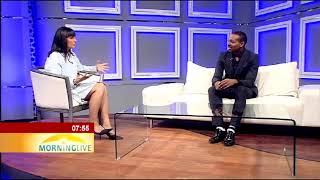
2017년 12월 비트코인 급등을 배경으로 한 인터뷰로, 출연자는 21세에 비트코인으로 백만장자가 됐다고 소개한다. 출연자는 비트코인이 올해 초 1,000달러에서 약 15,000달러로 올랐고 남아공에서는 약 25만 랜드 수준이라고 설명했다. 최근 상승은 주요 금융시장이 이를 주류 자산군으로 인정하겠다고 발표한 데 따른 것으로 추측됐다. 비트코인은 블록체인 기술 기반의 암호화 화폐로 거래 투명성과 해킹 방지 특성을 강조했다. 0.1개 단위로도 살 수 있으며 결제 수단이나 가치 보관 수단(금과 유사)으로 쓸 수 있다고 소개했다. 출연자는 비트코인 거품 우려에 대해 수요와 공급에 의해 움직이는 탈중앙 화폐라는 점을 근거로 반박했다. 입문 방법으로는 CoinMarketCap에서 코인 정보를 확인하고, 해결하려는 문제와 시가총액, 개발 로드맵을 평가하라고 권했다. 라이트코인 개발자의 제휴 계획과 짐바브웨 주유소의 비트코인 결제 사례도 언급했다. 두바이 블록체인 장관 임명 등 정부 차원의 채택도 근거로 들었다. 출연자는 비트코인이 '여기 있으며 미래'라고 강조했고, 놓치면 큰 수익 기회를 잃을 수 있다고 말했다. 다만 구체적인 가격 목표나 기간은 제시하지 않았다.
다듬은 글
Before the break I mentioned that Bitcoin has grown from about a thousand dollars at the start of this year to about fifteen thousand US dollars now. In October alone, one Bitcoin cost around sixty thousand rand, and now it hovers around two hundred and fifty thousand rand. Like other markets, Bitcoin responds to developments, and the recent surge is speculated to be due to announcements by two global markets that intend to legitimize it as an asset class for mainstream investors. What does all that mean? I don't know. Somebody in the studio is going to help us unpack it. Tagada is the author of *How I Became a Millionaire at 21*, and Bitcoin is here in the studio with us. Good to have you. Welcome to Morning Life.
Thank you, thank you so much for having me.
Okay, so you're a cryptocurrency millionaire. Does that translate into being a millionaire?
It does, yes.
Why is cryptocurrency so important? Basically, what we're looking at is currency that uses specific encryption techniques that do two things. First, they verify that you actually have the currency. Second, they facilitate the transfer between two people and encrypt it, meaning no one can hack you, and no one can duplicate the method of payment you're using. So it's basically a safer, encrypted digital currency.
So you're 23 years old, and you first bought into Bitcoin at around 20 or 21, while it was still on the rise. What made you interested in Bitcoin?
What happened is somebody asked me to buy Bitcoin for them. I bought it, and overnight the price jumped. So I did my research into what was going on. I started studying it, looking at materials, and reading blogs where people spoke about it. What interested me most was the technology behind it. Bitcoin runs on blockchain technology, and blockchain is sort of the future of all transactions. It allows everyone to see transactions as they happen. For example, corruption can be stopped through blockchain, because everything is visible to everyone. A blockchain cannot be hacked, because each transaction is linked to every transaction that has ever happened. Those attributes, the technology and its speed, made me think we're looking at the future of currency, and that's how I got interested.
The thing is, people think, "There's no way I can afford one Bitcoin." When we're talking, I quoted a price of about two hundred fifty thousand rand. Is that about right?
Yes, that's about right, but you don't buy one whole Bitcoin. You can buy portions of a Bitcoin. We're not only talking about Bitcoin, which is the most valuable one. There are other cryptocurrencies like Ripple, which is worth about three or four rand for one Ripple. But when you buy Bitcoin, you don't have to buy a complete Bitcoin. You can buy 0.1 of a Bitcoin, because you can buy a specific portion of it.
So what does it mean that I own 0.1 of a Bitcoin? You've got to help me out here, because I think a lot of people are confused about how this works. Say I decide today that I'm going to go buy Bitcoin and invest in it. Is it an investment, or can I use it as internet currency to buy things?
You can definitely transact with it. In South Africa, a lot of places accept Bitcoin as a method of payment. You can even get a card to use your Bitcoin, so you can swipe your card and the transaction happens through Bitcoin. Or you can just hold it and assess its value, saying, "I back this technology, and because I see it as the future, I'll hold it, sort of like gold." So it plays both roles: it's a currency, and it's also a technological advancement that people look at and say, "I see value in this."
A lot of people also see it as a potential bubble that could burst very soon. Some people are very nervous. Cryptocurrencies together are worth perhaps about four billion dollars, which is larger than the GDP of a lot of countries, but some people say there's no backing. How do you allay those fears and say there is a future in Bitcoin or in cryptocurrencies?
When Bitcoin started, people said they wanted to create something driven by the demand and supply of the people involved, not by a specific political power. People were trying to move away from currencies that depend on what a government is doing or what the political situation is. They wanted something decentralized, affected by the demand and supply of people within the actual space. So it becomes a global market instead of a country-by-country market. It's decentralized and global, because anyone in any country can participate. In an economy, you want the instruments of supply and demand to play out freely, and you want the system to be fairly governed by the people involved. That's what Bitcoin offers: a system where people are involved and get to make a choice, through their own decision, about whether they want to be in or not.
So you've decided to take the cryptocurrency route and invest. There are about 900 cryptocurrencies. We keep emphasizing Bitcoin because, as you yourself have said, it's probably the most valuable and well known at this stage. But if I want to start, what's a good way to begin?
The first thing you need to do is look at a website called "coin market cap," which gives you information on all the coins that are available. When you invest in cryptocurrencies, you look at what kind of solution a specific cryptocurrency is solving, because different cryptocurrencies are designed to solve different problems. You look at the market cap, you look at the future advances for it, and you take it from there. For example, one coin was developed by one of the guys who helped develop Google. He branched away from Google and started a coin called Litecoin, and now he's looking at partnerships with other retailers. So you look at that and ask, "Do I see value in this?" If this person is involved in Google, and this is his plan, and this is how the coin is being developed, you assess the situation and then invest based on that.
Litecoin, as we speak, was about 1,300 last week. Because of the potential partnerships lined up, Microsoft is one of the companies saying, "We're going ahead and investing in this cryptocurrency." Today it's around 4,000, because of the value of the technology. I always say cryptocurrencies are the digital age of currency. Something is coming on board that solves problems we've had for many years. If you look at it and ask, "Is this actually solving the problem I want solved?" that's how people are thinking about it.
I once spoke in Zimbabwe, and I was surprised to learn there's a petrol station there that only accepts Bitcoin. They say they're not accepting anything else, and they buy their petrol with Bitcoin. In a country like that, where their currency has failed, Bitcoin comes in as a solution. It's these technological advances that make people say, "We want to know what this is, and we want to see whether we can actually use it." Dubai has even appointed a minister of blockchain, which is essentially a minister of Bitcoin. So even governments are allocating resources to this.
It's eight o'clock, so I can't ask you another question. But the reality is that it's here to stay. This is the future, and it's now. If you miss out on it, you could miss one big profitable opportunity to make your fortune.
Well, I think I'm going to go and take a look at this. It might be a little late, but maybe I can become a millionaire soon, and then I can run away and become a Bitcoin specialist.
Tagada, thank you so much for sharing your personal experience about Bitcoin and cryptocurrency and for talking to us. Let's get our news.
Comments 0