저자: MarcFaber · 외국인
요약 보기
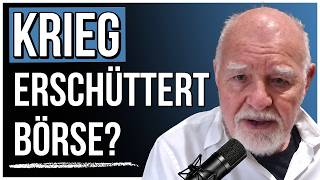
한줄결론: 마크 페이버는 미국 주식(특히 기술주)이 크게 고평가돼 있어 향후 잠재 수익률이 낮고, 실질 구매력 기준으로는 손실 위험이 크다고 보며, 현금 대신 실물 금·은을 분산 보유하라고 강조한다. [주식 시장 전반] 연초 주식 매도를 권했던 입장을 유지하며, 지금도 주식의 잠재 수익률은 높지 않고 하방 위험이 커졌다고 본다. 다만 일부 종목은 올랐고 지수를 끌어올렸지만, 대다수 종목은 하락했다는 점을 지적한다. [미국 주식·기술주 고평가] 미국 시장, 특히 기술·반도체 섹터는 역사적으로 높은 밸류에이션에 있다. 시가총액 대비 글로벌 경제 규모 비율은 사상 최고 수준이라고 언급한다. 엔비디아·테슬라·애플 등 인기 종목에서 자금이 빠져나갈 가능성을 제시했다. 방향: 하락(미국 기술주, 엔비디아, 테슬라 등), 행동: 관망~매도 성향, 기간: 중기. [버블 판단 기준] 버블은 과장된 표현이지만 고평가 지표(밸류에이션, 시가총액/GDP 등)를 근거로 든다. 1990년 일본처럼 과거 고평가 시장에서 자금이 이동한 사례를 언급하며, 미국 고평가 종목에서 빠진 돈이 저평가 지역·섹터로 이동할 수 있다고 본다. [실질 손실과 현금] 통화 발행으로 명목 수익이 나더라도 물가 상승으로 실질 손실이 생길 수 있다고 본다. 1964~1966년 실질 고점 이후 실질 가치가 약 70% 하락했던 역사를 예로 든다. 현금도 안전하지 않다고 경고하며, 외국인 국채 동결 사례(아프가니스탄, 러시아)를 든다. [금·은·비트코인] 금과 은을 선호하며, 원자재 중 상대적으로 비싼 금보다 다른 원자재가 상대적으로 저렴하다고 평가한다. 장기 구매력 보존 목적이라면 비트코인보다 귀금속이 낫다고 보지만, 단기 급등 가능성은 인정한다. 실물 금은 해외 분산 보관, 국내 정치 리스크(사회주의·녹색당 정책)에 대비한 분산을 권한다. 방향: 금·은 상승 선호, 행동: 보유, 기간: 장기. [숏 전략] 통화 발행 환경에서 장기 숏은 부적합하다고 본다. [시장 타이밍 vs 시간 분산] 장기적으로 자산 인플레이션이 이어졌지만 앞으로 40년 동안 반드시 같을 것은 아니며, 실질 수익을 보기 어려울 수 있다고 본다. 자산 간 가격 상승이 순환하므로 유연성과 운이 필요하다고 한다. 상업용 부동산(독일)은 최근 수년간 가치 상승이 없었다고 언급. [금리·국채] 미국 10년물 금리는 1981년 고점 이후 하락했으나 2020년 이후 상승 추세로 전환됐다고 보며, 장기적으로 상승을 예상한다. 방향: 상승(미국채금리, 장기), 국가부채 문제는 더 커질 것으로 본다. 한국채금리·환율에 대한 직접 발언은 없음. [전쟁·정치 리스크] 대규모 전쟁 가능성이 2차 대전 이후 가장 높은 수준이라고 경고한다. 전쟁 시 금융시스템 교란과 재산권 침해 위험을 강조한다. [조건/리스크] 본 대담은 정보·오락 목적이며 투자 조언이 아니다. 개별 종목 언급은 예시이다. [출연자 전망 요약] 단기 조정 및 미국 기술주 하락 가능성, 귀금속 중심 분산, 현금 보유 위험, 장기 금리 상승을 종합적 입장으로 밝힌다. 과거 40년 주식 투자 경험 기반의 회고도 포함되어 있다.
다듬은 글
Conditions for a major war have never been as favorable since World War II as they are at the present moment. Whether cash is safe, maybe it is not safe. Did the stock markets reach their real peak in 1964 or 1966? But due to price increases, they have fallen by 70% in real terms. My guest, Dr. Marc Faber, also known as Dr.
Doom and, for 36 years, the continuous editor of the Gloom, Boom, Doom Report. That is now trying to lose as little money as possible in in the coming years. So it's not about earning as much as possible, but about receiving as much as possible of what you have already earned . We'll discuss what distinguishes a real bubble from a merely expensive market, how you can tell that your portfolio is already losing real value, where he stores his gold and where he explicitly does not, and which strategy he considers the only sensible one for the coming years .
In an environment of money printing , shorting is an unsuitable strategy in the long term. Signals, half-measures and Lamborghinis, you can find those elsewhere. Here you can see how professionals really trade. For example, his retrospective on over 40 years on the stock market. If you're serious, subscribe to Bulle und Mensch now on YouTube, Spotify and everywhere podcasts are available.
Because the more we grow, the more high-profile the guests I get in front of the microphone become. At the beginning of the year, you said to get out of stocks. How do you view that today? Yes, good. It's all relative. I've already warned you that stocks are high. And in the meantime. It's true that some stocks have risen .
And they drove the index up , but many stocks didn't rise, they fell. So, if you look at the most popular stocks... They drive and drive related stocks in America and in the Magnificent Seven. They have n't actually held up very well relative to the market. And there are some stock markets that have barely risen.
And others have risen, that's true . But basically, when I look at the last 40 years. And the. The price increases we have experienced, the big ones in the investment markets. Then I would say that the deck potential is now higher. Regarding stocks, and that was already the case in January of this year.
That the potential is not particularly good. And that's the risk. It has naturally increased downwards . You've been doing this for almost 40 years now, and of course there's always criticism, or one could also say that the indices have risen. One is constantly confronted with questions, criticism, and often, of course, positive feedback.
Why do people do that? Yes, I don't quite understand the question, what it refers to. These public assessments, yes, so it's either out of stocks, in into stocks, or doom. Yes . They requested an interview with me, they asked the questions, and then I answered them. Personally, I don't have any strong opinions, let's say.
About forecasts, because I know perfectly well . That nobody can predict the future with certainty. And. We must assume that we do not know what the world will look like. In the morning. Or in six months, or in five years, or 50 years, we simply don't know. Because that depends on so many different factors.
Which are unpredictable. But if I am asked what my opinion is, then I will share my opinion. Why shouldn't I do that? No, I meant... refuse to answer your questions? I was referring to a statement they made elsewhere , but I was mainly referring to the Glomb and Doom Report. You're releasing that one too, aren't you?
Correct. Exactly, and so every stock market trader who publicly expresses their opinion is also subject to criticism. Yes, she does. Exactly, and usually the criticism is a bit harsher than when it's positive , i.e., when you're right. And you need a bit of, how should I say, staying power or even courage to really do that for 40 years , right?
What is your motivation for being so committed to publicly declaring your beliefs for the past 40 years? Yes, well, I have an investment newsletter that I publish, and that's a business, and uh, people pay me for my views. And when the media then ask me, uh, and request interviews, then uh, it's a kind of public relations or advertising.
I don't earn anything from your interviews. You're not paying me for my time. Therefore, I'm doing this as a goodwill gesture, so to speak . And uh, you advise me to uh, reject these requests that come to me, like those from you. Do you advise me to cancel it? No, quite the opposite. We are interested in your opinion.
Um, of course, there is also criticism, and I wanted to understand what motivates you to do it anyway, but we've already done that. Um, yes, that's good criticism. Basically, I go through life and I'm not particularly interested in what people say about me . What interests me, uh, personally, is my financial situation and my investment success and uh, my personal life, how I manage it.
But I don't care what you and your listeners think . So it doesn't bother me much whether someone says Faber is an idiot or he's good. It does n't change my lifestyle much . These are very well-known, especially Dr. I've often read about Doom in research and so on. How, where, and by what criteria do you recognize this, or what do you look for, when you say we might be in a bubble?
"Bubble" is an exaggeration, but at least in terms of high valuations. Is it the P/E ratio or what is it? Where are you looking? Yes, that applies to many indicators, of course. The signals convey information. Signals Where At a time when the stock markets are depressed. And the prices are relatively cheap, and then there are indicators that point to that.
That something is very popular and already expensive, and so on. And in the present, we have some indicators that actually, well, typically emerge at a certain point in time. Where the investment market is high. So we have some indicators that clearly show this. That today – I'm not saying this applies to all stocks worldwide, but let's say in America.
And especially in the case of technology stocks in America. The ratings are far above average, far. And partly at a peak, so if you say the stock market. Compare the capitalization to the global economy. Then it will be at a record high. [clears throat] So that someone would come and say. What he wants to tell me is that the stock market...
It is undervalued. That 's unlikely. That it is highly rated, as there are some indications. Yes, exactly, if you look at the S and P 500 , then it's mainly tech that's not tech. Generally speaking, I would say that things are rated fairly normally, but tech is of course rated very highly. But tech has historically always been highly valued, hasn't it?
Yes, it depends. There were times like 1990 when the technology... It wasn't rated particularly highly. And that is precisely the difficulty in an environment of money printing. What is cheap and what is expensive? All of these things move in relative opposition to each other. For example, in 1989 Japan was expensive.
And other markets were relatively cheap. Were they incredibly cheap? One might ask, but they were relatively cheap. It's similar today. America and the technology sector and semiconductors and so on. They are highly rated. But it's true that other markets in the world are too. They are relatively inexpensive.
They're not exactly cheap either. They are relatively inexpensive. Yes, now one can say yes. We had the Internet bubble in the early 2000s. Um . And many are now comparing the AI bubble to it. I think the main difference is that with AI, sales are increasing massively, right? Couldn't these companies also grow into their valuations based on their revenues and fundamentals ?
Possibly, possibly. No, unlikely, but possible. But what can happen is that there are many companies whose profits have increased and whose shares have fallen. And we must be aware of that. But I don't want to get into a discussion , uh, debate about stock valuations. I mean, everyone is free to decide what they want to buy and what they don't want to buy.
And, uh, according to my uh views and calculations and let's say uh uh research, I assume that the American stock market is vastly overvalued, vastly. But if you advise your investors to buy, then that's good, then you might make money. That's, um, that's not it, doesn't bother me, you know? Uh, you go your way and I go mine.
And what you consider a success is your business, not mine . I don't give advice at all, I always try to understand how my guest thinks and how he participates in the trade, so to speak. I already told you what I think. I think the stock market is vastly overvalued . And that applies to stocks in particular.
In the technology sector. Not. To meet the expectations of the market or market participants . Yes, I think that's a good point. But they don't go so far as to go short, or short in general, do they ? Yes, I would very much like to cultivate alabaster. But understand this in an environment of money printing.
Is shorting one of them? An unsuitable strategy in the long term, because... You can print money to change all courses. Push upwards. Expressed in nominal terms, that is possible. The stock market here has doubled. But the price level has tripled. Then you have a nominal value. Money earned. But in reality, you have lost because the price level has tripled, while your shares and the shares you recommend to your investors are at record highs, highest valuations.
That these shares will then rise less, that the price level. So they will lose real money. And how can that be measured? You can do that, for example. Measuring and comparing stocks. To precious metals at man. I'm not saying that this always works, but generally speaking, if you look at the price movements of precious metals and those of stocks, and the stocks rise less than the precious metals, then I would assume that the stocks have also lost purchasing power.
Risk warning: This conversation is for informational and entertainment purposes only. This does not constitute investment advice or a buy or sell recommendation. Mentioned stocks, funds, or assets are for illustrative purposes only. Every investment involves risks, up to and including total loss. You can find more information about the disclaimer in the show notes.
But real investors are not interested in that; they are interested in buying a share and reselling it at 100 and 110. And what happens to the price level is relatively unimportant to them. But in fact, if the price level goes from 100 to 150 and you only see your shares rise from 100 to 120, then you have lost real money.
Understand. And the conclusion you draw when you say that the American market is relatively expensive is that, if my research is correct, you invest heavily in gold or precious metals, or do you diversify into other regions of the world? How do you proceed? Yes, that's a good question, because [ahem] there are two situations, or circumstances, that can occur.
When a bear market occurs in one area, in one sector of the stock market, say in 1973/74, American stocks fell, and especially stocks, i.e., companies, that were significant. And back then they were called the Nifty Fifty. These were large companies like Xerox, Kodak, Polaroid, Sears, and so on. Most of them went bankrupt.
But they were very popular and highly rated back then, and then they fell. And at the same time, all stocks fell worldwide. But another case is of course Japan in 1981, which then fell by 70% in the next 15 years. But other stock markets rose at that time . In other words, the money has shifted from Japan, which was sold and used to buy other stocks, particularly the Nasdaq in America.
And to answer your question, I assume that yes, money will flow out of these popular stocks like Nvidia, Tesla, Apple, and so on. And that money will then flow into other undervalued areas. That world or. The six economic sectors in America, or one could choose from one sector. Uh. Sell and buy in another sector .
That's conceivable. But anyway. I would be a little careful there. Because if. The S&P, which is primarily weighted in technology stocks. It falls. I would assume that the mood in the world has deteriorated to such an extent. That, uh, everything would fall a little. Uh, some things more than others.
And that would be my strategy now. This inflation of assets over 40 years. The goal now is to lose as little money as possible. In the next few years. So, not to earn as much as possible. But as much as possible . Uh, to receive confirmation that one has already earned it. That sounds like a lot of cash in the account, right?
Yes, that's a good question: is cash safe? Perhaps it's not that safe. Because it's cash. Basically, you borrow money from a bank. The bank promises to pay you back. But that's assuming you buy it. Like foreigners Treasury Bills. In America. And then the money will be frozen, which is what the Americans did in the case of Afghanistan.
And Russia, and so on. You understand, that's very difficult to say today, that's for sure. In my grandparents' time they said, yes, but save money every month and have a savings account at the cantonal bank or at a major bank in Germany or Switzerland. But that's no longer certain. I read in your interview that gold and silver are your favorites, right?
Yes, good. Gold, silver, and everything else has price fluctuations, and one should of course try to buy when these investment objects are not particularly expensive. If I compare gold and silver to oil, or gold and silver to the price of wheat, sugar, corn, or soybeans, then gold is relatively expensive and the others are relatively cheap.
But for the individual investor, it is of course somewhat difficult to store a ton of wheat without simultaneously holding a kilo of gold somewhere. It 's relatively simple, and therefore it's possible that the price of gold will remain relatively high compared to other commodities and other investment objects.
What do you think of crypto? So, Bitcoin. Many say, yes, this is the new gold. I don't suppose it's new gold , but uh, as long as certain people believe it, the price can of course rise. But if I had to go to prison for 10 years and couldn't trade anymore, meaning buy and sell and so on... And if someone were to ask me, yes, what would you invest in if you could invest once and then not for 10 years, and then in 10 years you come back, and the objective would have been to maintain the value of the purchase, the purchasing power of the money.
Then I would say I would rather invest in precious metals than in Bitcoins and cryptocurrencies. But if the question is to buy something at this time today and make money in the next 10 minutes, possibly yes, there is a certain cryptocurrency in the cryptocurrency market that could move strongly upwards in the next 10 minutes.
This is also possible with gold or a stock. You understand, it depends on the circumstances. And then, of course, the question arises: gold, yes, we agree, it is interesting as an investment. But where do you keep it in America? In Mr. Trump's safe, for example, or buried in the ground in your garden, and so on?
These are all questions that the investor naturally has to ask himself. It sounds a bit like you don't think much of paper gold—I'm deliberately calling it paper gold—but that it should definitely be physical and preferably not in a safe far away, but rather nearby. Or yes, I would say that's a relatively good description of my strategy.
But I would still like to mention that, let's say you were in Shanghai or Eastern Europe in 1944, then the Russians came and expropriated everything in Eastern Europe and Russia. Then, of course, it wasn't so advantageous to keep the gold at home, you understand. And the same thing happened in Shanghai in 1948.
Let's say you had all your assets in Shanghai at that time, then the Communists came and conquered the country, ending the civil war, and confiscated all the property . Then it wasn't so convenient to keep everything to oneself. And that is an argument made by, uh, the proponents of cryptocurrencies.
They say, yes, it's movable, and so on. You can purchase a cryptocurrency here and then obtain it in America, and so on. That is indeed an argument, I accept that. But I believe that you are assumed to have possible assets. They should keep gold, let's say with themselves and in a safe and outside the banking system, but in different legal systems, in different countries.
And not everything in one country, especially not if it is run by socialists and greens, as is the case in Germany . Because those are people who don't think much of private property. And, uh, they could easily expropriate you one day. Yes, that's a good point, because we started with the overvaluation of American stocks.
But I'm hearing now that there's a very strong political risk behind this, isn't there? How would you describe it if you were to look at the world right now? So on the one hand, you also mentioned Trump , and now you've mentioned the Germans with their rather left-wing or rather socialist-green agenda.
Then we have Russia, China, and so on. There's just a little bit going on right now , how should I put it? They also initiated a movement, to some extent. Is this political tension also a major driving force behind their gold theory? No, I've actually studied economic history quite a bit. And as you can see, I do have quite a few books.
And. Business cycles have always fascinated me, and rightly so. Stock market cycles and commodity cycles. And then there are those things. War cycle theories. And I'm not saying that it will happen , but the conditions are. For a bigger war. They have never been as good since the Second World War as they are right now , at this very moment.
And it could explode. Any time. The most frequent question I get asked is: Mario, you talk to so many top traders and investors, what have you actually learned from that? My honest answer: too much for me to really remember. That's why I built frag.bulle-und-mensch . You ask your question and the AI searches the podcast conversations for the exact relevant sections, including timestamp and link to the corresponding episode.
Just try it out. Go to frag.bulle-und-mensch.eu now. Then it could have very, very unpleasant consequences. On the financial system. And that's why I would advise any investor or anyone who has money to consider, in an emergency such as a war, how to lose the least amount of money. Not if you look at the history of Germany , from 1900 to the present day.
And they held, as they said, uh, cash, so cash, then they lost it all exactly three times. World War I, hyperinflation, and then World War II. But if they had shares, like Bayer and BASF and so on and Mercedes, then of course these shares fell very sharply during wartime and were not worth much, but at least today they are worth significantly more than they were 100 years ago, especially with dividends.
Well, uh, but that's based on the fact that despite wars, or perhaps during the wars, property rights were not respected, but after the war they were reintroduced. But there are countries like that, I'm very familiar with Vietnam. Someone who had land before the revolution, um, who still doesn't have any land, right?
That was taken away from him. I know families who were very well-off and, uh, they lost everything during the Vietnam War or after the Vietnam War, when the country was ruled communist-style , they lost everything. And no longer held back. Yes, but one could also say that there were times when gold was banned.
Yes, yes, I don't deny that. You are absolutely right. I tell you, the socialists and the Greens are the first ones to go after the owners of gold. Yes, I understand. Now, the counter-argument to what we just discussed is that Time in the Market beats the Timing the Market. Or to put it another way, the opportunity costs, i.e., if I 'm not in the market and assume that the market will go down , then it potentially costs me that the prices, at least in the global ETF or overall, continue to rise, right?
How right. Correct. How do you view that? What is the smarter strategy? Yes, we need to agree on a currency unit, and that's not so easy, creating a currency unit in times of money printing and monetary inflation. So, let's say you have a portfolio of stocks worth 100 that rises to 200, but the price level increases three- or four-fold, and then, measured in real terms, adjusted for inflation, the returns that rose from 100 to 200 have actually fallen.
That was the case in America and also in Europe. The stock markets reached their peak, measured in real terms, in 1964 or 1966 and didn't fall, but rather moved sideways until 1982. However, due to price increases, they fell by 70% in real terms. During this time, precious metals have naturally risen in price.
Oil prices also rose at that time. But that does n't mean that just because they rose back then, they will rise again now. I assume so, but I couldn't guarantee it. And I wouldn't guarantee that. Well, many people, especially the younger generation, say, " I'll buy a global ETF and then everything will be fine, because historically it has worked most of the time , though not always, of course." Yes, you've already mentioned a few dates or periods, but at least, let's say for the last 30, 40 years, the motto has always been "Buy the Dip," which is quite good.
And uh, the dips didn't take very long , did they? Do you believe that the time is over and that we are experiencing a long, perhaps even 10 or 15-year, lateral or price correction downwards? Or how do you view the market over the next 10 or 15 years ? Yes, I would say the fact that we have had high asset inflation over the last 40 years, partly caused by central banks printing money and by states' fiscal policies with deficit financing and so on.
This does not mean that it will continue like this for the next 40 years. Because that is the problem with price increases. It's not that the price increases are not uniform. It's not that the entire price level rises and then falls again, but rather that it can rise in one area and then in another, or behind me or in front of me; in other words, price increases can manifest themselves in commodities, real estate, stocks, bonds, collectibles, such as stamps, wines, old cars, and so on.
And old memorabilia from Hitler or Mao Zedong and so on. And the investor has to be relatively flexible and relatively lucky, have a lucky hand, so that he is always invested in what is rising and not in what is falling. For example, commercial real estate in Germany has not increased in value in recent years.
And in general, real estate has not been a particularly good investment in recent years. Because many were highly valued in 2017 and 2018. And then interest rates rose. And the profitability of properties that were bought with debt has naturally changed. So, if someone comes to me and says, "Something is always rising." So I am very careful.
Because that is not the case, and historically it is not the case. And I mean, what you're saying is true, that the world index has risen and so on and so forth. But there were many in... Well, 100 years ago there was no world index. But I can show you hundreds of cases where something was valuable and then became worthless.
So in 1918, during the revolution in Russia, the aristocracy lost lands as large as a small state in Germany, like a small kingdom. But the aristocrats, of course, and the generation they were before this happened, always said, "Yes, in the long term the country will increase in value." Yes, okay. To conclude our conversation, I have two final questions: If you, having been involved in the stock market for over 40 years, were to start all over again, what would be the very first thing you would do?
Yes, well. I believe. If I. Good. I was, of course, born in a certain time . Where the economy was expanding, I was born in 1946. And I completed my studies , actually in 1969. With a doctorate. And then I started working in New York in 1970. And I believe that in retrospect. I should have only bought one.
And that's the S and P 500 in America. And I should invest my savings in S and P every year . And then reinvest the dividends, and so on. So, in terms of the system, that would probably have been the best option. But I don't know, because... I didn't experience that in that sense, and it's possible that I might have sold it one day, or...
Uh. To time to me. would have sold at a bad time and bought at a bad time. That's the hardest thing to say, what I would have done differently . But there's one thing I'd like to observe, from when I was studying and so on. We have already discussed Silvio Gesell in economic history because he was an important figure.
He was a Bavarian, so he came from Germany and from the Munich area. And he then had to flee to Germany because he was labeled an anarchist. But I have his works, economic works. And they were also discussed by Keynes and Schumpeter. Because it favored negative interest rates. He said yes, the problem with the economy is that people save money, put it in the bank, and keep the savings in the bank.
And then those funds no longer flow back into the economy . So, you have to make savings unattractive so that people don't save, but spend the money . So, one could say we force people to spend money by issuing notes, like stamps, that are only valid for six months of the year, right? Or, if they have savings in a bank, they could be told that we charge negative interest rates of 3% or 5% per year.
So, in short, I naturally brought this up here, but I never in my life thought that, let's say, the ten-year Treasury bonds in America, uh, when I started working, the interest rate on the ten-year Treasury bonds was 6%, then it rose to 15% and more in 1981, and then it fell, but I never thought it would fall so low, to uh, 0.57% in August 2000.
I never would have thought that. And, uh, other observers thought the same thing . And that would be the case in Switzerland and other European countries and in Japan, where interest rates were negative. I would never have thought that. That's one thing. The second thing, uh, I would have assumed earlier, is that the growing national debt would become a problem.
Now, the following has happened: national debt has grown very strongly everywhere, least in Germany, but it has also grown. And uh, they weren't a burden until recently because interest rates move in long-term cycles. And after 1981, the interest rates were high. In a downward trend. Until 2020, interest rates have tended to rise .
And I assume that this upward trend will continue to increase. But of course, irregularly, if you include the interest. During the 1970s. Accelerating. Inflation has fluctuated greatly. And I assume the interest rate structure will continue to rise, but with fluctuations. For example, in the next six months.
Is it conceivable that interest rates could fall somewhat in America? In the long term, I expect them to rise. And uh. That the national debt will then become a bigger problem. Because in a democracy, it's unlikely. That voters will elect someone who tells them, yes, we have to tighten our belts. And we either need to spend less money .
Or we have to raise taxes, but that's so unlikely. So. It is more likely that they will print money. And that they are alongside such events that one experiences in life. Overrated or underrated. But. In my opinion, it was unforeseeable. But other people may have seen it differently and said, yes, that was predictable.
Mhm. [sighs][gasps] To conclude, I always ask each of my guests a question: if you had to stick just one sentence about active investing on your screen , what would it say? So, I would have to write a sentence on the wall to constantly remind myself of it. What does it say on it? Yes, I would assume it would say that the future is uncertain, meaning it is not predictable.
That is, and we do n't know that much about the present either. And we also know little about the past, because an Italian will interpret history differently than an American. And the Germans, in general, would describe the Second World War and the events that led to the Second World War differently than you would the English and the Americans.
History books, by and large, are not written by the defeated and the dead , but by the survivors and the victors of the battles and the circumstances. Well, our knowledge is very limited. And that's precisely the point: knowledge about the future is completely undefined. Dr. Faber, thank you very much for the interview.
Please, please, it was a pleasure and I wish you and your investors all the best and much success. If this has helped you – the honest side of trading, not just the success stories – then subscribe to Bulle und Mensch. This way I can offer you guests who will reveal their biggest learnings and mistakes in trading.
You'll get conversations you won't hear anywhere else. Not a price target that will be wrong again tomorrow, but knowledge that will help you in every market phase . Start with the episode whose title makes you most curious.
Comments 0