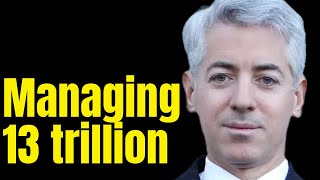
저자: BillAckman · 외국인
요약 보기
그레이엄의 가치투자 원칙(가격과 가치 구분, 안전마진, 투기와 투자의 차이)을 설명하고, Ackman의 사례로 UMG(음악 디지털 전환·카탈로그 가치), Chipotle(식중독 사태 후 급락 매수·CEO 교체 효과), Google(AI 경쟁 우려 속 데이터·인재 우위)을 든다. 레버리지 회피, 행동주의 투자, 10~12개 종목 집중, 저비용 인덱스 활용을 조언한다. 개별 자산의 1~3개월 가격 방향에 대한 예측은 없다.
다듬은 글
가치투자의 출발점: 가격과 가치의 구분
Today, we will take an in-depth look at the core principles of Bill Ackman's value investing and examine specific examples. Hello, this is ChoWorld.
First, there is Benjamin Graham's *The Intelligent Investor*, which Bill Ackman frequently references. After the Great Depression, when fear and panic selling dominated the market, Graham suggested distinguishing between price and value. This means evaluating a company's fundamental earning power beyond short-term confusion.
Graham famously said, "In the short run, the stock market is a voting machine, but in the long run, it is a weighing machine." Even if stock prices fluctuate temporarily due to market sentiment, in the long term the real earnings and cash flow a company generates will be recognized. Bill Ackman emphasizes that this concept is the very starting point of value investing.
투자와 투기의 차이
Another core topic is the difference between investing and speculation. Speculation refers to short-term trades aimed at profiting from price fluctuations, for instance, buying simply because you believe prices will rise.
Investing, on the other hand, involves analyzing a company's future earnings and growth potential, and only purchasing if the present value of its future cash flow is judged to be significantly higher than the current stock price. An essential concept in this process is the margin of safety. You need to buy at a price significantly lower than the intrinsic value, so that even if your estimates are slightly off, you can minimize losses. This principle is a crucial standard that Bill Ackman applies to nearly all of his investment decisions.
사례 1: 유니버설 뮤직 그룹(UMG)
Now, let's look at some company examples. First is Universal Music Group (UMG), which holds about 30% of the global recorded music market. With the rise of digital music streaming, music consumption has become much more predictable.
Ackman believes that music is strongly tied to human culture, and Universal can continue to monetize it globally. UMG adapted quickly during the Napster era and the digital transition. They also have an excellent artist development system, and their catalog, including the Beatles, U2, the Rolling Stones, and many others, holds enduring value. Regarding concerns that AI could replace the music industry, Ackman noted that the public is still fascinated by the stories and personalities of human artists.
사례 2: 치폴레
The second example is Chipotle. In the past, its stock price nearly halved due to a food poisoning incident in its stores, but the company had a differentiated model that emphasized healthy, fresh ingredients and on-site cooking. Ackman saw the plunge in such a well-managed company due to a single event as the perfect opportunity for a value investor to buy in.
Chipotle now has over 3,000 stores worldwide, and it is still expanding rapidly while restoring its brand image. Crucially, they appointed Brian Niccol as the new CEO to restructure management processes and drive sustainable growth. Ackman ultimately made a large profit and once again demonstrated the lesson that a plunge in a fundamentally sound company is an opportunity.
사례 3: 구글(알파벳)
The Google investment case is also very interesting. When OpenAI's ChatGPT emerged and there was talk of collaboration with Microsoft, the market worried that Google might be losing the AI race.
However, Ackman believed that Google had already accumulated massive data and engineering capabilities through DeepMind and other initiatives. Furthermore, data obtained from various divisions, including Search, YouTube, and Cloud, serves as a very strong barrier to entry, so Google wouldn't be pushed aside solely by ChatGPT's single innovation. AI could be disruptive, but Ackman believes that Google's financial resources, talent pool, and already dominant market position are more than enough to offset this challenge.
빌 애크먼의 투자 철학
Now, let's examine the core of Bill Ackman's investment philosophy. He says he learned a "long-term perspective" and "cool-headed attitude" from Warren Buffett. A typical viewpoint is that the best time to buy is when fear dominates the market and everyone is selling. He also emphasizes the principle of avoiding leverage. When there's a sudden plunge in stock price during an investment, excessive borrowing or margin can corner you.
행동주의 투자자로서의 역할
Ackman is also well known as an activist investor. He acquires significant shares in a company and directly pressures or advises the board and management, fixing structural issues and raising the company's value. In cases like Wendy's, Canadian Pacific, and General Growth, he drove value recovery through board reshuffles, corporate governance improvements, and CEO appointments.
He says, "If the board doesn't function properly, even a great business can fail." Therefore, the character, incentives, and credibility of the CEO and management are extremely important. There is a story that when analyzing a company, he often reviews five years of conference call transcripts to see if what they said matches what they actually did. Ultimately, he's evaluating how much the management genuinely cares about shareholder value.
개인 투자자를 위한 조언
For individual investors, his primary advice is, "Never invest with borrowed money. If the market plunges and you're forced to sell in a panic, you can't invest for the long term." He also suggests not over-diversifying but rather focusing on around 10 to 12 companies in industries and brands you understand well.
Lastly, he points out that mutual funds often have high management fees, making them less cost-effective relative to returns. As an alternative, he recommends index funds or ETFs. All these principles ultimately help investors avoid being swept up by short-term volatility, and instead focus on the fundamental value of a company from a long-term perspective.
This wraps up our first session on Bill Ackman's investment philosophy and examples. Thank you. We will continue to strive to provide meaningful information. Please subscribe.
Comments 0