저자: 미상 · 외국인
요약 보기
스탠리 드러켄밀러의 투자 이력과 원칙을 소개하는 영상. 1992년 영국 파운드화 매도(약 20억 달러 이익), 석유·방산 집중투자, 1999~2000년 기술주 버블 당시 손실과 감정적 판단의 실수를 다룸. 핵심 교훈은 확신이 있을 때 집중 투자, 뉴스는 좋은데 주가가 안 오르면 이탈, 틀리면 빨리 인정하고 손절, 감정 통제와 규율 유지.
다듬은 글
The man who achieved annual returns exceeding 30% for three decades without registering a single negative year. Ladies and gentlemen , Stanley Druken Miller. Stanley Druken Miller dropped out of a PhD program in economics after realizing that academia was not for him. He got an entry-level position at Pittsburg National Bank after the department head, upon learning that he had studied at the University of Michigan, told him, "If you went to the University of Michigan, you're hired." At just 25 years old, he was promoted to director of research.
As he himself admits, the promotion was not so much due to his talent, but to the decision of a peculiar mentor, an investment genius who wanted to demonstrate his power within the bank. From this mentor, Druken Miller understood and learned quite a few lessons in his early days, but if he had to choose one, it would be a simple but very powerful rule.
If all the news is good and the stock price isn't going up, get out of there. At 26 , a bold recommendation catapulted him to the position of investment director. Following the overthrow of Iran's Saddam Hussein, while his colleagues advocated for diversification, Drugen Miller proposed a radically concentrated strategy.
70% of the capital in oil shares and 30% of the capital in defense shares. The result was spectacular. In the following two years, their stock selection appreciated by 300%, while the SP500 index remained flat. This move not only demonstrated his courage and ability to identify major macroeconomic trends, but also solidified his reputation as an investor with a pure conviction of the common good.
In 1968, Stanley joined George Soros to co-manage the legendary Quantum Fan. This collaboration would not only define his career, but would also produce one of the most famous financial transactions in history. The first six months were a bit rocky, with a lack of clarity about who was really in charge.
However, history changed drastically with the fall of the Berlin Wall. Drugen Miller identified a generational opportunity, a massive bet on the strength of the German mark against the market thesis that unification would weaken it. His resounding success earned him the complete trust of Soros, who granted him full autonomy to manage the fund.
This confidence is built on their subsequent success. The operation that cemented its legend was the massive sale of the pound sterling in 1992. The pound sterling maintains a fixed exchange rate with the German mark. However, Germany, booming after reunification, needed high interest rates to control inflation.
In contrast, the United Kingdom was in recession and needed low interest rates to stimulate its economy. This contradiction made parity unsustainable in the long term. After reading an article by the president of the Bundesbank, which confirmed his suspicions, Drugen Miller prepared to bet big against the pound.
With the fund managing about $7 billion , he went to Soros' office and told him he was planning to make a $ 5 billion bet. Soros's response became the most important choice of his career. That's ridiculous. Why only 5 billion? You should make 15 billion. He taught her that when conviction is absolute, the size of the stake must be extraordinary.
The fund made a profit of more than $2 billion. However, Druken Miller revealed that the biggest gains did not come directly from the devaluation of the pound, but from concentric waves, as he calls them. They bought British government stocks and bonds that soared when the Bank of England, finally freed from the fixed exchange rate, drastically lowered interest rates to combat the recession.
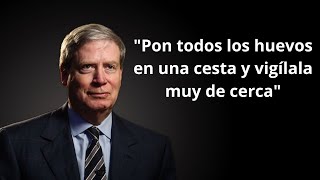
Druen Miller's extraordinary track record is based on a set of clear and counterintuitive principles that prioritize boldness and discipline over market convictions. Focus on diversification. Drucken Miller believes that diversification is greatly overrated. His motto is to put all your eggs in one basket and watch it very closely.
He argues that if you have an investment thesis with a high degree of conviction, diluting it with other lesser ideas only reduces potential returns. Fundamental and technical analysis. Between 75 and 80% of his ideas come from fundamental analysis. However, he never invests without technical analysis confirming his thesis.
His rule is simple. If I love a fundamental thesis, but the graphic sucks, I won't do it. It respects the market and assumes that the price may be reflecting information that its fundamental analysis has not yet captured. Emotional discipline and humility. One of the keys to his success is his ability to quickly change his mind when he is wrong.
My track record is mainly due to the fact that when I'm wrong, I change my mind. If the original reason for buying a stock is no longer valid, he sells it without hesitation, regardless of the price he paid. Gambling with the house money. Drucken Miller manages risk based on his winning streak. If it's winning during the year, it becomes much more aggressive in order to maximize returns.
If you're losing, drastically reduce the size of your trades, making small bets to regain confidence before going back to playing big. Invest in the concentric waves we saw in the Libra trade. Their strategy is not limited to the main bet. Once he identifies a major macroeconomic thesis, he actively looks for secondary and tertiary consequences.
In the pound trade, he not only shorted it, but also bought British stocks and bonds. anticipating that they would benefit from the inevitable subsequent drop in interest rates . This Domino approach allows you to maximize the profits from a single great idea. His experience during the tech bubble of 1999-2000 is a testament to the importance of emotional control.
In early 1999 he bet $200 million against internet stocks, as he saw them as extremely overvalued and stocks like Yahoo had already multiplied their value several times over. In just 13 days, he had lost the astonishing sum of $800 million . He accepted the mistake and closed the position. After reversing the trend and joining the bull market, it ended 1999 with spectacular gains.
In January 2000 he was right again when he sold everything. However, when he saw that his younger managers were still making a huge amount of money, 5 to 7% daily, he couldn't stand it. Driven by envy and emotion, he betrayed his own discipline and bought back the top of the market just before the collapse.
The loss was so devastating that he resigned from his position with Soros. After taking a 4-month break without looking at a single financial newspaper, he returned with a clear mind. He identified one of the best opportunities of his career. Betting on falling interest rates in the face of an imminent recession.
It recovered all the losses and ended the year in positive territory. The choice was clear. Discipline and the ability to step back and maintain perspective are fundamental to long-term survival. Stanley Drucken Miller's career offers a roadmap for anyone who wants to achieve excellence in this world.
His key lessons go beyond finance: the importance of having unwavering conviction in one's own ideas, the humility to recognize and correct mistakes without ego, the discipline to adhere to a proven system, and the audacity to bet big when the opportunity arises. That's all for today's video. Thank you and I hope you liked it. All the best.
Comments 0