저자: EdYardeni · 외국인
요약 보기
지정학적 위기 이후 조정은 과거 패턴상 매수 기회이며, 실적 시즌과 경제 회복력으로 S&P500 저점은 이미 형성됐다고 봄. 다만 인플레이션은 헤드라인·코어 모두 상승할 것으로 보며 채권시장이 이를 과소평가하고 있다고 경고. 원유는 미국 수출 증가 가능성을 언급.
다듬은 글
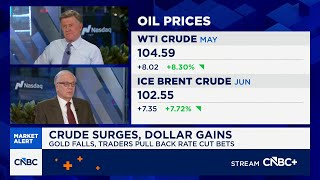
Ed Yardeni is here. He is, joining us now. He's president of Yardeni Research. Ed, after the the ceasefire was announced, I think last week, and it looked like at least a deceleration, you said the lows were in. And now this is unclear. The way they were in the ceasefire, you still think the lows are in?
have the the March 30th low, I think what was it for this pullback? It didn't even It turned out to be a a correction for the Nasdaq, but not for the S&P 500. But you know, the earnings season is up ahead here, and I think it's going to confirm that the earnings story is remarkably resilient. The economy has been remarkably resilient.
I mean, we've had some weak numbers, but I think a lot of that I blame the weather. We had some pretty nasty weather in January and February. And the weather in Congress? And the weather in Congress, of course. Is it the shutdown? Yeah, you do a good job of of of reporting on that, of course. But all in all, I think the economy is is going to handle this pretty well.
And I'm actually impressed by the resilience of the financial markets. I mean, especially with the announcement of the blockade of the Iranian ports, the reaction so far has been pretty muted. Who would have thought? I mean, who would have thought you the headline would be, "Okay, we're going to blockade the Strait of Hormuz." Do people just not believe that's going to happen?
What Why is there at this point Why is it total shrug? Well, I I think we have some experience even recent experience with these these kind of events. Geopolitical crises tend to be buying opportunities, and we we we saw that last year when that we had the the whole tariff issue. We had a bear market in 2022, no no recession, but it only lasted nine months and turned out to be a great buying opportunity.
So the problem the problem It's not really a problem, but everybody knows that geopolitical crises are buying opportunities, so when we get one, they're like, you know, buying on the dip. Yeah, we need to shake that conviction and and and make you think, "Well, this time it's not going to be a dip."
Historically, it's worked. Um we have a supply I I saw a map of of how many tankers we have around filled with with oil. So we have supply here, but it's the price is set globally. So we're going to feel it at the pump, there's no doubt. Well, we're going to feel it at the pump especially because some of these tankers that used to go to the Arabian Gulf are now coming to the United States at the to get oil.
And I think that's why the West Texas Intermediate just recently has jumped above the the Brent crude oil price. Depending on the month, yeah. Because we're sort of a very reliable source of oil, and so I I won't be surprised if we in fact do see our exports increase maybe substantially over the next year or so.
And that would be a positive for for our oil industry, for sure. So where do you see actual inflation? We had inflation numbers on on Friday. I keep pointing to core, because that's what you're supposed to use, because it's volatile. You We always make the joke, "Nobody eats food, no one drives." Obviously, inflation the headline number is what we're paying, but the reason they separate it out is because on a monthly basis it's it's volatile.
It is volatile, yeah. So will we get to the 5% core? Well, I think we're going to see a higher core. I mean, the the the core Cuz it filters through. I I think you know, there there there we've had this recent anomaly where in the past the CPI inflation rate used to be higher than the consumption deflator rate, which is what the Fed watches.
Right. Yeah, and now now what we're seeing is the opposite, and the reason for that is rent inflation now is actually coming down substantially, and it's got a huge weight in the CPI, not so much in the so-called PCED deflator. So the Fed follows the PCED deflator, and we are going to see higher inflation both headline and core.
And I think it's more of a problem than the markets are actually anticipating. I think the bond market's been remarkably calm about it.



Comments 0