저자: InvestingwithTom채널진행자 · 외국인
요약 보기
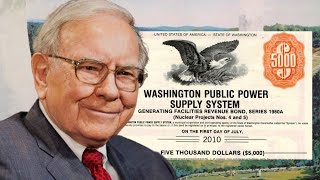
워런 버핏은 과거 채권을 고평가로 봤지만 실제로는 1983~1992년 WPPSS 채권을 대량 매수해 세후 약 17% 수익을 올린 사례를 소개한다. 버핏의 1988년 주주서한 기준 투자 분류(장기 주식, 중기·장기 채권, 단기 현금성, 단기 차익거래)를 설명하고, 최근에는 저금리 환경에서 채권을 순매도해 왔다고 짚는다. 2015년 CNBC 인터뷰에서 버핏은 미국 20~30년물 국채를 공매도할 수 있다면 하겠다고 했고, 당시 10년물 국채 수익률은 약 2%로 주식으로 치면 PER 50배 수준이라 성장성이 없어 매우 고평가라고 평가했다. WPPSS 채권은 디폴트 위험과 상승 여력 제한이 있지만, 가격이 낮아 세후 수익률이 16%대였고 버핏은 이를 기업 인수에 준하는 관점으로 분석했다. 이 사례의 교훈은 채권도 기업 가치 관점으로 접근하고, 가격과 수익률이 매력적일 때만 투자하라는 것이다. 발언에 특정 자산(삼성전자, 비트코인, 금리 방향 등)에 대한 1~3개월 가격 방향 예측은 없고, 장기 채권 고평가 견해만 제시된다.
다듬은 글
Economist Paul Samuelson famously said when the facts change I change my mind what do you do sir and legendary investor Warren Buffett is certainly no stranger to changing his mind he's of course best known for long-term Investments and great companies with strong competitive advantages companies like apple Coca-Cola American Express and more but on a recent video I covered some of Warren Buffett's ventures in two different styles of investing such as Arbitrage Buffett is open to allocating his cash to all types of intelligent Investments investment opportunities that have a high probability of an adequate return and a low probability of a permanent loss of capital and an investment category that buffered over time has occasionally viewed as an intelligent one and an area where the facts have certainly changed a lot in the past 40 years is in the area of bond investing in Buffett's 1988 letter to Berkshire hathway shareholders he explained that his Investments generally Fallen to one of five categories one long-term common stock Investments two medium-term fixed income securities three long-term fixed income securities four short-term cash equivalents and five short-term Arbitrage in this video I'd like to cover some of Warren Buffett's occasional Ventures into the world of fixed income or Bond Investments so if you enjoyed this video and haven't subscribed to the investing with Tom Channel just yet please be sure to do so now in more recent times Warren Buffett has been very negative on the prospects of returns from bonds and for the fixed income invest uh even going so far as to say that if he had a low risk way of shorting bonds and substantial size that would move the needle for Berkshire he would go ahead and do that and this is what he said in an interview with CNBC back in 2015.
if I could if I had an easy way and a non-risk way of shorting a whole lot of 20 or 30-year bonds I would do it but that's not by game and it's very it can't be done to the kind of quantity that would make sense for us uh but I think that I think bonds are very overvalued I'll put it that way the central bank has the capacity to keep them in that situation almost indefinitely so we'll see what happens on that now at the time of that interview U.S 10-year treasury bills which are a good kind of Benchmark for bond yields in the US we're yielding about two percent and if you put them in sort of a business or stock kind of context to do some analysis on that as a potential investment it's kind of like paying 50 times earnings for a stock if you pay 50 times earnings you're getting a two percent yield which is exactly what you were getting on 10-year treasuries at that time now of course all things being equal with stocks the lower the price you can pay the better the return you're typically going to get so if you're paying 50 times earnings which is a very high multiple of kind of current business performance you would expect that underlying business to grow a lot in order to justify paying a 50 times multiple on their current earnings but in the case of a 10-year bond that two percent coupon is fixed for 10 years so you're paying effectively 50 times earnings for a quote sort of business that sure is very low risk those payments are very likely to turn up given that it's the US government paying them but they have absolutely zero Prospect for growth and for that reason Warren Buffett viewed them as very very overvalued now Buffett through Berkshire never actually ended up shorting bonds as far as I know but he did do something kind of analogous to that which was to sell a lot of long-term bonds and you can see here in Berkshire Hathaway's latest annual report uh that at the end of 2021 they had over 39 billion dollars in borrowings a large portion of which was issued in countries that have unbelievably low interest rates take some of the Japanese Yen denominated bonds that Berkshire sold they had a weighted average interest rate of only 0.6 and some of those bonds aren't due to have their principal repaid until as far out as 2060.
but as the facts change Buffett changed his mind and at a time now where interest rates are starting to go up fairly materially for the first time in a very long time I thought it would be interesting to look back at a time where Buffett was on the other side of these types of Trades and was actually buying bonds for Berkshire Hathaway and generating as he tends to do very very good long-term returns now more specifically between 1983 and 1992 Warren Buffett was very active in accumulating a range of different fixed income Investments some of these were corporate bonds some of them were convertible preferred shares and at the end of 1992 berkshire's top seven fixed income Investments were worth a market value of about 1.95 billion dollars which represented about 22 percent of berkshire's total net worth perhaps the most well-documented Bond investment that Buffett made through that time began in 1983 with the purchase of the so-called Pro projects one two and three of Washington Public Power Supply system or as a Buffett later term them wppss now the first mention of these particular bonds came in Buffett's 1984 letter to Berkshire shareholders he said from October 1983 through June 1984 berkshire's Insurance subsidiaries continuously purchased large quantities of bonds of projects one two and three of wppss this is the same entity that on July 1st 1983 defaulted on 2.2 billion of bonds issued to finance partial construction of the now abandoned projects four and five while there are material differences in the obligers promises and properties underline the two categories of bonds the problems of project four and five have cast a major Cloud over projects one two and three and might possibly cause serious problems for the latter issues in addition there have been a multitude of problems related directly to Pro projects one two and three that could weaken or destroy an otherwise strong credit position arising from guarantees by Bonneville power Administration despite these important negatives Charlie and I judged the risks at the time we purchased the bonds and at the prices Berkshire paid much lower than prison prices to be considerably more than compensated for by the prospects for profit and Buffett goes on in detail to explain how he and Charlie manga think about uh kind of weighing up Bond Investments against stocks and other investment Alternatives that they have he says as you know we buy marketable Securities for our insurance companies based upon the criteria we would apply and the purchase of an entire business this business valuation approach is not widespread among professional money managers and has scorned by many academics nevertheless it has served its followers well to which the academics say Well it may be all right in practice but it'll never work in theory simply put we feel that if we can buy small pieces of businesses with satisfactory underlining economics at a fraction of the per share value of the business something good is likely to happen to us particularly if we own a group of such Securities Buffett then went on to say that he basically applies this exact same framework to bond investors we extend this business valuation approach even to bond purchases such as wppss we compare the 139 million dollar cost of our year-end investment in wppss to a similar 139 million dollar investment in an operating business in the case of wppss the quote business contractually earns 22.7 million dollars after tax via the interest paid on the bonds and those earnings are available to us currently in cash we are unable to buy operating businesses with economics close to these only a relatively few businesses earn the 16.3 percent after tax on unleveraged Capital that our wppss investment does and those businesses when available for purchase sell at large premiums to their that capital and the average negotiated business transaction unleveraged corporate earnings of 22.7 million dollars after tax equivalent to about 45 million pre-tax might command a price of 250 to 300 million or sometimes more for a business we understand well and strongly like we will gladly pay that much but it is double the price we paid to realize the same earnings from wppss bonds so here we really have the complete opposite situation to what Buffett was talking about in that 2015 interview where our treasuries were basically yielding nothing he's instead buying bonds that have north of a 16 after tax yield which would be the equivalent of buying a stable business for about a PE of six or so and just like often happens in stock market Investments that opportunity for buffered and Munger emerged because of largely unjustified fear in the market Buffett however does go on to lay out some important other differences to consider between stock and bond Investments he says however in the case of wppss there is what we view to be a very slight risk that the business could be worth nothing within a year or two there also is the risk that interest payments might be interrupted for a considerable period of time furthermore the most that the quote business could be worth there's about the 205 million dollar face value of the bonds that we own an amount only 48 higher than the price we paid the sealing on upside potential is an important minus it should be realized however that the great majority of operating businesses have a limited upside potential also and less more capital is continually invested in them that is so because most businesses are unable to significantly improve the average Returns on Equity even under inflationary conditions though these were once thought to automatically raise returns and this treaty in a Bond as a business uh sort of analytical framework did clearly offer Buffett and manga quite a significant advantage in analyzing the kind of fixed income Investments Buffett explains that by saying our approach to bond investment treating it as an unusual sort of quote business with special advantages and disadvantages May strike you as a bit quirky however we believe that many staggering Errors By investors could have been avoided if they had viewed Bond investment with the businessman's perspective for example in 1946 20-year AAA tax-exempt bonds traded it slightly below a one percent yield in effect the buyer of those bonds at that time bought a quote business that earned about one percent on quote Book value and it moreover would never earn a dime more than one percent on book and paid a hundred cents on the dollar for that abominable business if an investor had been business-minded enough to think in those terms and that was the precise reality of the bargain Struck it would have laughed at the proposition and walked away for at the same time businesses with excellent future prospects could have been bought at or close to book value while earning 10 12 over 15 percent after taxon book probably no business in America changed hands in 1946 at Book value that the business believed lacked the ability to earn more than one percent on books so as he often does Warren Buffett has a phenomenal kind of clarity in explaining how the everyday investor should think about buying bonds and uh to me it makes a whole lot of sense to think about bonds exactly the same way as you would think about stocks you're really just trying to allocate your capital in the best way you possibly can in order to earn a good return without taking you know absurd levels of risk so um how exactly did this particular Bond investment play out for Warren Buffett well it was about a 10-year long investment in the end and this is kind of the timeline of how things played out this is in 1985 about two years after the initial purchase at year end our insurance subsidiaries had about 400 million dollars in tax exempt bonds of which 194 million at amortized cost were issues of wppss our unrealized gain on these bonds at year end was 62 million dollars perhaps one-third arising from the outward movement of bonds generally and the remainder from a more positive investor view towards wppss one two and threes annual tax-exempt income from our wppss issues is about 30 million the next year in 1986 he said at year end we owned wppss issues having an amortized cost of 218 million and a market value of 310 million paying us 31.7 million dollars in annual tax exempt income in 1987 we added to our wppss position during 1987 at year end we had Holdings with an amortized cost of 240 million and a market value of 316 million paying us tax-exempt income of 34 million dollars annually in 1988 he said we explained the reasons for our wpp SES purchases in the 1983 and annual report and a pleased to tell you that this commitment has worked out about as expected at the time of purchase most of our bonds were yielding around 17 after taxes and carried no ratings which had been suspended recently the bonds were rated double A minus by s p they now sell at levels only slightly above those enjoyed by top grade credits the next year in 1989 just after mentioning that they had sold off some of their lower yield in fixed income Investments and bonds he said we have kept all our high coupon wpp is s issues some have been called for redemption in 1991 and 1992 and we expect the rest to be called in the early to mid 1990s and finally let's fast forward to 1992 and nine years after the first investment this is the final mention of these bonds that I can find in any of Buffett's letters and this is what he had to say during 1992 we added to our Holdings and ACF debentures had some of our wpps air spawns called and sold our RJR Nabisco position over the years we've done well with fixed income Investments having realized from them both large capital gains and exceptional current income Chrysler Financial Texaco Time Warner wppss and RJ anabisco were particularly good Investments for us meanwhile our fixed income losses have been negligible we've had Thrills so far but no spells so thrilled so far but no spills is a pretty characteristic understatement if above it he essentially held most of those wpp SS bonds for about nine or ten years and he earned 17 after tax returns which for most people investing in the stock market that would be like a home run exceptionally good decade I think most people would take that every day of the week so to earn that from a fixed income bond investment is a pretty unbelievable result so I think there's a couple of main lessons here from Buffett that the everyday investor can take away firstly most of the time Warren Buffett does have an overwhelming preference for buying businesses that's generally where he can get the best returns but occasionally you know other forms of intelligent investment do arise like in this case these very kind of mispriced and misunderstood corporate bombs the second thing is that by taking a business-minded approach to analyzing an investment the investor can get a really good understanding of kind of where they sit and whether they should be buying or potentially even selling Bonds in the case of the wppss example you know that looked much more attractive to Buffett given its price and yield and so on uh compared to what he could buy a private business for he would have to pay much more for a private business to get the same sort of after tax income but in more recent times as conditions have changed and as interest rates have been lower Buffett has turned around kind of done the exact opposite and he's been a net seller of bonds to raise cheap cash for berkshire's other Investments so thank you very much for watching the video if you did enjoy it please be sure to subscribe to the channel but that's it for me for this one and I'll see you in the next video cheers




댓글 0