
원문 보기
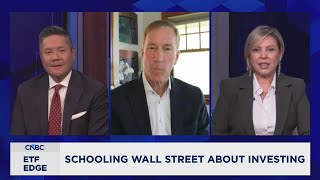
All right, welcome back. This week's jobs report could be pivotal in understanding what the Fed's next move might be, especially with concerns over a slowing economy intensifying lately. Let's bring in Yardeni Research President Ed Yardeni for more on what he's watching. Welcome back. It's good to see you.
Thank you, Scott. Get to the Fed in a second, but just your view right now of this market which has rallied back pretty hard. Now what? Well, I think the market's been choppy since the beginning of the year, mostly choppy to the downside and now maybe we're getting uh well, in the past week or so we've had a lot of chop to the upside.
I think it's going to remain choppy. I think the trade issue is still going to hang over the market through early July. Certainly the issue with regards to to China and what that implies about price inflation in the United States and empty shelves in the in stores. Uh so I think at this point it's that choppy is probably the way to describe it, but I think the market may actually be doing what it's supposed to be doing and and that is looking out uh beyond the next week or or month.
I think it's actually starting to think about 2026 and anticipating that a lot of this the crazy craziness will be behind us. I mean, you really think any part of this market activity that we've witnessed in the move back up from the lows has to do with that? I just feel like it was oversold, we're coming back, we're not sure what's going on and we can't even look, you know, five yards ahead of us.
I have a hard time believing we're looking 10 months. That's a good That's a good question. Uh look, I think that historically corrections tend to occur when investors worry about recession that doesn't happen and bear markets occur when the recession actually happens. I think that we've seen a correction.
I think we made the low on April 8th, the day before the postponement of liberation day for 90 days. I think the market at that point started to uh anticipate that maybe there wouldn't be a recession. There might be a slowdown in the second half of the year, but to the extent that this turns out to be a correction, which is what I think it it's in turning out to be, then I think the market's confirming my view that we're going to get a soft patch in the second half of the year and an improvement in 2026.
So, look, I think the market does look look forward. It does look ahead. People look at valuation multiples and they've come down and ask themselves, well, now that things are a lot cheaper, does this make sense relative to my outlook for the next couple of years? Maybe we're just looking ahead and anticipating rate cuts.
Maybe that's why bond yields have finally started going lower in anticipation of that while the stock market's just going to see what the data is, see what the earnings are, and then listen to Powell and company. Yeah, well, there's certainly a a debate between Powell and company and some of the dissidents or dissenters that seem to be coming coming to the fore.
Governor Christopher Waller has indicated that he's ready to lower interest rates sooner rather than later, whereas Powell and company have expressed the view that they're in no rush to lower interest rates at all. And I think they still have an inflation issue. I mean, we just had the Dallas Fed data come out today.
We now have five of the regional business surveys and they show a very big decline. We can in the activities index, but on the other hand, the price index is really picking up. So, it's a stagflationary environment, and I think the Fed has to be very concerned about uh fueling inflation. So, I don't think they're going to be in a rush to lower rates, and that may again add to the choppiness.
The market's had a history over the past few years, Scott, as you know, of anticipating rate cuts that don't happen. And it sounds to me like you don't think they should cut rates. I don't think they should cut rates cuz I think they've got an inflation problem and uh that inflation problem is going to become increasingly visible in coming months.
I mean, the PCE D inflation number that'll come out on Wednesday looks like it's going to be great. It's going to be like zero, but I think we all have to anticipate that given some of the other pricing indicators, particularly for the regional business surveys and the national PMIs, purchasing managers indexes, all those prices paid prices um received indexes are showing uh upward momentum.




댓글 0