저자: 미상 · 외국인
요약 보기
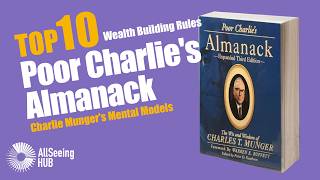
이 영상은 찰리 멍거의 『Poor Charlie's Almanack』를 바탕으로 한 부자 되기 10가지 원칙을 소개하며, 특정 종목이나 자산의 가격 방향에 대한 예측은 포함하지 않는다. 첫째, 여러 분야의 지식을 엮은 다학제적 사고 틀(멘탈 모델의 격자 구조)을 쌓아야 한다. 한 분야만 고집하면 맹점이 생긴다고 설명한다. 둘째, 역발상(인버전) 사고를 하라. 부자가 되는 방법보다 실패와 가난을 부르는 행동을 먼저 찾아 피하라는 원칙이다. 셋째, 극도의 정직성과 청렴함을 지켜라. 도덕성은 장기적으로 가장 효과적인 사업 전략이며 신뢰와 좋은 파트너를 끌어들인다고 한다. 넷째, 능력의 범위(역량 범위) 안에서만 투자하라. 투자 위험은 정보 부족보다 근거 없는 자신감에서 온다는 주장이다. 다섯째, 인내와 규율을 갖춰라. 큰돈은 사고파는 과정이 아니라 기다림에서 나오며, 안전마진이 큰 기회가 왔을 때만 과감히 행동하라고 강조한다. 여섯째, 경제적 해자를 가진 뛰어난 사업 모델을 찾아라. 공정한 가격의 훌륭한 기업이 훌륭한 가격의 평범한 기업보다 낫다는 멍거의 관점을 소개한다. 일곱째, 학제 간 지혜를 적용하라. 금융의 복리, 물리학의 임계질량, 생물학의 진화, 심리학의 인센티브 구조를 결합해 시장 변화를 예측하라고 제안한다. 여덟째, 의사결정 체크리스트로 인간의 실수를 막아라. 중대한 투자 전에 위험, 회계상 경고 신호, 심리적 편향을 점검하라고 권한다. 아홉째, 인간의 판단 오류 심리를 공부하고 극복하라. 과신, 사회적 증거, 손실 회피, 인센티브에 의한 편향 등을 경계하라는 내용이다. 열째, 평생 학습과 자기 개선을 지속하라. 호기심과 겸손, 그리고 더 나은 증거 앞에서 자신의 견해를 버릴 용기가 필요하다고 마무리한다. 영상은 결국 합리적 사고, 지적 명료함, 원칙 있는 삶이 진정한 번영의 바탕이라는 메시지로 끝난다.
다듬은 글
In the vast realm of financial literature and personal development, few works command as much profound respect as Poor Charlie's Almanack. This book is not merely a collection of stock-picking tips or short-term trading formulas. It is a master class in human wisdom, decision-making, and long-term wealth creation distilled from the extraordinary life of Charlie Munger, Warren Buffett's trusted partner and the intellectual co-architect of Berkshire Hathaway.
Munger's core philosophy centers on breaking past cognitive limitations to build what he calls a lattice work of mental models. By drawing principles from multiple disciplines, you can navigate an unpredictable world with clarity, rationality, and exceptional foresight. Today, we will explore the top 10 wealth-building rules from Poor Charlie's Almanack, designed to help you shatter your mental barriers, avoid costly mistakes, and achieve sustainable financial freedom.
First, construct a broad lattice work of mental models. Munger famously observed that to a man with only a hammer, every problem looks like a nail. Relying on a single discipline, whether it is finance, accounting, or technical analysis, creates dangerous blind spots. Instead, you must build a multi-disciplinary toolkit by learning the foundational concepts of psychology, physics, history, biology, and economics.
When you examine a business opportunity or a complex situation through multiple lenses simultaneously, you see reality as it truly is, allowing you to make vastly superior decisions. Second, master the art of inversion. Think backwards. When solving difficult problems or planning your financial future, inversion thinking provides extraordinary clarity.
Munger frequently the mathematician Carl Jacobi, who advised, "Invert. Always invert." Rather than asking only how to become rich or successful, first ask what behaviors guarantee failure, poverty, and misery, and then relentlessly avoid them. By systematically eliminating fatal mistakes, bad habits, and foolish risks, you naturally clear the path toward long-term wealth and accomplishment.
Third, uphold extreme honesty and uncompromised integrity. For Munger, moral integrity is not just an ethical duty. It is the ultimate long-term business strategy. Deception or short-cutting may yield quick, temporary profits, but it destroys reputation and trust over time. Operating with total transparency and honesty eliminates hidden friction, reduces counterparty risk, and creates a virtuous cycle.
It gives you peace of mind and attracts high-caliber, trustworthy partners who are essential for long-term prosperity. Fourth, strictly operate within your circle of competence. The ultimate risk in investing is not lack of information, but unearned confidence. You must develop a ruthless self-awareness regarding the precise boundaries of your knowledge.
Focus your capital and effort exclusively on industries, businesses, and concepts you deeply understand. Operating within a small, well-defined circle of competence is far safer and more lucrative than speculating outside of it. Recognizing what you do not know is a prerequisite for protecting your wealth.
Fifth, cultivate extreme patience and iron discipline. Munger often remarked that big money is not made in the buying and selling, but in the waiting. Financial markets constantly tempt investors with noise, fad trends, and rapid fluctuations. True wealth accumulation requires the patience of a seasoned hunter, waiting quietly for rare, high-probability opportunities featuring a substantial margin of safety.
When such an opportunity presents itself, act decisively. Otherwise, remain completely still and disciplined. Sixth, seek out and hold extraordinary business models. When evaluating investments, prioritize businesses protected by durable competitive advantages, commonly known as economic moats. A truly great company possesses pricing power, high returns on capital, strong brand loyalty, and abundant free cash flow.
Munger famously convinced Buffett that buying a wonderful business at a fair price is far superior to buying a fair business at a wonderful price. Outstanding enterprises compound value automatically over time. Seventh, apply interdisciplinary worldly wisdom. Worldly wisdom requires integrating core concepts from diverse fields into your everyday thinking.
For instance, combine the concept of compounding interest from finance with critical mass from physics, evolutionary adaptation from biology, and incentive structures from psychology. By synthesizing these universal truths, you can anticipate industry shifts, understand market dynamics, and stay well ahead of the crowd in both business and life.
Eighth, use decision checklists to prevent human error. Even the most brilliant minds are vulnerable to fatigue, emotional stress, and oversight. Munger strongly advocated the use of formal objective checklists prior to making major financial commitments. Before executing any investment or business deal, review a predetermined list of fundamental risks, accounting red flags, and psychological biases.
A checklist forces you to slow down, verify facts, and eliminate preventable errors. Ninth, study and overcome the psychology of human misjudgment. Human psychology is filled with evolutionary biases that distort rational thought. Munger categorized dozens of misjudgment tendencies, including over-optimism, social proof, loss aversion, and incentive-caused bias.
By studying these cognitive traps, you can recognize when emotional urges or flawed incentives are clouding your judgment. Overcoming these natural biases gives you a massive competitive advantage over an irrational market. 10th, commit to lifelong learning and constant self-iteration. Charlie Munger was a quintessential learning machine who spent his entire life reading voraciously and refining his worldview.
In a rapidly evolving global economy, stagnant knowledge quickly becomes obsolete. Curiosity, humility, and a willingness to destroy your own favored ideas when better evidence appears are essential. By dedicating time every single day to learning and self-reflection, you compound your intellect alongside your financial capital.
Looking back at the legacy of Charlie Munger, his greatest gift to the world was not just his remarkable wealth, but his commitment to rational thought, intellectual clarity, and principled living. True prosperity is never an accident. It is the natural byproduct of a disciplined mind, continuous learning, and unwavering character.
By adopting these 10 rules, you can elevate your cognitive ability, shield your capital from catastrophic mistakes, and build a lasting foundation for lifelong success.
Comments 0