
원문 보기
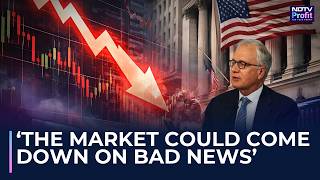
in Wailuku bernard especially or fashionable fork sent new fashion wear for men hello and welcome to a special programming on Bloomberg quint the global sell-off continues with global equities witnessing their sharpest correction in years let's take a look at how the markets are faring at this point of time the nifty is down almost close to 3% at the lowest point of the day the Sensex is closing in again on close to the 33500 it's below 13400 mark and the nifty bank is closing in on the 25 thousand mark so there seems to be a partial recovery that's come in but over there nevertheless you know the markets have been rather weak what's leading the fall on the nifty some of the counters which have cracks significantly Tata Motors is down 6% pushed a very weak set of numbers Gale and Axis Bank are down and trade indiabulls Housing Finance which was one of the worst performers over the past few days is down almost four percent so across the board all the stocks are falling the the best of the nifty stock is BPCL but that is also down 101 percent so that's the trend that we are getting in as far as the market is concerned as for the global trends that is the sell-off but there are some stocks which have managed to survive the sell-off over the past five days yeth ins here with that list because what you've seen is that for the past five days the Nifty has been down but the selling has intensified yet in in the past three days but what's happened in the past five days if you can tell us with respect to you know certain groups like the nifty nifty Bank what's going on well if you look at the Nifty index that clearly you can see a sea of red in the last five days barring you know a tech minor abortion Ayesha motors which are up in you know in terms of the marginal gain look at the losers list you know we have indiabulls Housing Finance Tata Steel who NGC dr.
Reddy's and ICICI Bank all of these stocks tumbling over 10% in trade in the last five trading sessions of course so we also have the financial services and that is the bulk part here over 9% cut coming in as far as VI HDFC Axis Bank you are mentioning the fact that today also is one of the top losers ICICI Bank so all of these stocks have been battered down of course we also have Asian Paints minor and mind BPCL which as which have you know outperform but clearly our trading with losses especially over the you know last five-day period so clearly this is the scenario as far as the Nifty is concerned and look at this nifty Bank index the kind of battering that he had seen almost thousand points today down today as well seven and a half percent cut is what we are seeing in a nifty Bank in the last five trading sessions however if you look at it the the fall is coming in really from the PSU banking space so we have Canada Bank P and B is bi all of them down anywhere between 11 to 10 percent also in this in Bank quota yes Bank HDFC Bank all of these banks have seen cuts of nearly you know five to seven percent so when it comes to the banking space also you know the situation is much weaker then the you know large gap frontline stocks so banking has seen some weakness you know which is much higher and much severe in terms of the correction that we have seen in other large cap stocks you know I was seeing this mail from you in which you said that you know bike of the shocks in in the 52 week low are from the BFF IVFs i spaced right can you highlight them well if you look at the likes of idfc limited and you know the list is quite long so clearly all of these stocks are moving down so you know it's s aria infra max financial audit Sibylla capital IDF see these are the private you know be FSA participants wherein we have seen the share price touch of fresh 52 week low in today today when it comes to the financial services space in the psu segment we have PFC LIC housing which have touched the finish 52 week low and surprisingly after the bank recapitalization planned we have seen saps search coming in as far as most of the PSU banks are concerned but look at the scenario in in a couple of months we have a long list of PSU banks coming in so dana bank you co Bank Syndicate Bank Central Bank of India Indian Overseas Bank Corporation Bank you know and the list is long Union Bank Punjab Sindh Bank Oriental Bank of Commerce all of these talks are trading at a fresh 52 week low despite the fact that we had some reforms coming in on the banking side so clearly you know we can understand the kind of weakness that you're looking at as far as the entire PSU banking lot is concerned okay many thanks for that nothing but we have some global voices which is spoken jonathan ghana of morgan stanley believes that the recent market correction is not a one order to deafen amin on but a more long-lasting one here are the slice of the conversation he had with Bloomberg's David English earlier in the day I think there's a lot of loose talk around like a healthy correction I think you have to be very specific about which markets and you need to look at how valuations are just so we're actually just moving below our base case target for Japan today that's suggesting more quickly topics for Hong Kong yesterday we had the very strong southbound flows which actually cushioned the adjustment but it's selling off heavily now so again just starting to move below our base case target but I suspect we need to see a correction that is meaningful enough to establish something like five to ten percent upside to base particularly when you bear in mind the way that some of the quantitative strategies systematic strategies are starting to unwind and just how extreme the investor euphoria was going into all of this so I doubt very much that this is just going to be a one or two day phenomenon I suspect it's going to be more long-lasting how deep will this correction be and their views out there that it is just a correction this sell-off will be short-lived are you of the view I mean you said that perhaps not the next few days but how deep will it be I touched on the idea that Japan is moving faster through this correction than elsewhere but but the deeper problem for Asia is where a tech-heavy region and we downgraded the samisen tech hardware space last November and last night just before the US Open and our US strategy team did something similar we downgraded tech overall including the internet names so that's very important for us here in Asia and it's really there with evaluations have been at their most extreme and where we're starting to see earnings revisions moving south and again that speaks the idea this is going to be quite a long lasting correction so I think where's defensive actually you were covering the markets in Singapore I think ASEAN Singapore and Thailand that's not over owned it's not tech heavy so actually M speaks more to the upstream energy sectors I think those markets can be somewhat defensive in so often we think North Asia is where the price action will be most severe Jonathan I want to touch on volatility the VIX for a very long time people were saying where is VIX where's the volatility now we see the volatility spike the most in a very long time what do you make of that and how do you play this any of you just looked at VIX as one factor model it's obviously moved to like the high 30s then you'd say you know you saw wow that's extreme so you don't lean into it however given everything else we talked about so far on that's interview I really wouldn't just use that as a single factor and what we don't know about is the way in which these kind of volatility suppression strategies these quantitative and systematic strategies now get into into difficulties and there are some signs around that so yeah VIX is is high but I wouldn't use that just as a simple reason to say like let's buy the dip this is not a buy the dip situation it's a far deeper problem around valuations and earnings outlook okay it's a technical sell-off says mama the Papa the head of equity strategy at Citigroup Asia speaking to Bloomberg TV he says that the low volatility had also prompted investors to take bigger positions which may have triggered the sell-off he does not it does expect the sell-off to continue for some time more let's listen in we did some analysis which is called the quantum tunnel and the lower end of the tunnel was 2,700 on the S&P man that broke yesterday he saw a very sharp rise in the VIX this is actually quite a technical sell-off what we've seen is a rise in volatility that rise in volatility as it's sort of in a way that we've never really seen happening before it's because there's been a lot of people over the last five years sitting there selling volatility for income and that resets higher basically what it means is that positions have to be taken down so we think that overall there's probably another five percent lower in this market we're watching very closely now for the reaction of the central bank your previous speaker is talking about China that's going to be very important in Hong Kong today to see what southbound flow does but we think five percent lower the markets will be looking for the central banks to to react and come out with some sort of statement do any of the data matter today I mean we have the R b/a later on or is today one of those days where you essentially take everything you throw it out the window kitchen sink and the baby and just just let this one let this one settle for the moment yeah I think what's important to remember is that certainly the fundamentals remain fairly strong so it's a lot of things matter there on a day like this on a day like today it's more about positioning but saying that you know the just coming off the trading floor right now the longer only funds are very calm in fact hour by hour pad was actually better to sell in Japan in the morning is actually turn neutral to slightly better buyer but I think that the longer Li funds are will probably be watching from the sidelines initially as they decide what to do remember this is all happened within the space of about two or three days ago I mean even when I look at the commentary I get my inbox people were talking about another ten fifteen percent higher even few weeks ago and now you know we're looking at this mean that where we're going the thing is that earnings revisions actually followed the market up as well so it'll be interesting to see what happens with those earnings revisions but really what we are looking for is some indication from the the central bank and I think if mr.
Powell wants to speak then 5% lower I think he should get a call from the White House or something what a great first day on the job for for J power but it also makes me scratch my head when people say the fundamentals have changed because I've gotta wonder what's changed in the last two days when the bulk of the sell-off has happened Wednesday when we haven't had any indicators least of which ones that have surprised to the downside but I want to throw up this quick chart this is G hashtag BT v6 one one and it just shows kind of how unusual how aggressive the sell-off was for the SP right we've been saying this was the worst route than we've seen at various other points where some we saw after China devalued its currency worst and after brags at worse than out to the US election in terms of not seeing these two percent percentage plus moves to the downside very often at all in fact we didn't see that pretty much all last year we saw that that's pretty much close to where we had the election but what accounts for the violence of the movement is it just the fact that we've come from such a peachy level I think there is partly that I think I was on your show yesterday talking about the idea that markets don't go parabolic forever and when the day of reckoning comes then you know things are a little bit more interesting let's say I think what's also interesting is that this comes this is got this move is going to be put in its appropriate metric which is that you've got to measure it relative to how many standard deviations it is away from from from zero really and a low-volatility environment people's positions get larger really as that volatility Rises what it necessitates is for that position to be unwound and if you want to have a look at really how concentrated those positions actually were you only have to look at something like the XIV inverse VIX ETF to really see what what's been going on in terms of that of that volatility selling so I think at the moment it's going to be very technically related I mean we're seeing really positions being tamed taken down we've we've seen very high short positions in Treasury bonds we think some of those will get unwound as well but generally just a bit more circumspection into into the market and we do think 5% lower from where we are right now if we can get down there we'll present potentially the first big buying opportunity of of 2018 we're actually looking at a three sigma move today and you know when I look at something like this for example and that that leg that you see lower MSE I use your Pacific it right away just in case if you look at the extreme moves that you're seeing on the long end of the curve see over in Europe to your point escape velocity in the economy were not give therefore inflation which tells me the bond markets might have just overshot yes over in Europe where's the mispricing right now in fixed income yes so my view has been and I don't think this is a very popular view my view has been that the bond markets are actually very cheap and I think we highlighted that last week is well saying that you know certainly at 3% bonds would look would look very interesting the question at the moment really is and this is the really big in question for investors is do they believe that if the central bank liquidity was withdrawn that the global economy would continue to rally what we are seeing is actually a 97% correlation between global equity markets and our measure of central bank liquidity which you can also track on Bloomberg under the ticker CGC tgb al now if there really was this escape velocity then that correlation would be starting to break down and so far we've not seen any evidence of that so if that is the case then what that would indicate is that going forward some of these macro numbers may actually start rolling over and we're going to be more help from the central bankers yet again okay and joining us on the show now to give a broader view on the market sell-off is Jim Rogers chief executive officer at fraudulent good morning mr.
Rogers first of all what reasons you attribute to this global fall that has happened around the world have been going up a lot in the last few years in the US for instance there has not been up a big correction for a long long time it's a very unusual what happened in the American stock market it is overdue for a route and now we're having one whenever there's an overdue correction people always find reasons I can give you some reasons the main reason is that he'd gone up too long too far too fast but interest rates are going higher their problem is in Washington with the government with the politicians and many reasons but essentially it's because they went up so long without a correction and now we're having a normal correction so what does it mean for emerging markets like India this correction that has happened if you talk about India first of all the yawl markets will be effective as you know China went up yesterday despite all this but nearly all markets will be affected in the same way especially India because mr.
moody is now coming up with the capital gains tax and whenever you tack something that you presents a problem there's less demand so you now have the problem of - having gone up a long time for a long way and now you have a capital gains tax so India will probably be worse affected than other markets mr.
Odgers do you expect further fall in India because of the long-term capital gains tax that is coming yes to repeat whenever you tax something whether it's salt or cars or anything alcohol whatever it is there's less demand people don't like paying taxes and especially in a country where they haven't had to pay a tax before it's going to cause uncertainty if nothing else and less demand so now do you view commodities as a relatively safe or heaven well agriculture is down a lot over the past several years so I would consider agriculture less vulnerable and perhaps even a place to make money on the upside because things have been down for so long okay so that's the view that's coming in from mr.
Jim Rogers but finally before you go other than agricultural commodities any other commodities that you would place your bet on well agriculture I mean I don't know what was unclear agriculture sugar white sugar everybody hates sugar at the moment or you can also look at US dollars as a safe haven the US dollar went down a lot last year and in times of turmoil people often turn to the US dollar as a safe haven it's not it's not but people think it's a safe haven okay okay taking cue from that finally what's your view on global markets given that the fall that we've seen what do you expect now what I would expect to happen is for the markets to go down out of every weary March into March at least when the Federal Reserve were ways we'll raise taxes will raise interest rates I mean once that happens the markets will probably have a nice rally then we'll have to see where it goes from there but you know ultimately the US markets been going up since 2009 so the US market is very very vulnerable to a bear market we usually have bear markets every four to seven or eight years so sure by 2019 if not before we're gonna have a bear market again okay thank you mr.
Rogers for speaking to Bloomberg winter with that it's a wrap on this special edition on Bloomberg Quinn we continue with the coverage with transporting on the other side


댓글 0