
원문 보기
Yes, that's almost a thousand dollars higher than where we are now. If this happens in a year, it will be a 25% increase. So, it's still a pretty big step. But, you know, last time we went up to 5,000, we went up there really fast. So, next time we can go up even faster. This is simply a moment where traders need to put two and two together to realize that what is happening in the bond market right now is the best thing that could have happened to gold.
If you have a brokerage account and you, you know, want to just buy ETFs, you can buy them and still own gold. I also like miners. I have more of my own money, much more of my own money, actually, in mining company stocks than in physical bullion. Uh, because I'm just so bullish on gold that I want to own the gold that's still underground because I think it's a really good deal, and I want to own these operating businesses that I think are going to become much more valuable and much more valuable now.
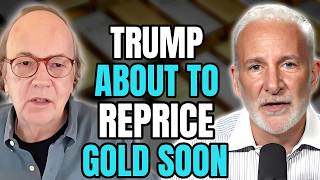
They're making a lot of money, and they're going to make even more money, I think, as gold prices go up. Peter Schiff, an economist and longtime gold market commentator, explains why he believes gold's next big move could happen sooner than many investors expect. With gold already showing historic gains, he argues that another move to $5,000 could potentially happen much sooner as investors begin to associate weakness and changes in the bond market with rising demand for the precious metal.
The discussion also highlights an important distinction between owning physical gold, ETFs, and gold mining companies. Mining stocks offer access not only to rising gold prices, but also to the underlying businesses that produce the metal. In my opinion, the most interesting part of this thesis is the connection between gold and bonds.
If confidence in government debt weakens, investors may increasingly seek alternative means of preserving value. This does not guarantee a straight-line increase in gold prices, and mining stocks carry additional business and market risks, but the combination of monetary uncertainty and high gold prices could create an attractive environment for the sector.
If this information . Turn on the bell so you don't miss any updates and comment below to share your thoughts on the matter. Thanks for tuning in . Now listen to the interview. But, you know, maybe there are still some investors who are selling. Maybe the money is coming from ETFs around the world. But probably a significant portion of this supply, the new supply that comes into the market, is being absorbed by central banks .
I know there have been a lot of sales over the past few years . There has been a net outflow from GLD for years. So, obviously, a lot of this gold was just going directly to foreign central banks, which was unfortunate because Americans were losing their gold and foreign central banks were getting it.
But I'm sure developing countries, consumers in China and India are still buying, right? They don't sell their gold. They're not that stupid. But, you know, at some point the sellers' supply will run out. No one will want to sell their gold. I mean, you're going to want to sell your currency, your fiat currency.
And eventually, people will also want to sell their cryptocurrency. All Bitcoin owners will want to get rid of this. They will also want to buy gold and all these other digital tokens. At some point, people will want to do it too. So, you know, gold will be the last safe haven. Gold, gold and silver, I think.
Because it's such a small amount, even if, say, the dollar falls by 10 or 20%. You know, you expect your tech stocks to double or triple. So, n- no one cares. Currency risk is important in the bond market. It's a big deal there. Because, let's say, a foreigner bought Treasury bonds at 5.1/2%. A small movement in the dollar can wipe out an entire year's worth of interest.
Yes. So this is where it matters most. So once foreigners start worrying about the dollar exchange rate , it will further reduce demand for Treasury bonds. Nobody will want to buy. If you think the dollar will lose 10% and you are European, you will not buy Treasury bonds with a yield of 5%. You will lose.
They will lose half of your money. We had a 40-year bull market, and you know, we really rode that wave since 1981, mortgage rates were 18% at their peak in 1981, and they bottomed out at 2 5/8 in 2021. And this, you know, is related to Treasury bonds, the 10-year Treasury bond was at 16% in 1981 and 60 basis points in 2021 .
So, that's when the markets peaked and interest rates bottomed out . We are now in the 6th year of what I believe is a major, uh, bear market, a century-long bear market that will last at least twice as long as a bull market, so maybe 20 years, and we are already 6 years into it. But what we will see during this period is ever- increasing rates.
And they, you know, will probably grow faster than they fell. Mhm. So, you know, we could see mortgage rates at 9 % by the first quarter of next year. And, you know, the impact of this on affordability is going to be dramatic, because people can no longer afford to buy homes at current mortgage rates.
So the only thing that will allow you to buy a house is a sharp drop in prices, maybe 30-50% across the country, which will be as big, if not bigger, than the drop we had, uh, in 2007-2008, which led to the, uh, financial crisis. So, it's an even bigger bubble. The only thing keeping people in their homes right now is that they have fixed-rate mortgages, you know, at 3-4%, that they're tied to.
But once the equity runs out , if you're struggling to make mortgage payments, even if they're low, why bother? You are simply throwing money away when you have negative equity. Uh, so we're going to see, uh, a big problem. But, but also, people underestimate how important rising house prices and falling interest rates were to the economy because it was a driver of consumer spending.
Because if you own a home, you can continually refinance, extracting cash you could spend and lowering your monthly payments at the same time . No one else can do this. Refinancing is dead. Uh, the housing stock withdrawal is over. The global gold market may be approaching a major supply-demand turning point as central banks continue to absorb new physical supply while traditional sellers gradually become less willing to part with their assets.
The discussion explores why gold and silver could become increasingly important if investors lose confidence in fiat currencies, cryptocurrencies, and other financial assets. At the same time, rising interest rates and increasing currency risk could create serious challenges for the United States. The interview also contains a much broader warning for the economy.
The era of falling interest rates and steadily rising house prices may be coming to an end. After decades of low rates, a prolonged period of higher borrowing costs could impact housing affordability, reduce refinancing activity, weaken housing production and potentially expose vulnerabilities in an already expensive real estate market.
In my opinion, the most important connection here is between bonds, housing, and gold. If higher rates persist, investors may increasingly question traditional wealth-building strategies, while demand for scarce physical assets will increase. This does not guarantee a collapse or a straight-line rise in gold, but the change in interest rates deserves serious attention.
Let's move on to the interview. When you are going to sell your bonds if you cannot hold them to maturity, but if you eventually hold those bonds to maturity, you will still lose money because the inflation rate will exceed your coupon. You know, if you just kept your money in money markets, you would end up getting a lot more than 5 %.
But I want to get out of this situation completely . Uh, people should buy gold. You know, gold sold out. At one point today it fell by almost $100. Silver fell more than $20 because metals are still reacting, or traders are reacting to rising bond yields as if it were a bearish signal for gold and silver.
This is the most optimistic thing that can happen to gold and silver. Because this rise in bond yields shows that bond prices are falling. Bond investors are losing money. And if they want to stop losing money, they have to sell their bonds. What are they going to buy with the proceeds? Well, gold or silver.
You're looking for a safe haven, that's all. And why are bonds falling? Because, uh, investors are losing confidence in, uh, the governments that issue this debt. They worry that inflation will be too high and they will lose the value of their principal, uh, that interest rates aren't high enough to make up for the loss of purchasing power.
Well, that's why you buy gold. Yes. Gold is the only protection against Treasury bonds and, um, and, you know, government bonds and, uh, and, and, and, and, and , and, and, and, all these other sovereign debt instruments. If you want a safe asset but don't want to own government debt or other bonds, what would you own?
You will own gold . And of course, the other thing that's happening is that because rates are going up so much, and we already have so much debt, the budget deficit is getting bigger and bigger , because the additional interest that we have to pay is also having to be borrowed. So, right now we are spending 1.2-1.3 trillion a year on interest on the national debt.
Ahem. So, this is almost half of the actual deficit. I mean, the government claims that the budget deficit is 2 trillion. In fact, it exceeds 2.5 trillion if you keep an honest record. But about half of this is interest on the debt itself, which now accounts for a large part of the budget deficit. The bond market could see significant changes as rising Treasury yields expose the rising cost of government debt and the risks faced by traditional fixed-income investors.
The interview argues that holding bonds to maturity does not necessarily protect purchasing power when inflation remains higher than the bond's coupon payment. For investors concerned about real returns, the problem becomes even more serious as bond prices fall and interest payments consume an increasing share of government spending.
This creates an unusual situation for gold and silver. While rising yields are often interpreted as negative for precious metals , the argument here is that higher yields may actually reveal deeper weakness in sovereign debt. If investors lose confidence in government bonds as inflation and debt burdens erode real returns, capital may increasingly seek assets without government liabilities.
In my opinion, this is a key point worth looking at. Gold doesn't need a bond crash to do well, but persistent budget deficits, rising interest costs, and declining confidence in real purchasing power could enhance its long-term investment appeal. If you found this analysis valuable, please like the video, for more precious metals and macroeconomic analysis.




댓글 0