
저자: 미상 · 외국인
요약 보기
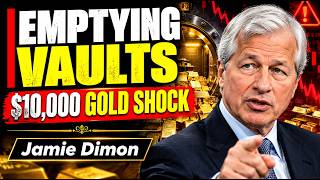
영상은 미국의 구조적 부채위기와 유동성 경색이 임박했다고 주장하며, 연준의 금리 인하는 위기의 신호이고 이후 달러 하락과 인플레이션으로 구매력이 크게 줄어든다고 경고한다. 실물 은(silver)이 산업 수요와 공급 부족, 페이퍼 시장 대비 실물 부족 때문에 저평가되어 있어 자산 이동이 일어날 것이라고 주장하며, 이를 근거로 실물 귀금속 보유를 권한다. 다만 제목·설명란에 출연자 정보가 없어 발언자는 미상이다.
다듬은 글
If you sit back and believe the headlines that we are in for a “ soft landing,” you are being prepared for the greatest financial carnage of our lifetimes. I'll be honest. Recession is a normal and healthy part of the economic cycle. Companies are getting rid of unnecessary inventory, unprofitable businesses are closing, debts are being restructured, and the system is being updated.
What is coming is not a recession. We are facing a structural systemic debt crisis combined with an irreversible liquidity freeze. Take a look at what's happening behind the scenes right now. While the media distracts the public with monthly employment reports and daily stock market gains, the foundation of the global monetary order is crumbling.
The numbers that no one wanted to talk about for decades: every time Wall Street sneezed, central banks printed trillions of dollars and cut interest rates to zero. They taught two entire generations of investors, businessmen, and ordinary families that insurance will always be there. The Central Bank Trap: 1971—Present.
They have created a culture where risk costs nothing. But here's the truth that no one wants to hear. This " insurance" has officially run out of resources. Global debt has exceeded $35 trillion in the United States alone, and over $315 trillion worldwide. For the first time in modern history, the cost of servicing this debt, just the interest payments, has exceeded our entire defense budget.
Think for a moment about what that means. When your interest payments exceed the cost of defending your borders, you are no longer running a functioning superpower. You run an overly leveraged hedge fund with an army attached to it. No one in Washington or on Wall Street is talking about the real danger.
Anatomy of a trap: When governments run deficits of two trillion dollars a year during a period of supposedly peaceful economic growth, what do you think will happen when the real shock hits? They only have two choices left, and both lead to absolute financial disaster for the average person. Choice A: allow the system to default.
Keep interest rates high, refuse to bail out the system, and allow the banks, commercial real estate, and municipal bond markets to suffer a deflationary crash like in 1929. Choice B: monetize everything. Print trillions of new dollars to buy up our own debt because foreign nations refuse to deal with our Treasury bonds.
In a moment, I'll explain why choice B is the only button they'll press, and why it will quietly evaporate 80% of your purchasing power over the next 5-10 years. Most people think that inflation is just a 5 or 10% increase in food prices. This is not inflation. This is just a symptom. Inflation is the deliberate, calculated devaluation of the results of your labor.
Every hour you work, every dollar you put into your retirement account, every savings account you thought was safe at your local bank—all of this is being deliberately devalued so that governments can “ dissolve” their unsustainable debts through inflation. History of the 1970s vs. Today: People like to compare our current situation to the stagflation of the seventies.
They say, "Well, Paul Volcker raised rates to 20%, tamed inflation, and in the 80s the economy boomed." Let me explain why this is a complete illusion today. In 1980, the US debt-to-GDP ratio was approximately 35%. When Volcker raised rates to 20%, the government could afford to pay interest because the debt load was manageable.
Today, the US debt- to-GDP ratio exceeds 120%. If interest rates were 8, 9, or 10% today, the federal government would have to spend half of all tax revenue just on interest payments. The entire system would come to a standstill within 90 days. They cannot raise rates high enough to stop inflation, but they cannot lower them without provoking a hyperinflationary currency crisis.
They are trapped. And when institutions fall into the trap, ordinary citizens pay for everything. Hidden red flags in the banking sector : At the largest financial institutions, we monitor liquidity flows every microsecond. We monitor counterparty risks, credit default swaps, and collateral turnover rates .
What we saw with the collapse of Silicon Valley Bank and Signature Bank was not an isolated incident. This was the first disturbing jolt. These banks failed not because they bought speculative junk. They went bankrupt because they bought US government bonds— supposedly the safest asset on the planet.
When yields rose , the market value of these bonds collapsed, creating hundreds of billions of dollars in unrealized losses throughout the domestic banking sector . These losses have not disappeared. They lie quietly on balance sheets, disguised by emergency lending programs and accounting tricks. I will be straightforward.
In the commercial real estate market alone, more than $1.5 trillion in debt will come due in the coming years. Office towers in major metropolitan areas that were valued at $100 million are selling for $30, $20, or even $15 million. Who owns these loans? Small and regional banks across the country. The very banks where your checking accounts, small business loans, and your family savings are located.
. An inevitable U-turn that will change everything. The public is waiting for rates to drop so that mortgages become cheaper and stocks rise. They don't understand: when a central bank is forced to aggressively cut rates in the face of inflation, it's not an act of mercy. This is an act of desperation.
This means that something at the very foundation of the financial system has broken down completely. What happens next is even worse, because when this reversal occurs , a global run on the dollar will begin. Capital, which previously lay quietly in paper promises, will begin to look for a real way out.
But by the time the evening news says the doors are closing, institutional money will have already left the premises. Liquidity freezes, the phantom dollar, and the hidden collateral crisis—let's talk about how money really works. Not what is taught in school textbooks, but how capital and liquidity move behind closed doors.
Most people believe that their money is safely stored in a bank's digital vault. You open your banking app, see your balance, and think those dollars belong to you. Here's the truth that no one wants to hear. These are not your dollars. At the moment you deposit cash, you become an unsecured creditor to the financial institution.
You have exchanged legal ownership of capital for a promissory note in an electronic register . Shadow system and derivatives: Beneath the surface of conventional banking lies the global shadow system—a network worth hundreds of trillions of dollars in repo transactions, interest rate swaps, currency derivatives, and cross-currency obligations.
The fuel for this machine is high-quality collateral , primarily US Treasury bonds. For 50 years, the world used US debt as impeccable collateral because the United States was the undisputed economic, military, and industrial hegemon. But over the past decade, this collateral has been repledged, loaned, and used as collateral 5, 10, and sometimes 20 times in different jurisdictions.
What happens when collateral loses 20, 30, or 40% of its purchasing power due to fiscal dominance? Margin call for the entire financial system. When an institution receives a margin call, it sells not what it wants, but what it can sell. It is liquidating profitable assets, removing liquidity from credit markets, and freezing lending to businesses and consumers.
This is how a financial collapse turns into economic paralysis in a matter of hours. The destruction of the working class, let me explain what this means for real people. Remember 2008. Millions of families lost their homes not because of their own recklessness, but because institutions packaged exorbitant debts into top-rated securities and sold them as risk-free investments.
What is happening today is infinitely more dangerous. In 2008, the private sector was overloaded with debt: subprime mortgages and investment banks. In 2008, the United States' public balance sheet was relatively clean, allowing the government to step in and take on bad debts. Today, the state balance sheet is the same bad debt.
Who will come to the aid of someone who prints money when he himself is drowning in his own obligations? There is no larger balance sheet to which losses could be transferred. The only entity left to absorb the losses is you, through direct taxation of capital, financial repression, and the deliberate devaluation of the dollar; In a moment, I'll explain why the traditional financial advice of holding a portfolio of 60% stocks and 40% bonds is financial suicide for the next decade .
Clamped in the grip of financial repression, governments faced with enormous debts always resort to the same historical method . Rome did this by reducing the silver content of its denarii. Weimar Germany did this in 1923. Great Britain did this after World War II. This is called financial repression .
Mechanisms of financial repression. First: keep interest rates below the real rate of inflation. Second: force domestic institutions— pension funds, banks , insurance companies— to hold public debt through strict regulation. Third: silently transfer purchasing power from depositors to the debtor state.
If inflation is 8% and your savings account or bonds yield 4%, you lose 4% of your purchasing power every year, like clockwork. You don't see the bill. You do not receive a tax notice. But in 10 years, almost half of your wealth is confiscated without a single vote in Congresir statements, see that the nominal balance has increased slightly, and rejoice, completely oblivious to the reality : their dollars buy half as many eggs, fuel, medical services, and real estate as they did a decade ago.
The collapse of global trade and the reality of de-dollarization while Americans are kept in the dark. Foreign central banks are awake at the wheel. For decades, foreign nations had a trade surplus with the United States, took those excess dollars, and put them back into the U.S. national debt. This was the foundation of the petrodollar system, established in 1974.
This system is quietly coming to an end. More than 40% of global oil transactions are now conducted in currencies other than the dollar. gold and tangible reserve assets at the fastest pace since World War II. Sovereign states understand that holding foreign reserves in Western digital assets makes them vulnerable to sanctions and systemic devaluation.
If foreign central banks stop buying our debt, who will buy it? The Federal Reserve becomes the buyer of last resort. And when the Fed becomes the sole buyer of government debt, you enter the final phase of fiat money experiment inevitable redistribution of wealth—this is why traditional financial advisors are completely incompetent.
They were taught to look back 40 years, to a period of low interest rates and low inflation. They manage money for a world that no longer exists. When paper assets lose credibility, a large-scale capital transfer occurs. Capital flees from promises of payoff and moves into things that cannot be printed at the push of a button.
And this brings us to the most important truth . The rich don't keep money in cash. They don't hold them in long-term government bonds . They invest in critical commodities, strategic infrastructure, physical monetary metals, and essential productive assets. "The Great Asset Flight," "Silver is Hard Money," and "The Insider's Survival Guide"—let's cut through the noise and talk about the real mathematical reality.
Over 5,000 years of human history, every fiat currency has reached an intrinsic value of zero. From the French assignat to the continental dollar, paper systems collapse because those in power cannot resist the temptation to print more currency to solve pressing political problems. 5000-year money rule.
Gold and silver have survived the collapse of every empire, every war, every central bank, and every financial crisis in history. Not because of a government decree, but because they are the embodiment of accumulated human energy, physical scarcity, and the absence of counterparty risk. When you hold physical metal in your hands, you don't need the internet, a banking system, or a clearinghouse permit to prove it's yours.
The incredible mathematics of silver— everyone is talking about gold. Central banks buy gold, billionaires buy gold. And no one is talking about the real asymmetry of silver. Silver is the most manipulated, misunderstood, and critically undervalued asset on the world stage today. Let me dissect a structural discrepancy that almost no one is following.
Unlike gold, which is almost entirely stored in vaults and never consumed, silver is used daily by modern industry. Solar energy and the global transition to renewables require huge amounts of silver for photovoltaic paste, electronics, and AI. Silver is the metal with the best electrical and thermal conductivity in the periodic table.
Every semiconductor chip, electric car, artificial intelligence server, and advanced defense system depends on the scarce supply of silver. The silver market has been experiencing a structural deficit for many years in a row. Onshore reserves are being depleted, while global production is declining.
You have a rapid increase in industrial demand, which directly clashes with an unprecedented flight of capital into safe assets. Everyone is competing for the physical market, which is a tiny fraction of the gold or bond market. Paper illusion vs. physical compression on COMEX and the LBMA London Bullion Market.
Hundreds of ounces of paper silver are traded for every physical ounce that actually exists in registered vaults. Speculators trade paper contracts to keep prices low. But paper contracts don't build solar panels. Paper contracts cannot power the interconnection of artificial intelligence data centers.
I will be frank. The moment physical delivery demands exceed available storage reserves, the paper pricing mechanism will collapse. When this happens, the true price of physical silver will be revealed instantly. Historically, the ratio of gold to silver has been approximately 15:1 for centuries, as this is the ratio in which they are mined from the earth.
In our time, this ratio has ballooned to extreme and unnatural levels. When this ratio returns to historical averages during a financial crisis, the redistribution of wealth into physical silver will be unlike anything seen in today's markets. others gues economic change, . Insider's Guide: What you need to do right now.
The window of opportunity to take a position before this global shift occurs is rapidly closing . When a storm hits, the exits will be blocked. Here is a strategic framework that every serious investor should implement immediately. I have been at the helm of global finance for decades. I have seen panics, bubbles, crashes, and bank bailouts.
The signs are more pronounced now than they were in 2007. Debt is higher, political will is weaker, geopolitical tensions are higher, and central bank tools are exhausted. You can believe the optimistic speeches of politicians who need your vote, or Wall Street analysts who need your management fees; or you can look at the cold, hard math of debt, liquidity, currency depreciation, take control of your wealth, protect your family's future, and do it before the system forces you to act.



Comments 0