원문 보기
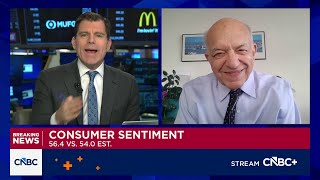
Well, let's bring in Professor Jeremy Seagull. He is professor emeritus of finance at the Wharton School of Business and a chief economist at Wisdom Tree, of course. Um, and Professor Seagull, good to have you. I mean, pick your spot here in terms of weighing in on whether you feel as if uh this long-holded broadening of the market is going to stick with us for a while.
Is it durable? Uh, and and where should we expect it to go from here? Yes, good morning, Mike. Listen, I think this has legs. you know, we how many head fakes did we have last last year? Oh, everyone called it and you know, we had like a week where uh we had value stocks, smaller stocks uh outperform and then it just reverted.
But I think what we've seen over and it's more than just this year, you know, through December, um I think there's been questions about the the Mag 7, the only AI trade. Um, and listen, it isn't that they're not great companies. It's that are they going to be the leaders in in in uh 2026? And as you mentioned, I think the headwinds are a stronger economy that really does favor value stocks, smaller stocks.
I think we've got two more rate cuts coming. The short-term interest rate is much more important to smaller stocks than it is the larger. I don't really expect much of a decline in in the 10-year bond, but short rates do help that small sector. Uh and then, you know, we do have the tax cuts and others that are going to power consumer spending.
We don't quite know what I mean GDP third quarter over four. I don't know if I really believe St. Louis, they say fourth quarter is over five. There's a lot of question. We have to learn about some gold flows with have we might subtract from that figure. But we're heading into 2026 at a at a very very strong rate.
It does seem as if uh yeah, we finished up last year strong and we do have some of those tailwinds on the fiscal side kicking in early this year. I I guess the question I've always had about, you know, this idea that smaller stocks and value stocks can take the lead is that they seem to obey maybe a little more of a valuation ceiling than, you know, these worldbeating growth names that have addressed these huge markets and have been able to grow uh at, you know, super GDP rates forever.
So I I wonder if that's uh going to be a complication in the story. Well, it it is, but when you sell at 15, you don't need much growth to have a really good return. Uh uh you know, you if you work through the mathematics, so you really just if you just even grow at the you know, the level of of nominal GDP and don't super grow, you're going to get some really good returns from a 15 PE stock.
Now, when you have a 30 or a 40 PE stock, you can't have that. So uh it doesn't the leverage is so much higher on a little bit of growth to get those multiples higher and to get that good return um that this could be the year and by the way I think another thing that's powering it is this the year of the AI user and not just AI supply uh we know uh that only 15 20% of firms have really uh substantially fully incorporated AI into trying to lower cost.
There is a lot out there uh that can um and uh you know talking about this is the year where where costs could be cut, margins could be improved for those uh and with the leverage of a low PE they could be the outperformer and we are starting to hear that from companies on their earnings calls when they're talking about the ways that they're using AI in the back office functions and reducing headcount.
Alternately, what's your prediction about what that means for the labor market? Well, that there is a big question there on that. I mean, if you look through the history of of technology, there's always other jobs um uh that that people rotate on them. Is this going to be faster than what we've seen before?
That's a question. But I think uh thank goodness we're, you know, not entering into this period in a recession. uh job openings are still strong. The labor you know unemployment rate uh under four and a half% is still one where people can can find those jobs. But uh you know you think of what the margins will be.
I mean, I think uh you know, I've I've even witnessed it at my company how uh uh uh my commentary gets written in ways that are so much faster and more effective than what we had before we had AI and how much savings of time and energy that and you go across firms, you could really see, you know, profit margins rise two three percentage points just by moderate incorporation of AI techniques.





댓글 0