저자: 미상 · 외국인
요약 보기
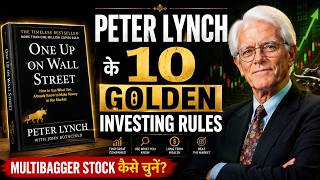
Peter Lynch의 투자 원칙 10가지(아는 것에 투자, 이익 성장, 저부채, 적정 가격, 인내, 군중 추종 금지, 단순한 사업, 조정 활용, 직접 조사, 승자 수익) 소개. 피델리티 마젤란 펀드 13년간 연평균 약 29% 수익률 언급. 특정 자산에 대한 가격 방향 예측 발언은 없음.
다듬은 글
Have you ever wondered how some investors become such that they recognize the multibagger stocks hidden in ordinary companies before the world and on the other hand, millions of people invest money in the stock market for years. Yet they do not get better than average returns. If I tell you that there was a person who created history by investing not only in big brands but also in companies used in the daily lives of common people, then you might not believe it, that person's name is Peter Lynch.
Peter Lynch is considered one of the most successful fund managers in the world. He managed the Fidelity Magellan Fund for about 13 years, during which time the fund delivered an average annual return of about 29%. This is why even today millions of investors consider his thinking and his book One Up on Wall Street among the most important books on investment.
But the most important thing is that Peter Lynch believed that you do n't need to be a Wall Street genius to find multibagger stocks. If you learn to observe the world around you in the right way, you too have a chance to identify great companies before big investors. In today's video, we will understand in detail the 10 golden investing rules taken from Peter Lynch's famous book One Up on Wall Street.
These are not just bookish things but such principles by adopting which Peter Lynch created wealth not of crores but of billions of dollars. Be sure to watch this video until the end because the last rule is what Peter Lynch considered his greatest strength, and if you understand it correctly, it can change your perspective on the stock market forever.
So without further ado, let's start with Peter Lynch's first golden investing rule. Rule number one: invest in what you know. Peter Lynch's most famous principle is Invest in What You Know. This does not mean that you should invest money in any familiar company without research. What it really means is to observe the world around you.
The products and services that people are increasingly using can become big companies of the future. Peter Lynch used to say that sometimes the average customer recognizes a great company before the top analysts. Suppose you see that the store of a new brand is always crowded or an app suddenly starts appearing in everyone's mobile or the product of a company is continuously becoming the first choice of people.
Most people just notice such things and move on. But this is where an investor starts his research. Peter Lynch made many successful investments based on this thinking. He first understood the behavior of people. Then studied the company's financial reports, sales growth, profit and management. I invested only when everything seemed right.
Remember, observation shows you opportunities. Research gives you confidence and patience creates wealth for you. That's the real essence of Peter Lynch's first Golden Rule. Now the question is, after looking at a company, which financial thing should be checked first? This is what we will understand in the next rule.
Rule number two, great companies grow their earnings. Peter Lynch's second golden rule was to always look for companies whose earnings are consistently growing. The share price may fluctuate for a few days. Market sentiment may change. Volatility may occur due to news. But in the long run, the real direction of any company's share is decided by its profits and earnings.
Peter Lynch believed that if a company's business is continuously getting stronger. If sales are increasing and profits are improving every year, then sooner or later its share will also move in the same direction. This is why they did not invest just by looking at the price charts. He used to read the company's annual report first.
They looked at whether the revenue was consistently increasing. Is the net profit improving every year ? Is Earnings per Share (EPS) consistently going up? Only if the answer to these three questions was yes, the company would come on their watch list. In India too, many multibagger companies first showed tremendous growth in earnings and after that their shares gave excellent returns to the investors.
Remember, price tells you the story, but earnings tell you the truth. Therefore, before investing in any company, definitely check its financial results of the last 5 to 10 years. If profits are growing consistently, it could be a strong indication that the company is moving in the right direction. Rule number three avoid [sound of clearing throat] companies with too much debt was Peter Lynch's third golden rule.
Stay as far away from companies with high debt as possible. Many investors buy shares simply because they see that the company's business looks good. But they don't see how much debt is hidden behind that business. Peter Lynch used to say that even a great business can be ruined by excessive debt. Just imagine, if the company's profit is increasing but a major part of it is spent on paying interest, then what will be left for the shareholders?
This is why Peter Lynch always looked at the Dept level very seriously. They particularly focused on the debt to equity ratio and the interest coverage ratio. Companies with low debt have the strength to survive even in difficult times. But companies with high debt can get into trouble even during a small economic downturn.
That's why the next time you analyze a company, do n't just look at its profit. Also see who has the first right on that profit. Of the shareholders or of the bank. If the bank is moving the money first, the risk to the investor increases. This is the most important message of Peter Lynch's third Golden Rule.
So far we have learned three things. First, recognize the opportunities around you. Secondly, focus on earnings growth and thirdly, choose strong companies with low debt. But now the biggest question arises, if the company is great then should its shares be bought at any cost? Peter Lynch's fourth golden rule answers this question.
Rule number four: A great company can be a bad investment at the wrong price. Peter Lynch's fourth golden rule is perhaps the least understood. They used to say that a great company is not always a great investment. You may find this strange to hear, but it is very important to understand its meaning.
Suppose there are two companies. The business of the first company is excellent. Profit is continuously increasing. The management is excellent. The future also looks strong. But its stock has already become very expensive. The other company is also good. His business is strong. Earnings are continuously increasing.
But the market has not yet recognized its true value. Peter Lynch always preferred the latter company. Why? Because in investment, just buying a good company is not enough. Buying it at the right price is most important. If you are paying more for a company than its actual value, then even a good business in the future can give you poor returns.
This is why Peter Lynch always focused on valuation. They used to relate the PE slush E ratio to the growth of the company. If the company is growing rapidly then a slightly higher valuation can be accepted. But just a high PE without growth can be a red flag. Remember, buy a quality company. But not the Overpriced company.
Rule Number Five Patience Creates Wealth. Nowadays, most people want to see profit the very next day after buying shares. If the stock does not increase for a week, then sell it. Peter Lynch used to say this is the biggest mistake. Money in the stock market is made not by the speed of trading but by the power of compounding.
He held many companies for years because he believed in the business, not the price. Peter Lynch believed that if you have chosen the right company, then give the market time to do its work. No need to check the price every day. No need to check portfolio every hour. If the company is continuously growing then time becomes your biggest friend.
Remember, the market takes money from the weak and gives it to those who have patience. Patience is not an ordinary quality. This is the biggest strength of long term investing. Rule number six Don't Follow the Crowd was Peter Lynch's sixth golden rule. Don't follow the crowd. When the entire market is praising a particular stock, often a large part of that stock has already gone up and when everyone is selling out of fear, many good companies are available at cheap prices.
Peter Lynch used to say that if your investment decisions are based only on TV news, WhatsApp messages, YouTube tips or social media, then you are not investing but becoming part of the crowd. A successful investor always does his own research. He reads the balance sheet. Understands management. Analyzes the business model and then takes a decision.
Remember the crowd is not always right. If the crowd was always right, everyone would be rich in the stock market. But the truth is exactly the opposite. So far, we have understood six such golden rules which can change the thinking of any new investor. But Peter Lynch's next rule will teach you what a true multibagger company looks like.
And this is the rule that most investors miss. Rule number seven: Look for simple business. Peter Lynch had a seventh golden rule. Always invest in a business that you can easily understand. Many investors are swayed by big technical terms and complex business models. They think the tougher the company, the more money it will make.
But Peter Lynch thought exactly the opposite. He used to say that if you cannot explain the business of a company to a 15 year old child in 5 minutes, then perhaps you yourself do not understand that business completely. He always preferred businesses that had a clear revenue model, understood the demand for their products, and clearly demonstrated the reason for their growth.
Because when the market crashes, only the investor who understands the business can remain calm. Remember, wealth is created in understanding, not in confusing business. Rule number eight: Market corrections are normal. Most people panic when the market falls. [Sound of throat clearing] Breaking news starts playing on the news channel.
Panic spreads on social media and people start selling their shares at a loss. But Peter Lynch waited for such a time. He used to say that market correction is not a problem but an opportunity. If you have chosen a strong business, then the price drop should be like a discount sale for you because the business of a good company does not go bad in a day.
Only its price changes. Peter Lynch believed that the market gives you the opportunity from time to time to buy great companies at cheap prices. But only that investor can take advantage of it. Who has both patience and cash. That's why next time the market falls, first do research instead of panicking.
Rule number nine: Do your own research. Peter Lynch had a ninth golden rule. Never invest on someone else's trust. Today, there is a flood of stock tips everywhere – YouTube, Telegram, Instagram, WhatsApp. But Peter Lynch used to say, if you don't know why you bought a stock? So you do n't even know when to sell it?
So always do your own research. What does the company do ? Is his profit increasing or not? How much is Dept? How is the management? What is the potential for future growth? Take investment decisions only after getting answers to these questions. Successful investors buy facts, not tips. Remember, one hour spent in research can save lakhs of rupees in the future.
Rule Number 10: Big Winners Make Up for Small Users. Now let's talk about Peter Lynch's most powerful golden rule. He used to say that not every stock will become a multibagger and there is no need for it to be. Your goal in the stock market should not be to make a profit on every trade or every investment.
Your goal should be to have your winners many times bigger than your losers. There were many stocks in Peter Lynch's portfolio which did not perform as expected. But some multibagger stocks made up for all those losses and created much more wealth. This is the real magic of long term investing. So don't be afraid of a wrong investment.
Just make sure that when you come across a great company, you have the patience to hold it for a long time. Conclusion. So friends, today we understood Peter Lynch's 10 Golden Investing Rules in detail. 1. Invest in what you know; 2. Focus on earnings growth; 3. Avoid too much debt; 4. Buy great companies at the right price; 5.
Be patient; 6. Don't follow the crowd; 7. Invest in simple businesses; 8. Welcome market corrections; 9. Do your own research; 10. Let your winners grow. If you do n't just listen to these rules but make them a part of your investment process, your decisions will gradually change, and when decisions change, results change.
Remember, people who get rich quickly in the stock market often get out of it quickly too. But those who invest with discipline, patience, and knowledge build real wealth over time. If you liked this video then like it. Share with your friends who want to learn investing and don't forget to subscribe to Mitra Stock Academy for more such high quality trading and investing videos. See you in the next video. Thank you.
Comments 0