
저자: TomLee · 외국인
요약 보기
AI·반도체·메모리 대형주의 급락은 레버리지 디레버리징에 따른 약한 손 털기이며 펀더멘털 훼손이 아니다. 엔비디아 선행 PER 약 16배, S&P500 약 20배로 2000년 시스코 200배와 비교해 거품 후기 아님. 헤지펀드 미국 기술주 순매도(10년 내 최대) 등으로 바닥 근처 추정. 시스코 1993~2000년 사례 기준 현재는 1997~1998년 부근이라 추가 상승 여지 큼. 다만 낙수효과성 채찍효과로 메모리·장비주 경기 변동성은 주의. 보유 유지 권고.
다듬은 글
SK Hynix released its Q2 2026 earnings report a few hours ago, and it is the strongest single-quarter scorecard in the company’s history, bar none. Operating profit skyrocketed 557% year-on-year, and net profit increased twelvefold. The operating margin hit 76 %, the net margin was 118%, and cash on hand is nearly 90 trillion won; it is truly a super-tier enterprise, and the storage memory performance is extreme.
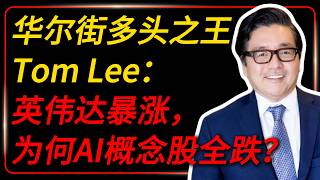
However, South Korea’s KOSPI index triggered a circuit breaker the day before the earnings, and then again after the report. You should know that in the history of the KOSPI, excluding these two times, it had only triggered a circuit breaker four times before. Under these circumstances, Tom Lee, one of the most accurate bulls on Wall Street, gave an interview to the Korean media.
He said that selling AI stocks now is like cutting the flowers in your garden and watering the weeds instead. He believes this correction is not the end, but precisely the best buying opportunity of 2026. They are out there pumping stocks again; what is the reasoning behind it? We think the AI stocks, the memory names, semis are going to make much, much higher new all-time highs.
So if someone is long these names, they should stay long. If they sold and got out and then they're waiting for a signal in, they're going to end up chasing markets higher. Selling your winners is like cutting your flowers and watering the weeds. Our bet is that inflation is going to undershoot expectations.
People are too focused on oil as a driver of inflation , and we've already had the oil shock. So I think we've had peak inflation impact from oil. On June 22nd, the Korean index, the KOSPI, reaches almost 3,300. The same day the stocks reach a high as well. And then in the last month, it's really taken a serious, serious tumble.
And people are asking, you know, why the impulsive rally, the sudden turn? Are we in some ways following the KOSPI? Is the KOSPI following us, or is it just a global AI trade? Well, you know, it has been doing really well for more than just 2026, really the last few years, and the underlying story there is the world is using a lot more semiconductors and memory for every unit of GDP output, which means Korea as an economy and Korea as a stock market is a lot more important in the next decade than it's been in the prior .
Stock markets are what you call price discovery mechanisms, and it made sense that stock markets be going up, but in the last few quarters, leverage products added, and that amplifies volatility. So I think in some ways, the moves have been a decline adjusting for that leverage, because as you know, markets when they go straight up they trap what they call longs get trapped and especially those with leverage and then they're forced to sell.
So I think that there's been a forced deleveraging taking place, but that doesn't mean that the underlying story has ended. So I think that this pullback is going to prove to be one of the best buying AI stocks logic stock markets once ends. I think the current stock market AI stocks, the memory names, semis, are going to make much, much higher new all-time highs.
I guess it's hard to see before you actually see it, but what kind of signal would you be looking for to say that, you know, the retracement has ended and now this is the opportunity? Never time the market. If someone is long these names, they stay long. If they sold and got out and then they waiting for signal to get in, they going to end up chasing markets higher.
Nobody ever calls the bottom correctly. However, the thing that you want to see which is massive deleveraging take place. Brokerage US investment banks, hedge funds degross —degross meaning that they already sold their tech longs at the fastest pace in almost 3 years. In fact, if you go past, it would be really the fastest pace in almost 10 years.
So they had a massive, massive deleveraging already and we already see some very, very high profile stories about how there's been a massive deleveraging in Korea. So if people had to be forced to sell, those are called like weak hands, they've been shaken out. I'd say that we should be pretty close to a bottom.
But again, I think the mistake people make is they chase things. They try to time the top and they try to time the bottom, and most people who've done the best are the ones who stay invested. In fact, as Peter Lynch famously said, selling your winners is flowers and you, and maybe even better, you know?
I think when there's a secular theme, like AI, which involves more semis and memory for every unit of GDP output, Charlie Munger said it the best. He says the money isn't in buying and selling, the money is made in waiting, you know? So, if there's a structural theme, they should just own it and then forget about it.
If I recall, Cisco ran into trouble. It was something of this bull effect where they saw orders collapse because in 2001, because people had over-ordered and all of a sudden, it was like a stack of dominoes that went over. So is that a relevant lesson to keep in mind, or are we just too early for that?
Well, eventually the AI story is going to become a bubble. I mean, it's a fact . Because anytime you have a structural demand story, risk, [indiscernible] because estimate risk, I don't think it's a late-stage AI bubble. The reason I don't believe it's late-stage is that as soon as the Korean stock market fell , most people declared a top.
You know, if it was a bubble, people would say this is a bottom and they should be plowing into it. On June 22, the Korean KOSPI index reached a historical high near 3,300 points. On the same day, the US semiconductor sector also hit a record high, and then, in the following two weeks, the KOSPI plunged nearly 40% , triggering multiple circuit breakers.
For the entire month of July, the KOSPI set its largest single-month decline in history at 23%, erasing 250 trillion won in market capitalization. At the same time, the US stock market didn't fare much better; Nvidia, SK Hynix ADR, and the entire semiconductor sector saw a collective correction. Goldman Sachs data shows that hedge funds have been net sellers of US tech stocks for four consecutive weeks, with semiconductors and hardware being the hardest hit, seeing the fastest selling pace in a decade.
So, recently the market is filled with voices saying the AI bubble has burst, the top is confirmed, and it's time to run. But Tom Lee says, it is precisely this panic that proves we have not reached the late stage of the bubble. This point is critical, so let me explain it to you. Tom Lee's logic is that if AI were truly in the late stages of a bubble, like the dot-com peak in 2000, what would the market reaction be?
It should be everyone shouting to buy the dip, seeing it as an opportunity, right? Because at the top of a bubble, people are usually irrational with excitement; any dip would be seen as a buying opportunity. But right now, whenever the S&P 500 drops, everyone in the world is screaming, "It's the top, run!" Hedge funds are cutting positions frantically , and retail investors are selling at a loss.
This shows that the market still harbors a significant amount of skepticism and fear, and a true bubble top would not have this much fear. If you think about this logic carefully, it actually makes a lot of sense. Think back to the end of 2021 when everyone was saying it would only go up; that was the true taste of a peak.
Now, everyone is scared to death, so what does that mean? It means the market has not yet reached that stage of manic, irrational exuberance. Tom Lee mentioned a very important concept called deleveraging. According to Goldman's data, hedge funds have cut their exposure to US tech stocks by about 10%over the past two months; this is the largest reduction they have tracked in over a decade, with semiconductors and hardware hit the hardest.
At the same time, the situation in the Korean market is even more extreme, as massive amounts of leveraged products were added during the KOSPI’s rise, triggering a chain reaction of forced liquidations. They call this "shaking out weak hands," meaning those who couldn't withstand the volatility and were forced to sell have already been eliminated from the market.
What does this imply? It implies that those remaining in the market are mostly long-term holders with genuine conviction and capital, suggesting the peak of selling pressure has likely already passed. They say no one can accurately bottom-fish, but if you already hold these stocks, you should continue to hold them.
If you sell and wait for a signal to get back in, you will end up only chasing the highs. Alright, next, I want to talk to you about a key metric that many people overlook: in Tom Lee's interview, he mentioned that Nvidia's forward P/E ratio is 16 times. Let's compare this to the overall S&P 500 forward P/E, which is about 20 times.
This means that Nvidia, an AI chip giant with revenue growth exceeding 70%, has a valuation similar to, or even lower than, the broader market. Just think about that. For a company growing at over 70%to have a P/E ratio on par with the market average is almost inconceivable in history. Tom Lee believes Nvidia should be valued at 25 to 30 times, as it has the CUDA platform as its core, a highly certain upgrade path, and is essentially a growth company with recurring revenue.
Look at Cisco at the peak of the 2000 bubble; it had a P/E ratio of 200 times . 200 times! Now, Nvidia is at 22 times . The gap is so large that they are not even in the same dimension. So, when someone tells you that a stock is too expensive, you should ask, "Compared to what?" Compared to the 2000 internet bubble?
It's a 10-fold difference. Compared to its own growth rate? It’s actually on the low side. Alright. Now, we enter the most exciting part. Tom Lee made a very detailed historical analogy with Cisco, which I think is the most valuable part of the entire interview. Let's break it down completely for everyone.
Cisco went through a full internet infrastructure bull market from 1993 to 2000. Tom Lee divided it into several stages. In the first stage, Cisco was at $ 0.8 in 1993 . By 1997, it rose to $ 9, a gain of more than 10 times. Then, it hit the Asian Financial Crisis in 1997, and Cisco dropped from $ 9 to $ 5, a decline of over 40%.
At that time, many people said it was over, tech stocks had peaked, right? This was the first stage. The second stage was that Cisco subsequently rose from $ 5 to $ 18 in 1998, which doubled its previous high, and then in 1998, it encountered the Russian crisis. Back then, with the collapse of LTCM and Greenspan warning of "irrational exuberance," Cisco plunged from $ 18 back to $ 9—another drop of over 40%.
A crowd emerged again to claim the tech bubble was bursting; Tom Lee says he witnessed that era, where many danced on the graves of tech stocks. In three stages, Cisco actually rallied from $ 9 to $ 80 by 2000, soaring 100-fold from 1993 to 2000. From the 1998 peak, it surged another five times in just 18 months; so the key question is, which stage are we in now?
Tom Lee's assessment is that we are roughly at the 1997 or 1998 mark, meaning we've had a big rally followed by a deep 40%correction where many declared it dead, but the real bull market may just be starting. Of course, Tom Lee also admits it will eventually turn into a bubble, as that is the fate of all structural demand stories.
When volatility is underestimated and people make irrational decisions, bubbles inflate, but he emphasizes that we are not in the late stages. What was the real reason for Cisco’s decline? By 2000, its valuation hit 200x, and the dot-com companies buying Cisco’s equipment were essentially a scam. You needed a 10-year DCF model, a 30x exit multiple, and a 6%cost of capital to justify the valuation—those assumptions were all nonsense.
But today, the ones buying the equipment are Microsoft, Google, and Amazon. Their balance sheets are cleaner than any bank's, which is the fundamental difference. However, Tom Lee is not blindly bullish; he points to a more significant risk known as the bullwhip effect. What does that mean? It means that in this supply chain, the further you move from the end consumer, the greater the volatility; for example, end-user demand is stable.
But at the assembly level, they might hoard inventory and double their orders to prevent price hikes. Then, moving up to the memory chip manufacturers, they see orders surge and expand capacity drastically; if end-user demand growth slows one day, the mid-tier inventory becomes severely excessive, leading to aggressive destocking.
This is why the P/E ratios of memory and semiconductor equipment stocks are actually at their lowest at the peak of a cycle, because the market knows this peak profitability is unsustainable. So, Tom Lee provides a very important distinction: companies that are customer-facing and have strong ecosystem lock-in should be valued like growth stocks, at 25 to 30 times.
But memory companies like SK Hynix and semiconductor equipment firms are further from the end-user and more cyclical, so their valuations should be discounted; you cannot compare their P/ E ratios to Nvidia's, as the logic is different. This viewpoint is actually very practical. Many people think SK Hynix is cheap when they see a P/E of only four or five, but if you understand the bullwhip effect, you'll know that in cyclical stocks, a low P/E isn't necessarily a good signal; it might just mean the market is pricing in the fact that earnings are about to peak.
Finally, Tom Lee paints a bigger picture, and I think this is his ultimate bullish logic. He says that in today's world, every unit of GDP output will require much more semiconductor and memory capacity than it does now. Why? Because humans consume food and use their own nervous systems to process. Physical information, but a robot, an AI, or an autonomous driving system consumes chips and storage.
As more and more economic activities are performed by machines, the demand density for semiconductors across the entire economy will rise exponentially. This isn't a three-to-five-year story; this is a 10-to-20-year structural trend. And South Korea, as the world's largest producer of memory, will have a more important strategic position in this trend than at any time in the past 50 years.
Charlie Munger once said something that Tom Lee quoted in the interview: making money isn't about buying and selling; it's about...When you see a structural trend with high certainty, the best strategy is to buy, hold, and then forget about it. Moomoo is a U.S.-listed company and a subsidiary brand of Futu, already ha section have a chance to receive up to $ 100 in stocks , and idle funds can earn up to 8.1% returns.
If you are interested, you can click the link below the video to try it out. Alright, to wrap up, let's go over the key conclusions of the day. First, the nature of this correction is a deleveraging wash-out, not a deterioration of fundamentals. Record-breaking liquidations have occurred, and the series of forced liquidations in Korean leveraged products have already been cleared out.
Second, stock valuations are nowhere near bubble territory. The forward P/E ratio is only in the teens, whereas at the peak of the dot-com bubble in 2000, it was 200 times—a difference in orders of magnitude. Third, tech giants have poured over $ 700 billion into building AI infrastructure this year; this is not hype, but a commitment of real money.
Fourth, comparing this to Cisco's history, we are likely only at the point of 1997 to 1998. There may still be five times or even more room for growth behind this major market trend. Fifth, the only thing to watch out for is the cyclical volatility caused by the bullwhip effect, especially for memory and equipment companies.
In closing, I’d like to leave you with this: bears may be very clever, but it’s the bulls who make the money. In the face of a structural mega-trend with high certainty, don’t cut your flowers just because of short-term market fluctuations. Holding patiently may just be the most correct decision for 2026. . Bye.



Comments 0