원문 보기
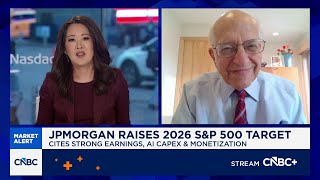
With us . Professor Siegel, I'm so glad to see you. Good morning. Good morning, Melissa. Is there anything about this rally that worries you? The fact that it is so dependent on AI, the fact that AI spending is now largely funded, is there something? Let me tell you what I'm looking at. The most important indicator for the economy is not even inflation or employment, but real wages adjusted for inflation .
This is real purchasing power. The most disappointing data I saw on Friday was a wage increase of only 3.2%. On Wednesday we will get the CPI figure. It is expected to grow by 3.4%. So what does this mean? Inflation is outpacing the growth of workers' salaries. And what is the main source of real income growth?
This is productivity growth, and it has been very disappointing over the last three quarters. We need to accelerate this, and there are some positive signs for this quarter. But the last three quarters have been below the 15- year average, and that's one reason the public is unhappy with the economy: incomes are not keeping up with inflation.
So we need to see how AI really increases the real wages of the average person. My good friend Kevin, who you'll be interviewing in a few minutes. I want to hear his opinion, but this is what I think needs to be seen in the economy to change the situation and improve people's mood. Do you think we are in a transition phase where AI spending is causing inflation and workers are not yet benefiting from it ?
So, we are in this transitional period. If you look more broadly. GPT was introduced in November 2022. The average productivity growth since then, which is almost a year and a half, has been 2.5%. And that's not bad. This is better than in the last 15 years. Of course, it's not as good as in the " golden" 1950s and 60s, when we had over 3%, but it's better.
But over the last three quarters, we have lost this indicator. Maybe it's about oil or other circumstances, but it's time for us to get back on the right track. You know, one of the indicators that looks promising is that while we didn't see significant employment growth in July, GDP estimates remain stable.
In fact, the Federal Reserve Bank of Atlanta predicts it will exceed 5%. In my opinion, this is too optimistic for the third quarter. Goldman Sachs is predicting 2.6%, but if it's 3 or 3.5% without the need for additional workers and hours, it will boost productivity, real wages, and the entire economy.
So, I think we had three quarters of decline. I expect the next quarter to rectify the situation, but that's why many people are unhappy with the overall economic performance over the past 12 months. To solve the affordability problem for workers, should the Fed raise rates? Should we have done this before the last meeting ?
Oh, that's a difficult question. I see some slowdown in money supply growth, and that worries me in the context of inflation. I mean, the situation in Iran is the main thing, along with what's happening with oil. If oil prices remain at current levels or decrease, to be honest , I think it will be quite difficult for Warsaw to raise rates.
Moreover, I heard that he often talks to President Trump, and soon we will get news about gas prices and other aspects. If the situation escalates, fighting breaks out, and prices go up again, it will be a completely different story. Of course, there are only 3 months left until the midterm elections, so time for real action and tangible results for the public is getting shorter.
It sounds like— if I were just listening to you, Professor Siegel, and didn't know what the S&P 500 was doing right now, which is at a near- record high. Yes. I wouldn't say these pictures match. So what do you think about the markets, given everything you said and your concerns about the economy? Well, there are a few points here.
First of all, the market is not an ordinary economy. The market may prosper, but the worker—not so much. Um, but you know, the profits are just incredible. Especially in the technology sector, they are growing. Hyperscale costs are going well. That's 40% of the S&P index. So this can continue to go well.
And as I said, I'm starting to see signs that this could spread to other areas in the third quarter. My big hope is that the AI advances that we hear so much about and that we use will reach the average company, where they can implement them and say, "Look, I can increase my profits too." This hope, I think, is what supports the stock market.
I'm not pessimistic about this. I'm trying to reconcile the fact that wages are not keeping up with inflation, which we'll find out in 2 days, with the fact that the stock market is doing great and AI is already here. And how do we reconcile all these things together? Partly it's just a matter of timing, and as I said, I see seeds of hope that the third quarter could bring these two factors into balance.



Comments 0