
저자: BillAckman · 외국인
요약 보기
퍼싱스퀘어 IPO와 구조 설명: 퍼싱스퀘어 USA·Holdings 및 상장 관리회사 구조, 하워드휴즈를 버크셔식 모델로 재편하고 Vantage 보험사 인수 추진. 알파벳·아마존·메타 등 빅테크는 대규모 CAPEX 우려 대비 밸류에이션이 낮아져 매력적이라 주장. 유니버설뮤직(UMG) 지분 보유 및 뉴욕증시 이전·이사회 개편 제안, 지정학 리스크(이란 전쟁)는 수주 내 해소 전망하며 시장 심리 낙관. 개인적으로 자산 배분 시 인덱스 펀드 선호, 채권은 매수하지 않겠다고 언급.
다듬은 글
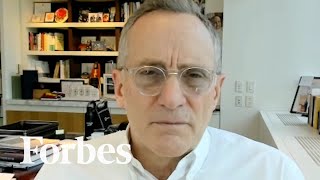
We believe that in some ways more than ever, if you're a top artist and you want to be a global artist, you need a label to help you, you know, break through. Welcome. I'm Manita Khoja, Forbes Editor-in-Chief and founder of Iconoclast, and I'm delighted to be joined by legendary hedge fund manager Bill Aman, CEO and founder of Persian Square Capital Management, which recently filed for a $5 billion IPO.
Bill, thank you very much for joining us. Thank you for inviting me. So, Bill, as we mentioned, four days ago you rang the open bell. You have applied for your IPO. Uh, tell us, you invested more capital on the second day. Tell us about this experience and how you are doing. So, the New York Stock Exchange is having a nice, nice little celebration that's a lot of fun.
And this is the very beginning of what will be a very long-term story. I mean, it's been, uh, 22 years since we took our company public. Uh , so, essentially, this offering is an IPO or listing of our management company, the general partner, a bit like a Blackstone or Apollo business model. And then, the new...this is actually our first publicly traded investment company on a U.S.
stock exchange, where you have, you know, $43, you can buy shares and become our investor on the best terms we've ever offered to investors. So we're excited to have the potential for millions of shareholders over time. And so I've known you for a long time, and I know you're a man of conviction, right?
So on the second day you doubled your investment and put more capital into the fund. Tell me what feedback you also received from some of your investors and how enthusiastic they were about it . I mean, of course. So, first of all , we don't view it as... yes, it's a responsibility to own other people's money, but we are by far the largest investors in the investment organization.
Uh, the management team has invested about $500 million in this new organization , and our goal is to grow it at a very good pace over a long period of time. And the people we tried to attract to the IPO, for the most part, are working in this field for a very long term. The nature of the IPO process has actually taught us a few things, um, like what it tells us.
So my goal was to make this outcome, um, very favorable in some way for every person, right? And so we did something almost the opposite of what they do in an IPO, which is that usually large institutions get preferred stock, and smaller companies might get 10 cents on the dollar in terms of what they're looking for.
Uh, we said, you know, I'm going to give every retail investor a full share per transaction because, you know, I want to give a preference to newbies. Uh, as a result of this, I think retail investors got a lot more shares than they expected. I think they are used to asking for more shares than they actually want.
Hmm. So, if someone asked for 10,000 shares, they actually want a thousand. Well, I gave them 10,000. So they found themselves at 1:55 p.m. on Wednesday with about 10 times more shares than they wanted. And that led to what I would say were less than ideal days of closed-end fund trading. It is trading at approximately a 14% discount to the cash we have in the company's cash register.
Well, this is an opportunity for those who come in today, meaning you can buy cash at a discount, and over time, I expect, we can get compounded returns at a very good price, and we all know that the next IPA and just the IPO within a few days of its opening is not really a predictor of long-term lack of success.
Absolutely not. And actually, but this IPO is different. Most investors rely on when you arrived. If you were in the main round, you are ahead of the game because we have given you a stake in the management company. So, it was an IPO of this investment fund , and you got the general partner's share for free .
Something like a gift with purchase. The package today, uh, I didn't see the closing, but the package today is worth a few percent less than the IPO price, but I still think it's going to be a very good long-term investment, and I think both companies will do very well over time. So, as I said before, Bill, I've known you for a very long time.
You were on the cover of Forbes . We called you Baby Buffett, right ? So, Warren Buffett was the one who inspired your investment philosophy from day one. And you called Buffett's evolution, your plan, partnerships permanent capital. Now you have Persian Square, Inc., traded on the New York Stock Exchange, and Howard Hughes, which is being rebuilt into the modern Berkshire with Vantage.
Two complex engines, both yours. How do they fit together? Uh , of course. So, Persian Square's main strategy has always been to buy minority stakes in fairly large companies and help them develop more successfully . This is Persian Square USA, and this is our offshore fund Persian Square Holdings. Persian Square Inc.
is a company that receives commissions from the funds we manage. And then Howard Hughes–this is an organization that is actually modeled after how you put me on the cover of Forbes, the subtitle I think was something like: Howard Hughes will become our version of a little Bergkshire. Well , we're finally taking Forbes' idea and putting it into practice.
So, Howard Hughes is a very interesting company that owns such small cities. We own all of the residential land, the vast majority of the commercial land, and many income-producing assets, such as in the woods or Summerland in Las Vegas, and we have a condominium business where we build beachfront condominiums in Hawaii.
This is a somewhat unusual public company, more of the kind of company you would usually see as family-owned. This is a private enterprise. It didn't get much attention from Wall Street, except after you wrote that cover story, when people thought it was going to be the next Berkshire. Now we're actually going to create, if you will , an organization modeled after what Buffett has done over time.
So we take a real estate company that eventually goes into liquidation. We sell land to developers. We generate, you know, a few hundred million a year doing this. Uh, we get cash from real estate, uh, income-producing assets that we own. And we sell condominiums. We have about 4 billion condominiums under contract that will be sold over the next few years.
Instead of redistributing this money into real estate, we buy an insurance company. You mentioned Vantage. This deal should close within the next month or so . Uh, and we're going to run Vantage the same way Buffett ran his insurance business, where he was very careful about the insurance he issued.
Uh, he was very cautious about the free capital generated by insurance, mostly in Treasury bonds, and then he took the insurer's surplus, invested it in common stocks. We are going to follow the same path, and the goal is to create a sophisticated tool that can be put aside for the next 50 years, and which will eventually grow into a large and valuable company.
This is the plan. And so, Howard Hughes will buy companies. Hmm. Will invest in insurance, but will be the controlling shareholder of these companies. Much smaller scale. Uh, and, uh, Persian Square funds will invest in large companies, but we will buy a small stake in the form of interest many years later.
Uh , which story is bigger? Persian Square Foundation. Uh, I think they'll both show good success over time . Yes. Yes. I love "All My Children." Of course. Of course. So Vantage, if we just double- click on this for a minute. This is a specialized insurance platform worth $2 billion . Real free capital, as you said, real underwriting.
When did insurance find the answer for you? Was there a moment when the model really, you know, seemed right and resonated? So, first of all, I've obviously been following Buffett for a long time. Yes, I have read the Bergkshire reports carefully . Hmm, but we've been debating what to do with Howard Hughes for a while now.
Uh, you know, should we leave it as a specialized real estate company? Should I make it private? It simply doesn't operate like a public company. The company's biggest problem, I would say, is that the market, I would say, cost of capital for a real estate development and land ownership company is too high.
And so you can't have the stock go up, make a profit that exceeds the cost of capital. The cost of capital is too high. So, look, we either need to take it private or transform the business. And I read a book called "This Is What It Seems to Be, the Complete Financial History of Berkshire Hathway," and it's not for, uh, it's just for geeks like Buffett.
OK. But it really tells the story of Berkshire, and it becomes very clear how insurance was, you know, something I knew, but it really clearly shows how disproportionate it was to value creation. Uh , and, um, we thought, you know what, let's just go down the same path instead of starting with the textile business .
Hmm. You know, Berkshire Hathway was a textile business , and not a particularly good one, right? But over time, it brought in a lot of money, which Buffett reallocated to more profitable ventures. We start with a real estate transaction, which is self-financing by its nature. Uh , instead of reinvesting all this money in real estate, we're going to invest in real estate that makes sense for these communities, but we're still going to have surplus money.
We're taking that capital and we're going to invest in insurance, and that's something we're going to build over time. So, Bill, you're known as one of the most famous and well-known activist investors of our generation, but 38% of your portfolio is now owned by Alphabet, Amazon, and Meta. Why do you think these great, you know, traditional names remain the safest and most underrated way to participate in the AI revolution ?
I know you talked about this earlier today. So these are businesses that we've admired for a long time, but they've never been cheap enough for us, or at least we've missed opportunities when they've had moments of, um, cheapness. Hmm, but I think the market has reacted very negatively to the very large, um, capital expenditures that these companies have committed to.
You know, when they get close to, you know, hundreds of billions of dollars, and I think investors are concerned about, "Are they going to get an adequate return on that investment?" And I would say that we do not share this concern at all. First of all, the valuations of the companies have come down significantly, and meanwhile their growth rates are accelerating, and that's what really creates opportunities, and we, you know, have confidence in the management teams when they say that we're getting, you know, a very attractive return on these investments, that makes sense to us.
I mean , it's unclear which model on the edge will emerge as the winner, or if there will be a winner at all . You always know that open AI was kind of a leader , and then we had, uh, Google, and then Anthropic, it seems, was a leader. But one thing is clear: all of these companies require huge amounts of computing power.
Uh, and the cloud is, you know, the most scalable and secure place to access such computing. And that certainly explains the Amazon story. I want to go to Google history. I want to go off-script a little bit and ask you because I think this would be a very interesting answer. What do you personally use?
Are you a fan of OpenAI? Are you a Claude fan? Are you a Gemini? I am a fan of Claude Groc. Good. OK. Grock partly because I was a small investor in XAI, and I'm an X person. So Grock is very convenient, and also it's extremely relevant because, you know, a lot of the training data is obviously taken from X.
Hmm. Um, Claude, I've also used, um, you know, Scott, we have a cloud-based enterprise model at work. We actually have most of the models at work, but I tend to default to Claude or Grock. And do you feel that this helps you? Do you use it more in your personal daily life, or do you also use it as an investor to help yourself in both cases?
Good. Yes. I want to learn about one topic. Another big topic, obviously, is Universal Music. I mean, you guys put forward, um, this is one of your biggest positions. Owner of the world's most valuable music catalog, from Taylor Swift to the Beatles. You recently proposed, um, increasing the Persian stake in the company, moving it to the US, and you, the board members, at a time when AI is changing every creative industry.
What makes UMG the right choice? So AI allows...I don't know if you've written music before, but if you want, you can now write a song. Uh , and that will lead to an explosion of creativity. I would say an explosion of new music. Hmm, but that means it's much harder to break into the world of mass distribution of music.
So, as long as the intellectual property rights are protected, we have great confidence in the Universal Management team. They do a very effective job there. Hmm, we think that in some ways more than ever, if you're a top artist and you want to be a global artist, you need a label to help you break through.
Even some of these AI artists, yeah, yeah, they 're signing to labels because that's really how you're going to do it, you're not going to be opening for Taylor Swift without the backing of a label. And if I know one thing about you, I know you do research, right? So what about the economics of owning this intellectual property the market doesn't fully appreciate or understand?
So Universal has done a very good job of growing the revenue and cash flow of its business, you know , while maintaining a very strong position in the market, signing the best artists in the world. What I would call the main engine, the operational engine of a music company. What they did less well is that they are actually a public company, uh , maintaining a balance sheet structure that makes sense.
Uh, capital allocation in a way that, you know, shareholders have confidence, communication with the street in a way that people really understand the business. Uh, the company is also listed on the wrong exchange, and I think they would benefit from, uh, a board of directors, uh, led by someone who really understands the entertainment industry.
And so what this transaction does, I think you described it pretty well , but we're moving Universal Music from Amsterdam to the New York Stock Exchange, where they should be listed. Uh-huh. Uh, we, uh, use the low stock price as part of the transaction, but 17% of the shares are canceled. Uh -huh. Uh, and then the board of directors is re-formed with Mike Oitz as chairman.
Mike, you know, knows his stuff in this industry, and he also has a long-standing relationship with Lucian. We are monetizing an asset that the market is not giving the company any credit for their stake in Spotify. And we have created a future-proof balance sheet and capital allocation policy that maximizes the company's return on capital without in any way exposing shareholders to risk, creating any financial risk for the company.
That's the whole point. That's the whole point. Yes. That's right. And by the way, these steps, in our opinion, turn the shares, which are worth about tens of euros per share, into something around 30. So, have you had productive conversations with management so far? Were they receptive? Can you share?
So, now the board of directors is actually conducting a certain process. The board of directors recently hired advisors. I think they appreciate our offer. Uh, and we, we're expecting a response from the company at this point, but it took them, I would say, a few weeks to get set up. So everyone in the room is trying to predict the next 12 months, rates, geopolitics, artificial intelligence, capital spending targets that won't stop.
When you look at the market today, what is the biggest discrepancy between price and reality? I think people are never comfortable in the middle of a war, so, you know, we have the situation with Iran, we have the question of the impact on energy price inflation , uh, what impact will this have on the Federal Reserve, all of these things are really tied to the outcome of this war, uh, you know, I think our view is that this war is not a situation for many months, I think it's just a few weeks, maybe it's a four- to six-week solution.
I think once the war is over, I think there will be a lot more focus on the fundamental drivers of the economy. So you're generally positive about market sentiment right now? Yes. I think once the cloud of uncertainty clears, I think there are a lot of very powerful forces driving the economy, and ultimately the stock market and companies are reporting very good earnings.
Hmm. We are still in the middle of earnings reporting. Right. This is true. If you had to invest all of your capital in one single asset class for the next decade, excluding your own funds, where would it go and why? Hmm, he would go into action. In stocks, I would say it's liquidity, long-term growth.
I would probably choose an index fund. Good. Good. Index fund. Any specific promotions? I wouldn't buy bonds. I would say you wouldn't buy bonds. Yes. Any specific stocks or your kids that are your favorites and that you feel really good about right now ? I love all my children. I love all our promotions.
Good. Good. So you've run public company campaigns that have worked brilliantly, and some have worked, some haven't, just like we all have. What is the hardest lesson you have learned about persuasion? You are, as I started, a person with very strong beliefs. Yes, I try to have beliefs based on facts.
Uh, and this is kind of the key thing, if you've worked hard on something and made your bet, and then facts start to emerge that contradict the original thesis, you need to rethink your bet. Hmm. And one last question, you structured the IPO without performance fees, which is a real break from how the industry has worked for decades.
You said the goal was access for someone with $50, not just institutions. What does this signal to the industry about where we should be heading? Listen, I think it's hard for other firms to launch a tool like this in our industry. Um, we can do that because the nature of our capital base is permanent.
Um, if someone created a new fund without incentive fees, everyone would abandon their fund that has incentive fees. Our structure is more stable than that, so we can do it. So, I'm not sure this is the start of an industry trend. Hmm. But I think a closed-end investment vehicle is an amazing corporate structure.
It was just being underutilized , and we're going to take advantage of that, and I think we can create significant value, and we have investors who wrote checks for $500 million in this, you know, uh, deal . We have investors who are going to buy one share and we are very happy to represent all of them.
So I lied. I have one last question. Please. So, there is a generation of younger investors here today who grew up reading your letters. Uh, including me, if you were launching Persian Square today, what would you do differently, and what would you do exactly the same? You know, Persian Square is my second foray into the hedge fund business.
I had the opportunity to redo a bunch of things. Uh, you know, I think what I would have done differently from the beginning, I don't know if I would have done anything differently. Uh, but once we launched the permanent capital fund, our business plan was that, having chosen the figure of 10 billion, we would return the external funds.
I would return the external funds earlier and focus only on managing the permanent capital structure. This is a huge advantage of investing–having capital that can't go away so you can be aggressive when markets are down. And you don't need to focus on capital flows. You can focus solely on investing.
These have been , you know, the best eight years in our 22- year history, and that's since we had a permanent capital base. We should have done this earlier. Bill Amane, CEO of Persing Square Capital Management, thank you very much for joining us. Thank you. We appreciate it.


Comments 0