
원문 보기
We are in a complicated moment for the global economy, and all the stock market experts are announcing that the worst is yet to come. Surely, wherever you look, you 've seen it: high inflation, the mother of all crises, recession, the end of the world. Aren't you a little fed up with this already? When are we going to see a video that says Warren Buffett says everything will be alright, Nadal says the best is yet to come, and Michael Barry buys a puppy and is happy?
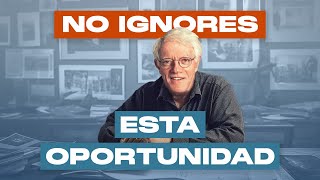
Well, hey, I want that positivity on YouTube! So in this video, I want to tell you about one of the strategies that Peter Links, one of the most respected investors in the world, follows. You'll learn who this super investor is, his investment approach, the advice he offers to help you achieve profitability in your investments, and above all, three of the strategies that have made him successful.
This is more positive than saying the world is ending, and it might even help you make money during the crisis—who knows? So stay tuned to this video because his strategies could be very interesting for investing. Let's start from the beginning: who is Peter Links? Peter Lynch was responsible for the Magellan Fund.
Fidelity, between 1977 and 1990, went from having $22 million in assets under management to $14 billion when he retired—an incredible feat. If you compare the returns he earned in 13 years to the S&P 500, for example, which saw a 75% return on the 2400 versus an 8% return on the 500, it's quite something.
But we all have origins. Peter Lynch had to work from a very young age after his father's death and started as a golf pro at a course outside Boston, where he was fortunate enough to work for the executives of the country's largest companies. Little did he know that a few years later he would be the one on the other side of the course.
He obtained a scholarship to learn the ropes and entered university. Curiously, he wasn't good at business, math, or accounting classes. However, in his second year of university, he bought his first stock, so it seems the bug had bitten him a little. Later, he applied for a summer internship at Fidelity, advised by the company's president, whom he also happened to meet at the golf course.
of golf and eight years later they would give him a small fund of 20 million called Fidelity Machine and which would go down in history as one of the best investment funds and if I leave it and one of the first lessons you can take from him is that knowing when to leave is one of the things we know least how to do in life, whether it's from a job, a relationship, a country or an investment.
I remind you that if you like our content you can subscribe to the channel to support us or leave a like by sharing whatever, I'll love you just the same. But getting back to Peter Lynch, you're probably wondering what his secret was. How does Peter Lynch invest? You might think he had a super innovative strategy, that he had insider information, or that he was simply lucky enough to discover an almanac with the results of all the matches...
no, that was from a movie, right? The horror movie. Now, the first thing we're going to see about Peter Lynch is what he calls the mirror test. Lynch asks you to ask yourself these three questions before you start investing: Do I already own a house? Do I need the money? Do I possess the personal qualities to succeed in the stock market?
I'm sure you're still confused. Let's elaborate a bit more on these three points. You've probably seen thousands of videos or ads telling you that real estate is an investment. This investment method, real estate investment, is very popular. Think of it this way: a house is an investment, just like stocks, but it's also a very different kind of investment.
A company can disappear and lose all its value, but a house is more complicated. The interesting thing about real estate investment, what makes everyone jump at it, is that it's an investment in real assets, and this makes it a perfect hedge against inflation, a great safe haven during a recession. You can raise the price of gasoline, but that won't affect the value of your home.
The second question is, do I need the money? Well, if you want to be a good investor, you need to have money that you know you can lose, and you have to be very clear about this. If you plan a strategy of investing 200, 300, or 500 euros a month, and suddenly there's a crisis, will you continue investing?
It will scare you. You'll say, "Look, bad times are coming, I'm going to stop." An investor has to be aware that they face pressures because Part of the market, these pressures can cause your investment strategy to fail, and you might end up selling your shares when they're very low and not waiting long enough for them to reach their potential value.
I'm talking about long-term investing. In a crisis, everything falls. Do you have enough money to hold out until things recover? The third question of the mirror test tells us if we have the qualities to succeed. Here you can see the list of qualities proposed by Leeds. There are many, as you can see.
I'd like to highlight the last one: resisting human nature and its hunches. Look at the example I gave you: if you're in a crisis, the shares you own lose value, and you're thinking they're going to fall even more and you're going to lose everything. Your instinct tells you that something is happening, that there's danger.
Resisting that is very difficult. Sure, you might lose 500 euros, but if you're about to lose 50,000 or 100,000, or even more, it would be your mind fighting against you. The long-term investor has to know how to control themselves and wait. The strategy is their goal; that's the law. The good investor studies, investigates, analyzes companies, and trusts...
They know their business will return, they don't let themselves be swayed by rumors, panic, or videos talking about the end of the world. Let's now look at the most interesting part of everything you've been waiting for: their investment strategies. Peter Lynch's growth stop strategy. This strategy involves investing in growth stocks or growth stops.
It could be a double-edged sword, since although it can offer the highest returns, it also carries the greatest risk. The theory is clear: growth companies are those that haven't yet generated the expected profits but will in the future. It's about investing in them before most others, buying shares before they reach their future bar.
An example would be Taco Bell. Peter Lynch considers it one of his best investments. In 1972, the stock was going through a correction, and Lynch saw an opportunity. From $14, it dropped to $7, and Lynch started buying. Then it fell to $1, and of course, you might think, "You're wrong, you're losing money." But James de Leeds kept buying.
For Lynch, this wasn't a loss; the correction wasn't over, and he knew perfectly well from his analysis that the company had no debt and was experiencing a Strong growth meant the stock price was still well below its value. Pepsi buys Taco Bell for $42. The ebook "From One Dollar to 42" will turn on Peter Lynch's investment strategy.
Something this super investor proposes is to always look at stocks like Tarno La Valla in English, as these would be companies that have historically always been solvent but that may be in a weak moment due to a crisis. Imagine that news has come out that makes the stock plummet. You know that analytically that this company is still profitable.
This scandal or this bad publicity has made people sell and its value falls. The strategy would be to know that fundamentally the stock has a value above what it has in that falling phase and that the company will manage to recover, so you could buy at a price below its value before the rise returns.
For example, Peter Lynch in the 80s bought Chrysler shares taking advantage of the fact that the stocks of car companies were falling a lot. Lynch had done a prior analysis of the company and knew that they had more than a billion in cash, so he thought this company is not going to Going bankrupt has plenty of cash on hand, and in just a few years, it quadrupled everything it had invested.
Peter Lynch's strategy of investing in cyclical companies, as we've discussed many times on this channel, is based on the idea that the economy is cyclical and goes through a series of phases: recession, recovery, and so on in a loop. Cyclical stocks follow this same pattern. They are companies that, during periods of economic downturn, experience severe declines and then increase profits during the recovery.
These sectors include airlines, automotive, and technology companies. Think of them as companies that produce things you usually buy when you have extra money, but which are n't really essential. For example, in times of crisis, you wouldn't buy their car. There are many more strategies, all of which you can find in his book, "One Up On Wall Street," which is very interesting and easy to read.
If you haven't read it, I recommend it because it's very entertaining, and you'll actually laugh more than once at his anecdotes and the way he explains things. If you want more content like this, remember to subscribe to our channel. Here's another video about Peter Light and his cocktail theory that you're going to love, and over here's a video about how another super investor, the legendary Set, invests.




댓글 0