
저자: 미상 · 외국인
요약 보기
마이클 버리가 미국 AI 관련 기술주(엔비디아, 팔란티어, 반도체지수, 나스닥100, 오라클)에 풋옵션으로 약 9.5%를 베팅해 숏 포지션을 유지 중이라고 전한다. 동시에 중국 알리바바를 매수했으며 PER 약 17배로 아마존(약 27배)보다 저평가라고 주장한다. 발언자는 버리의 포지션이 '미국 AI는 과대평가, 중국 AI는 저렴'이라는 가격 괴리 베팅이라고 해석하고, 미국 인덱스/나스닥 펀드 보유자는 AI 쏠림 위험에 노출돼 있다고 경고한다. 다만 중국 규제·지정학 리스크를 함께 언급하며 버리도 과거 중국 기술주에 베어 포지션을 취했던 점을 짚는다.
다듬은 글
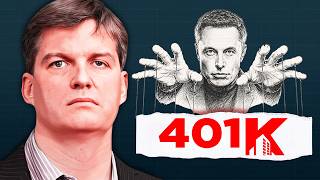
Michael Burr is betting almost 10% of his entire portfolio against American artificial intelligence. He is shorting Nvidia. He bets on Palunteer's short. He is shorting the semiconductor index, NASDAQ 100 and Oracle. The man who shorted the housing market in 2008 and made $800 million now believes the American artificial intelligence trade is one of the biggest bubbles in modern history.
You've probably heard this part. But here's what almost no one tells you. At the same time as he bets against American AI, Boer is quietly investing in one AI company, just not American. He buys Chinese companies. Specifically, he buys Alibaba and calls it the most advanced AI company in China and one of the most undervalued mega-cap stocks in modern market history.
Think about what this means. The most famous AI bear on Earth is not betting against AI itself. He bets against American AI because it's expensive, and bets on Chinese AI because it's cheap. Understanding this difference will tell you more about where this market really is than anything you'll hear on financial television.
Let me show you exactly what it does and why it directly impacts your 401k. Start with the side that everyone knows – the short position. According to his latest disclosures, Boer holds put option bets that pay off when stocks like Nvidia, Palunteer, the SOXX semiconductor ETF, the QQQ NASDAQ 100 fund, and Oracle fall.
Together, they account for about 9.5% of his portfolio, which is tied to the decline of US technology companies. His bet on Palanteer alone was built on 5 million put options . His thesis is simple and brutal. Shares of American AI companies are priced as if nothing could go wrong. And history says that something always happens, and it already works in his favor.
Palunteer has fallen about 34% from where he opened the deal. And now here's the part that turns the whole story upside down. If Boer truly believed that artificial intelligence itself was a fraud , he would be hiding in cash and gold. He is not like that. He takes the money and buys an artificial intelligence company.
He simply refuses to pay American prices for it. And the company he chose is the one that no one on American financial television wants to talk about, Alibaba. Let me give you the numbers, because the whole point is the gap. Alibaba trades at a forward price-to- earnings ratio of about 17. This means you pay about $17 for every dollar of expected earnings.
Amazon, which runs pretty much the same set of businesses: e- commerce plus a giant cloud division plus AI, is trading at about 27. So you have two companies that do basically the same thing. And American is 60% more expensive than Chinese. Now compare this to the shares that Bur is shorting. Palanteer, at its peak, traded at a price of more than 150 times earnings.
Nvidia—at a price of 40. American AI darlings are priced in a perfect future. Alibaba is rated as a disaster. The whole Bur move is this gap. In his own words, Bur called Alibaba the most advanced company in China when it comes to AI strategy, and it is buying back shares. He added about $111 per share to his position.
He described it as one of the most short-lived, misjudged mega-cap deals in modern market history. And he said something that accurately suggests what kind of bet it is. When the time comes, stocks will take off quickly and soar high. This is not the language of a person who hedges risks. This is a belief.
And this does n't just apply to Alibaba. Look at the whole scheme of what Boer was buying by selling American AI, because this scheme is the message. He bought Fiser, a boring payments company, at almost a 10-year low. He made Samsung, the Korean chipmaker, one of the largest positions in his fund, bought at a tangible book value that is about as cheap as the stock.
Each of these agreements is one and the same. Sell the expensive, over-the-top, beloved American technology and buy the cheap, hated, ignored stuff that the rest of the market has abandoned. He very deliberately does the exact opposite of what everyone else does. Now I have to be honest with you about one part, because this is the part that most of the channels covering it get wrong.
The Boer did not always like China. Back in 2025, he held bearish put options against shares of Chinese technology companies. He was betting that they would fall. So this isn't some lifelong Chinese bull that's finally proven right. This is a person who looked at the same company a year apart and changed their mind when the price got low enough.
Advertising actually makes the signal stronger, not weaker, because it has no emotional attachment to it. He was bearish when it was expensive and the risk was high, and he became bullish when the math changed . This is what discipline looks like, and it is worth more than the opinion of any regular reader.
So why is Alibaba so cheap? This is the honest other side, and you need it. It 's no coincidence that Chinese stocks are cheap . They are cheap because of the real frightening risk. Years of regulatory repression, when Beijing destroyed entire industries overnight. Geopolitical tensions between the US and China, which could escalate.
The constant threat of Chinese companies being completely delisted from American exchanges. And a basic inevitable truth. When you buy Chinese stocks, you are trusting a system where the government can change the rules whenever it wins. That's why the whole world ran away from these actions. And it was this escape that created the low price.
Boer is betting that the fear is overblown right now, that Alibaba is so cheap and buying back so many of its own shares that you are being paid more than enough to take the risk. He may be right. It can also be premature or wrong. These risks are real, and anyone who sells you this story without mentioning them is selling you something.
Now here's where it touches your money, and this is the part that should make you stop the video and check your account. If you own an S&P 500 index fund or a NASDAQ 100 fund like QQQ, or a target-date retirement fund through Vanguard, Fidelity, or Schwab, here's what you actually own. You have a huge concentrated position in the very same US AI stocks that Michael Boor is shorting.
Nvidia alone takes up over 7% of the S&P 500. Add in the rest of the AI complex, and you have a portfolio that is making one giant bet that American AI will continue to win at these prices. And here is the other half. You own virtually zero of what Bur buys. Almost no standard US pension fund owns Alibaba.
So the average American investor is maximally exposed to the expensive side of the Bur trade and completely absent from the cheap side. You, regardless of your choice, are on the opposite side of the table from one of the best contrarian investors. This doesn't mean you should run out and buy Chinese stocks.
Please don't take it that way. Bur is a professional who can tolerate a position that contradicts him for years, and who can absorb the risk of Chinese stocks falling to zero because of a political headline . You may not be able to. It's not about a specific action. It's all about concentration. Your retirement is one undiversified bet on American AI at the highest valuations in history.
And most people have no idea what kind of bet they are making. So, what should you consider? What should not be considered? First, carefully review your portfolio and figure out how much of it is in Nvidia, Palunteer, and the AI complex ; For most index fund owners, that's far more than they could get .
Second, understand what the Boer deal really is: not “AI is fake,” but “ American AI is overrated, and there is something cheaper.” It is this re-thinking that changes the way you read each headline. Third, respect the risk on both sides: the American AI he sells could continue to rise for a year, as happened with the dot-com bubble after everyone knew it was a bubble, while the Chinese stocks he buys could remain cheap or get cheaper for reasons that have nothing to do with the business.
Being right about cost and being right about time are two completely different things. And Boer himself has been wrong before. Because this same pattern is manifesting itself everywhere now, if you're paying attention. The question that really matters is not whether Boer is right about Alibaba. It's about whether you've ever looked at your own bill and asked, "Am I on the overcharged side of this deal?" Because most people never ask until it's too late.
If you want to stay up to date on what Boer and other billionaires are actually doing with their money, not what they say on TV, but where that money is going, subscribe, and I'll see you in the next one.



댓글 0