저자: PeterSchiff · 외국인
요약 보기
결론: 피터 쉬프는 2018년 하락장이 이제 막 시작됐으며 1966~1982년 약세장보다 더 길고 심할 것이라고 주장한다. 하락장 진단: 다우·S&P·나스닥 급락은 건전한 조정이 아니라 거품이 꺼지는 과정이며, 2008년 금융위기의 후반부가 전반부보다 더 클 것이라고 주장한다. 거품 원인: 2008년 위기의 원인은 규제되지 않은 시장이 아니라 연준의 저금리(1%)였고, 이번에는 제로금리 6년과 이후 9년간의 저금리로 주식·채권·부동산 전반에 더 큰 거품이 형성됐다. 경제 전망: 경제 상황이 2008년 직전보다 훨씬 나쁘며, 연준이 더 이상 거품을 만들어 구제할 수단이 없다고 본다. 손실 규모도 2008년보다 클 것이라고 예상한다. 출연 및 향후: 사회자가 다음 주 특정 종목 논의를 요청했으나 시간 부족으로 다루지 못했다. 개별 종목 및 자산에 대한 구체적 가격 전망은 언급되지 않았다.
다듬은 글
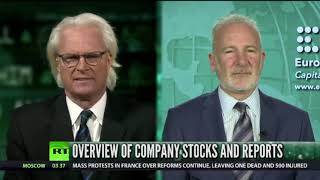
We are pleased to once again be joined by the CEO of Europacific Capital, Peter Schiff. Peter, thank you so much for being with us again. You've been calling for a correction for a long time, more than that actually, more than a correction, and this is certainly a correction. The Dow is down sharply, the S&P as well, and the NASDAQ too. Yesterday was no bargain either. Is this it, Peter?
Well, I've been calling for a bear market, and I think this is a bear market. If we get a rally, it will just be a correction, because the primary trend is now down. This is early in this bear market. It's very young, and unfortunately it's going to be very long-lived. I think this is going to be similar to, if not worse than, the bear market that ran from 1966 to 1982. It took 16 years for the Dow to make a new high, and during that time inflation took about 70% off the Dow's value. This time I think it's going to be worse.
Why do you think that? At this initial point, Peter, is it that some traders just don't want to face the music? Even if it's a downer tune, they don't even understand the music or what's playing?
What they don't get is that we are about to finish the financial crisis and the Great Recession that started ten years ago, in 2008. All the Fed succeeded in doing was interrupting that process, which was the market's cure for the underlying economic disease, and that disease is now much worse. Ten years of additional debt, borrowing, and spending simply allowed us to reflate an even bigger bubble than the one that popped before. As a result, we're in a much worse economic condition than we were on the eve of the last crisis, so the finishing process is going to be far more severe. The back half of the Great Recession is going to be much greater than the first half, and the rest of the financial crisis is going to be much worse than the beginning. People just don't get that yet, and it's going to take a long time for them to figure it out. Maybe not that long, maybe months, we'll see. In the meantime, everybody thinks this is a healthy correction. There is nothing healthy about what's going on. This is a bubble deflating. This is exactly how it started in 2008, only this is a bigger bubble, and it's going to produce a bigger crisis.
You've said this before, and if you'll pardon me, I want to tease it out a little more. Part of the problem leading up to 2008 was the unregulated markets, the mortgage-backed securities and those over-the-counter products that weren't regulated, plus rampant speculation. Why do you say this is a bigger problem?
I'm sorry to have you do a little remedial work for us, but I'm very curious.
Well, that's a common misconception, that the problem was underregulated or non-regulated markets. The products that fueled it were regulated ones. Fannie Mae and Freddie Mac were the entities doing what they did with subprime. But remember, the fuel for that bubble was not the mortgage lenders. It was the Federal Reserve, which kept interest rates artificially low. They kept rates at 1%, the lowest they had ever been, left them there for a full year, and then it took two to three years to normalize back up to 5%. When interest rates are artificially low, we take on a lot of debt, much of it mortgage debt, and the bubble popped. This time the Federal Reserve injected far more monetary heroin into the economy. They kept interest rates at zero for six years, raised them for three years, and are only now back at 2%. So we have nine years so far of extremely artificially low interest rates, which have caused a much bigger credit bubble than the one that popped in 2008. We have a bubble in real estate, residential and commercial. We have a bubble in stocks, a bubble in bonds, bubbles everywhere, and they're all popping and the air is coming out. During these nine years the economy got far more screwed up than it did during the years when Greenspan inflated the housing bubble and Bernanke was at the helm, and now the bubble is far bigger. So the economy is in much more trouble. The process of unwinding all these malinvestments, liquidating all the mistakes, means a lot of money is going to be lost, far more than was lost in the collapse of 2008. The difference is the Fed is not going to be able to bail anybody out. There is no bigger bubble the Fed can blow. This is it. They're done blowing bubbles, and we now finally have to deal with the consequences. Because we kicked the can down the road for so many years, the consequences are much more severe than they would have been had we bitten the bullet and dealt honestly with them earlier.
We totally ran out of time talking about that, but I appreciate it so much. Peter, going back, from my view I get what you're saying and agree about the lower interest rates, but those OTC products that nobody knew about seemed like a problem to me as well, in tandem with what you said about Freddie and Fannie. This is asking a lot because we're out of time, but I'd sure like you to come back next week and talk about some of the specific stocks we were going to get to but didn't. I know you want to talk about them, and unfortunately we don't have time today. Thank you so much, Peter, the CEO and Chief Global Strategist of Europacific Capital. Appreciate it.


댓글 0