저자: 미상 · 외국인
요약 보기
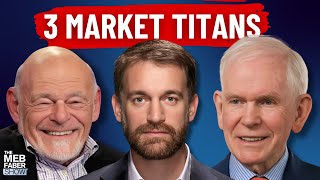
Meb Faber 쇼의 '역대 가장 기억에 남는 투자' 모음. Grantham은 QuantumCape 투자를 회고하며 SPAC 버블 붕괴로 자산이 급락했고, 이후 일부 매도 후 보유를 언급. Arnold는 Amaranth의 Brian Hunter 천연가스 포지션 붕괴 사례를 소개. Zell은 Mucinex(구아이페네신) 특허 투자와 Mobile home park REIT 투자 성공 사례를 설명.
다듬은 글
Welcome to the Met Favor Show, where the focus is on helping you grow and preserve your wealth. Join us as we discuss the craft of investing and uncover new and profitable ideas, all to help you grow wealthier and wiser. Better investing starts here. Met Faber is the co-founder and chief investment officer at Camry Investment Management.
Due to industry regulations, he will not discuss any of Camry's funds on this podcast. All opinions expressed by podcast participants are solely their own opinions and do not reflect the opinion of Camrian Investment Management or its affiliates. For more information, visit cambrianvestments.com. What's up, listeners?
Today, we're going to switch it up a little bit. We've had some amazing guests on the show in the past 580 episodes, and listeners know we asked each guest for their most memorable investment. Well, we've heard some great ones over the years, and wanted to share a few with you today. If you like this format, hate it, shoot us a note at feedbackfow.com.
First up, we spoke to the legendary investor Jeremy Grantham of GMO back in February 2021 when the market was going crazy. My favorite was QuantumCape because 7 years ago we made a very substantial investment because our foundation tries to invest in stuff that will change the world in a way that will help it decarbonize industry.
And nothing could do that better than a improved battery. And QuantumCape has spent the last 10 years working on a solid state battery that will be half the weight, half the volume. So it has twice the power to weight ratio, which means instead of having a,000 pounds of battery in a Model 3 Tesla, which I own, a wonderful machine, incidentally, it would be suddenly weighing 500 lb.
So you'd get rid of 500 lb of absolute dead weight. And then in addition, solid state doesn't heat up. So you save two or three or 400 pounds of cooling equipment that goes with the battery in a Tesla. So now you're talking 7 or 800 lb of complete sailing. You're simply going to perform better before you even get to the battery.
And then the danger of breaking into flame disappears to practically zero, which is pretty handy in a car because even if one in a thousand crashes starts to burn away, that's a public relations disaster. And it can be reassembled to recycle more easily than prior batteries. And it will charge in somewhere between 8 and 12 minutes probably in the end.
So it was a wonderful set of objectives. And seven years later they have done it on a lab basis and now they're faced with another four years which is a long time to wait another four years before they get it rolling along the production line. and they did a spa deal and I'd already committed myself to saying that spaxs were a ludicrous speculative instrument.
So that was the great irony because this was about the biggest investment that we had ever made. When it came at 10, it was a very respectable four times our investment. So it was already significant to us, but it spent the late summer working its way to 25 or so. And then when they got approval, which should have been worth nothing cuz they always get approval, they exploded to 40 and then kept going and took another couple of weeks or so to get tound 110.
And at 110, it was a 50% increment to the foundation plus any of my own money added together. So it had become absolutely massive, but couldn't be sold until May the 1st. So that brings up the second great irony is that I was writing about the bubble forming and the fact that it by January looked pretty late stage to me based on history that it would break in a few weeks.
So I'm not really expecting that I will get to May the 1st when I could sell some of this. I think it's quite likely that the bubble will break before that. As I say that was one of the great ironyies of my life. And of course, QuantumCape then turned down from 110 to uh the day before yesterday 44, which is the biggest wipe out of theoretical wealth, paper wealth that I have ever had by a multiple of perhaps 10.
So I've been I've been I've been theoretically writing a little story about how I came to love irony around QuantumCape. But when you think here's a company that it's a brilliant company, but it makes no bones about the fact there's four years to wait and at 110 it was selling for more than the market value of General Motors or Panasonic to take a battery company.
Not bad, eh? We had Jeremy back on the show in 2022 and I asked him for an update on his investment in QuantumCape. We sold 75% the first week or two that we could and we got 25. And then more recently it had a bit of a rally and we sold 20% of what we had left and at 15 or 16 I guess we're in no man's land.
Below 10 we might even start to buy it again. It's a brilliant little company and it could one day be a complete monster with solid state batteries. Everyone has talked about it. No one's done it. But these guys are pecking their way step by step through the problems. I think with any luck. Next up, we spoke with John Arnold, arguably the greatest energy trader of all time about the time he took the other side of Brian Hunter and Amaranth advisers in a famous trade.
I had seen a lot in 17 years of trading. One of the things I'd frequently see is that a trader would come in, have some success, and just start trading too big. and after a couple years of success, he gets significant risk capital from his company or his fund and just end up in positions that were too big.
And almost without doubt, that person would end up blowing up. And so this happened with Brian Hunter who in 2004 2005 had very good years. He was at a hedge fund that was really a ARB hedge fund doing a lot of convertible bond ARB and some of the more traditional hedge fund strategies, arbitrage strategies.
They weren't known for understanding and managing energy risk. And I think management started to see the numbers that he was putting up and gave him more rope without really understanding the risk he was taking. And so he ended up very very deep in a position that dependent upon having a hurricane, this exogenous event of a hurricane coming and really significantly impacting Gul of Mexico production and the whole market was kind of against him on this.
He had built it up to such size and as the summer starts to tick through and it's a slow hurricane season, the position started to decay and at some point his management came in and said no more. In fact, you got to decrease position. Turns out he wasn't decreasing the position, may have even been adding to it.
And then they get to a point where their clearing firm steps in and says position's too big. You got to get out of it. And so he calls me up one weekend when I'm in New York getting engaged, get the call and says, "Do you want to buy my book?" And I had a notion about what the size of it was. I had been a counterparty to him on many of the trades.
Often as a market maker, I had some of the other side of the position, but the whole market had the other side of the position. Just kind of told his folklore that it was centurus versus amaranth. It really wasn't. It was Amar versus everybody. I had a piece of it. Everybody had a piece of it. And that weekend he has to show me the position because I'm bidding on it.
And I was flabbergasted by the size of it. And that his management would let him get into a position with a position size like that. And I gave him a price that ended up being I think the right price given where things traded. That Monday whenever the market opened up and it had been shopped, his clearing firms ended up taking over the position and liquidating it and you know the market really just evaporated.
That became the natural gas story that led to a lot of regulatory oversight and a lot of headaches for me in the long term. We have the grave dancer himself, Sam Zel, on the show in April 2023, shortly before he passed away. Sam blessed us with not just one but two of his most memorable investments.
Well, somewhere in I don't know when it was, maybe it was 2011 or 2012, a guy came into my office and he explained that he was a pill manufacturer and that he manufactured pills pursuant to somebody else's formula. and he was just a commodity player but that his specialty was a chemical called guiesphan.
Guessen is an expectctorant and when you think about expectctors Robbitasen stuff like that and he explained to me that when the FDA was created in 1936 they had a problem and the problem was what do you do with grandfather drugs and so they put a provision in the bill that said that in effect grandfather other drugs did not have to be retested, but they were accepted just based on the fact they've been around for hundred years or whatever.
But that if you took a grandfathered formula and proved new efficacy, then the government would give you a monopoly on that effective use of that compound. And he explained to me that the number one grandfather drug was aspirin, which made sense, and guest was number two. And what he wanted to do was he wanted to basically come up with a longlasting version of guacif.
And I thought about it and I don't obviously know nothing about drug compounds and I'm a real estate guy or I'm a hard asset guy and here's some guy pitching me on drugs. And so I thought about it and I decided to back it. And so I put up the money and we began the process of going through the FDA and doing drug trials.
And eventually we succeeded and we got the monopoly. We then named the product Mucinx which as you know is an enormously successful. I couldn't believe how excited I was that we got approvals and we got a monopoly and eventually took the company public and then eventually sold the company and it was I don't know a 10 or 20 bagger I don't remember but that was one of the most unique experiences I had as an investor and when you asked the question that's kind of the first thought that came to my mind I thought you were going to say they'd let you name it you're like Sam what should we call this and you're like ah I don't know something about mucus mucinx that's it.
Yeah I've always kept my ego out of everything I do. Easy to say hard to do. Another example of what you're asking was that in 1983 we were interested in purchasing a distributor of real estate products. At that time, there were a number of companies out there that syndicated real estate to the investor through the brokerage firms.
And so we decided that we needed to be in that business because we were a big consumer of capital. And so we negotiated and finally found a company and agreed to buy it and agreed to the price and began the due diligence. And the guy in my shop that was responsible for doing the due diligence went to work and I was sitting at my desk one day and the phone rang and it was Barry and I said, "Hi, how are you?" And he said, "Sam, I've discovered something that's unbelievable." And I said, "What's that?" And he said, "I'm down here in Florida.
I'm doing the due diligence on the deal." and I've discovered these mobile home parks. I said, "Mobile home parks?" He said, "Yeah." I said, "That's Marlon Brando and Stella and Rolling Cactus." And why would I want to touch something that was that far down the pike? And he said, "Sam, you don't understand that there is a mobile home park business that's very different from what the street or what the world expects.
These are age limited communities. They're beautifully maintained. They're the typical story of the guy who sells his house in Buffalo, then buys a mobile home park in Sarasota. It's just a wonderful business. And he proceeded to fill me in on the business. And I was stunned because literally here I am, one of the biggest real estate players in the country and I never heard of it.
And so we did our due diligence. We never bought the syndicator, but we bought the largest mobile home player in the country at a time when no one in the quote commercial real estate business owned mobile home parks to any extent. Eventually, we built the business up and took it public in 1993. And from 1993 to today that mobile home park REIT has been the most successful REIT in existence sharing something like a 18% compounded rate of return.
Interestingly enough, the real reason it did so well is because of not in my backyard. going back to the great concept of competition because basically it was extraordinarily difficult to get zoning. So if you had mobile home parks and you had them and maintain them, not the dusty place on the edge of town, but the crisp, clear, clean place that established its own situation, we made a fortune.
So, those are two examples of out of the park investments that certainly weren't on my agenda. Podcast listeners will post show notes to today's conversation at mefab.com/mpodcast. If you love the show, if you hate it, shoot us feedback at the mebershow.com. We love to read the reviews. Please review us on iTunes and subscribe the show anywhere good podcasts are found. Thanks for listening, friends, and good investing.
Comments 0