저자: Taylor · 외국인
요약 보기
새 Fed 의장 워시는 물가 안정을 최우선으로 하며 Volcker식 강경책을 시사했다. 발언 후 2년물 금리는 상승, 장기물은 하락. 전문가들은 Fed 금리 인상 가능성을 언급하며 BofA는 2026년 3회 인상을 전망. 이란 전쟁 이전부터 인플레 추세가 상승했다는 주장. 주식 측면에서는 Russell 2000의 적자 기업이 흑자 기업을 크게 아웃퍼폼하는 현상, 스페이스X IPO 과열, 기술 기업 해고 증가가 언급됨. 전반적으로 금리 인하 기대는 약화된 상태.
다듬은 글
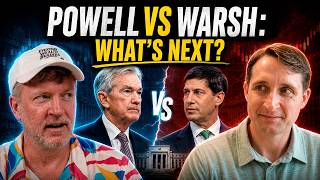
Alrighty, folks. It is very clear that we have a new chief at the Fed, Mr. Kevin Warsh is taking no prisoners and in looking to change everything about the Fed. But, of course, history sometimes rhymes and is he out to be Paul Volcker 2.0? Is he single-handedly going to take inflation down to 2%? He said, and I quote, "Inflation is a choice." which should send shivers down your spine if you are in certain sectors of the market.
about price stability more than 12 different times. Or, is he just playing 4D chess? Is he just buying times because he is a lapdog puppet to President Trump and rate cuts are coming? Again, I think it's either Paul Volcker or a lapdog. What say you, Taylor? I I I don't know that you can step away from that conversation and say he's just going to beat to the sound of Trump's drum because it couldn't have been any more opposite of of what Trump kind of seemed to have hired him for and it was lower interest rates and we're crazy if we don't drop interest rates once this war is over, oil's going back down, inflation's going to plummet, inflation's under control, look at this, that, and that's that.
And he said, "Listen, we got one thing we're focused on right now. Screw unemployment, we're not going to focus on that whatsoever. It is price stability." and price stability when inflation is running ahead of target doesn't say rate cuts to me. Yeah, doesn't say rate cuts to me. And again, folks, we did have two central banks last week raise rates.
First was the ECB, again single mandate price stability, and Japan also raised rates. So, again, the US is kind of behind the eight ball here. Again, you could often say the Fed has a dual mandate, right, full employment, stable prices, but I think Kevin Warsh at least came out and he talked tough. Again, he is clearly trying to buy some time.
I think one of the things that was a complete layup was the first meeting was going to be a nothingburger and it was going to be 18 to zero or whatever the vote total, 12 to zero I guess. Everybody was unanimous. I'm sure they wanted to do that for the first time for the new Fed chair. But, um you know, what what other takeaways did you have, you know, from the press conference?
To your point in the intro here, he's going to change change everything. At least that's that's what he's forecasted here. The thing that that was like such a blessing down from the skies above is we aren't just going to be reliant upon the BS data that we're currently getting from the government. We're calling people and asking them, "Hey, are you employed?" to get unemployment statistics, which is just bananas and bananas.
Bananas. And so, we're going to have these five committees that each have their underlying area of focus. It's data, it's AI, it's it's a whole, you know, multitude of different things. But, it does sound like they want to revamp every input, basically, that goes into the Fed's equation, which I think is long, long, long overdue.
No, I couldn't agree more. And in fact, one of the things that I called before the meeting was he was going to That's going to be a Kevin Warsh. He's going to hang his hat on that when he leaves office is that the Fed is is really taking in millions of data points and not relying on, you know, phone calls.
I don't even have a phone in my house. How the hell are they going to call me? Ridiculous. So, it's just wild. So, I think you're absolutely right. The other thing that I think is really clear, and I got to tell you, I'm not sure this is a good thing. I don't know how I feel about this. And again, you're a 10-year veteran on Wall Street.
You work with the top 1% of the 1%. So, you probably have a unique view on this, and that is forward guidance. Yeah. He didn't give a dot plot. He clearly won't give a dot plot in the future. Yep. And you know, he basically wants the Fed to shut up and stop talking about forward guidance. And I dude, I don't know if that's going to I don't know how that's going to work long term.
It's interesting. I think that basically what his underlying assertion is is instead of the Fed giving guidance to the market, the Fed should be taking guidance from the market. And so, what I mean by that is like, you know, think about some recent events. Basically, the market told us that And And I guess it's still out for debate at this point, but the Iran war was going to be a complete non-issue, right, economically.
And again, maybe we're too early to tell this, and and hindsight will will make us look very foolish, but at this juncture, it does look like the Iran war has been a non-event to our economic data. And so, maybe he perceives, and I and I think I I I like the way he thinks about this, that the market can drive a lot of what the Fed does relative to the Fed driving an outcome in the market that it hasn't worked in the rearview mirror.
And I think that that's that's kind of the the two sides of the same coin, and just a a complete inversion of the way we were looking at it over the prior two or three Fed chairs that were in place. Yeah, if not longer. So, again, if we were going to play that game, this would be completely new to me.
Uh you're going to have some unique opinions on this, so so please share them. And again, these could be just guesses on your part, as well. Yeah, again, if you were the average person, you know, who doesn't read daily like I do, Yeah. uh and there's this new Fed chair And again, you're saying the market's going to drive the Fed.
What What are the things that they should look at? Should it be the two-year note, which oh by the way is up massive since this talk? Yeah. Is it oil because it's an input to everything, which is down massive? Is it gold because it's a it's a safe haven? What's the average person supposed to look at to say the market's crying?
The two-year. The two-year is what's going to dictate it. So, there's a lot of misunderstanding about what the Fed controls, what the Fed doesn't control. And And we've had some of these conversations in the past, but the Fed controls two-years in in Correct. yield curve, right? And so, what you saw day of Fed chairman speech, washed for the first time last Wednesday, was a pop in the two-year, rightfully so, because he's coming out in a hawkish stance saying that inflation is enemy number one and the only enemy that we're focused on at this juncture, which leads you to believe that inflation's too high, so interest rates have to go higher, or at least stay steady and not get the cuts that the market was thinking earlier this year.
But, the interesting thing was the back end of the yield curve came down. And And that would A layman would be very confused by that. But, what the back end of the yield curve is sussing out Sussing out? Whatever that was. Sussing. Yeah. Sussing. There you go. Not sussing, sussing. Is where inflation's going in the future.
So, if we're going to be more prudently focused on where inflation is, and that's going to dictate the sole dictating factor, which is basically what he said, as to where interest rates are, interest rates have to go higher, and interest rates higher should drive lower inflation longer term. And so, the market acted accordingly.
And the front end of the yield curve popped. And so, that dictates things borrowing cost that are short-term in nature. That dictates revolvers. That dictates credit cards to to, you know, the average person. What it doesn't dictate is the longer-term stuff like mortgages. Now, mortgages did move a little higher.
Um But, I don't think that will last. The mortgage yeah. Yeah, and the mortgage is going to be more based on the 10-year. The 10-year did move marginally, but reality is if they're controlling inflation, mortgage rates should come down. Right. Right. So, again, so again, the average person maybe didn't care about the two-year, but again, it's long been said on Wall Street, and if you're you're obviously 10-year veteran, you hear this all the time, the Fed doesn't do anything except track the two-year.
And so, if the two-year is up, I I don't know what it's I think it's up 12 basis points today or something. Uh I think the two-year's telling you that there is a rate increase coming. Are you in that camp now that the Fed's going to raise once at least in '26? Have you gotten there or not yet? No, not necessarily.
I think if things persist, like, you know, the Fed has to realize what they can control and what they can. I think that Yeah, they don't drill, right? Yeah, they don't they don't drill. Exactly right. So, like, the oil input cost that is so darn volatile. Like, people are like, "Hey, they're not looking at the right inflationary data because everything that I'm buying, the costs are going up." But, like, a lot of that supply-side driven, and the Fed cannot control whether we are present in Iran and driving oil prices higher.
Right now, oil's caught a reprieve, right? From the high water mark that we've experienced. But, at the same time, that that that is completely outside their realm of control. And so, they need to focus on what it is they can control. And And And that is borrowing costs. Borrowing costs are what the Fed can control.
And is there a direct result of interest rate movements to borrowing and the the the demand for borrowing? No, but it certainly is directional. It's not like they cut rates, we all go to the bank and say, "All right, I want more now." But, it makes our decisions in things that are debt sensitive, it makes the math math a lot easier, right?
And things become positive investments, whereas 50 basis points higher, they aren't positive investments anymore. So, I'm I'm not there yet. I'd love to hear your take on whether you're there yet to say yeah, like, the likelihood is good. The market is telling us that the likelihood is there that the Fed raises rates this year.
That That's where the market's pricing right now. I haven't gotten there yet. Um I think you're on the opposite side of that coin, but go ahead. Yeah. Yeah, so, I you know, I've I've definitely been thinking about this a lot cuz I do think Kevin Warsh is playing 4D chess. Most people missed it, and frankly, I missed it.
Right? 24 hours after he spoke, I'm like, "Holy he's Paul Volcker 2.0. He's He's yanking this thing higher." Yeah. But, now I think all he's doing is he's buying time. He's actually created a no-lose situation for himself, which is really hard to do. What do I mean by that? It's this Iran more that you've talked about.
If this peace deal, which you Vice President Vance is probably negotiating right now, if it sticks and there's no major flare-ups, we have deflation, you know, coming, right? Again, we still have inflation in the system, but you know, you you fast forward 90 days, things get better. Uh but also, I think everybody knows, including Kevin Warsh, this thing could go sideways quickly and bad.
It it it looks like it's gone sideways from from you know, 3 days ago until today. Like reality Yeah, and and and and and just kind of not cut me off, but the other factor there that we don't control is we don't control Israel. Yeah, exactly. And so, that's like that's the outstanding now they're after, you know, the Lebanon, the Houthis, you know, Hezbollah, whatever it is.
We don't control any of that, and all of a sudden we're looped into now our peace deal's broken based on someone else's decisions. That's a that's a tough war to wage. Yeah. And again, this is why I think he's creating a no-lose situation because if this if this sticks and oil falls, he he's going to have grounds for, you know, talking about rate cuts in the fourth quarter.
If it doesn't and we get another month into this, we're going to have real problems. The world's going to have real problems, and he probably will have to raise. So again, I think he's buying time. Yeah. Um but you know, I'll stick with my call cuz I was the first economist that I'm aware of who said the Fed's going to raise rates this year.
I made that call four or five months ago, and I see no reason to change it. But I do think Kev I I think Kevin Warsh is smarter than I gave him credit for. And I do think he's creating a situation where he can't lose. Well, I also think that you know, him buying time is also the fact that a lot of inflation is psychological as well.
So, we can we can push a snowball down the hill psychologically and drive higher inflation. And so, he's saying, "Hey, I want to control inflation first and foremost. That is the primary objective here. We are super locked in on that." Yep. And that can dictate things psychologically because there is psychological pricing and psychological buying that takes place that drives inflation when folks think inflation's getting out of control.
Why would I wait for a year to buy something when I can buy it cheaper now? Yeah. And so, the psychological aspect of it of enemy of the state number one, we're not going to do anything until we control inflation is something that can transpire just mentally into inflation not getting away from us. And part of what he's doing I perceive to be laser focused on that underlying agenda from a psychological standpoint.
Yeah, another thing he said, you know, talking about the market. Again, I think you're right. We're all of us including myself we're going to have to reorient to what we look at. And again, thank you for the two-year note. But he also said something to the like of when you look at housing, you can see that we're restrictive, right?
Housing's been in a depression for 3 years, 2 and 1/2 years certainly. Yep. But then he said on the other side of the coin, look at the market. Yeah, the markets say that access to capital is easy. Right? So again, you've got this tug and pull. If you if you want to add a statistic on that, I'm pulling it up right now, but I was just sent a chart this morning that shows the difference in companies performance that have negative earnings to positive earnings in the Russell 2000.
So these are small cap companies over the last year, there is a 30 percent spread roughly. I'm looking at a chart. Roughly 30% spread of unprofitable companies outperforming profitable companies in the Russell 2000. They're looking at companies with positive earnings versus companies with negative earnings.
In other words, what we've seen over the past year is an epic to to the degree that we've very infrequently ever had this magnitude of movement of junk companies outperforming quality companies. Weird. it's so counterintuitive, but that is indicative of loose policy, right? But to your point on on on the equation of on the other side of it, it's there's there are things that are rate sensitive, there are things that aren't rate sensitive.
And and so the monetary policy right now is fighting a two-front war where housing is one of the most important things that we could possibly have being an economic flywheel that's turning and it's it's not turning right now. No, it's 12 12 to 13% of the economy that's stuck in the mud. Correct. Right, yeah.
Uh I don't know if you saw it this morning. I you I know you've been busy, the markets open, all of that, probably had phone calls the whole day, but Bank of America came out with this note in the last 24 hours. Did you see what Bank of America said about rates? No. You might want to read this later, but Bank of America is calling for three rate hikes in 2026.
In '26, September, October, and December. Three rate hikes, Taylor. And and justification of that was was what was there any real justification or was it more of a headline? It I would certainly a very catchy headline. My my take from the article which I read is they they think Kevin Warsh is Paul Volcker and that he's going to cut off inflation at the knees, he's going to do it quickly, he's going to do it in his first year, so he has three years to clean up the mess.
Uh that was essentially their take, you know, my summary of their words. Not not for nothing, but after that meeting, there's there's no way where you could say you're an idiot for saying that. Yeah, absolutely not, right? You you can, right? And and and what he has done is it it in his we are going to be 100% sensitive to the data and and align to the data that's going to be improved data, to be clear, right?
Um and I do think that that he will improve the data. Um in that, what he's done is driven a massive question mark, right? Because we don't know what the data is going to be and before we got at least the guidance out of the Fed to say directionally, here's where we think it's going and it's not to say they were ever right cuz they were more often wrong than they were right.
Yeah, I'm not sure they were ever right. But at the same time, you knew directionally where they were going. Now, if you don't know where the data is going, you don't know where the Fed's going anymore. And so there's this outstanding like Joker question mark that now is is hanging above the market.
And if you look at the data right now, you look where inflation is, you look at the fact that this is You look at the trend. The trend. And you look at the fact that the inflationary influx happened prior to the Iran war. Inflation started to move markedly higher. It's hard to make the argument that this is just oil related.
Oil Oil's where it was before. Yeah, this morning, yeah. Yeah. Um so it's um it's not bombastic to say like, no that's that's his intention. He said overtly that's his intention. Now, it's just how uh how you know constant you read what it is that he says or how convicted you think he is in that. Yeah, the other thing that he said again that I think a lot of people missed is when he was talking about inflation.
He did back up the 2%. You know, again, he's not changing that as the goal to get to. We haven't been there in I don't know what it was, 6 years or something. But he did have a little quip somewhere in the talk. I think it was one of the answers. He said he's he's worried about the left of the decimal.
Right. Yeah, yes, I did hear that too. Yeah, so basically he's saying like listen, is two the number we're trying to get to? Yes. Is 2.7 going to be acceptable? Yes. What's What's kind of my take on it? No, but that's let's be very clear. That's important. Oh, totally. Because again, the Fed before this recent increase was at 2.3, right?
That was the low of CPI headline. I think also for PCE. Um but again, I I think he's again, this is why I think he's playing fo- 40 chess and he's trying to he's trying to move pieces and I think he is playing the Paul Volcker threat to kind of be a distraction and a shield. Yeah. Right? If we like so when you just play out the calendar, right?
So he had his first meeting, big nothingburger, you know, full support. He He's saying less in front of the media. He's going to talk less to the media. No guidance. There's going to be a meeting in July. Then they're off in August, right? They do the Jackson Hole meeting. Right. And then there's the next meeting in September.
I am I want to ask you about Jackson Hole. Because Jackson Hole has been pivotal. Pivotal. So, my question for you is there are five task force. Let's assume that they initiated uh before the Fed meeting. Right? Cuz again, that was Wednesday. Do you think there is enough time for those, I'll call them leaders, managers, I'm not sure what to call them, but the head the heads the heads of the five task force, do you think they can report by August?
Is there enough time between here and there? I would like to think no, and the reason I would like to think no is why the F did we wait until now to do this and update our data if we were able to collect that data in such rapid turnaround. Well, again, I I'm not saying it's going to be the end product.
What I'm saying is do you think in 60 days or so they're going to be able to say, "Here are our findings?" Or here are not even findings, here are our suggestions. And then we implement whatever they decide to implement after, right? This is not about getting to August and having the answer and you're already you already got an A+.
This is just, "Hey, these are what we looked at for 60 days. Here's my report card. Let's debate." Directionally, here's what we need to do. We don't have the numbers yet. We don't have that. Yeah. No, it's government, so I don't think there is. Uh fair fair fair, yeah. I would almost be nervous. I I got to tell you, I was I was hoping you would say no.
Because this is what I think about task force. Having run them, I ran go-to-market for for companies who didn't even have products. So, we were literally creating the airplane while flying, all right, or falling. And if you can create like if a task force can produce an outcome that's meaningful in 60 days, it's actually a outcome because you went into it with an answer.
Yeah. And all you did is you're biased to that answer and you're just trying to make yourself look good. Right? If you're really going into a hard question with first principles and steel man and all this stuff, 60 days is not enough to uncover you know, a new reality. Unless you're biased to an answer already.
Or unless he has been working on this now for three quarters where he was pretty sure that he was going to be the position that he's in and and therefore has been working behind the scenes. he get tapped on the shoulder? Was that like 90 days ago? Yeah, but I think that I would like to think that he had a better idea of it long before we did and and so therefore it was six months or so.
Um I still am am A couple things that we haven't addressed and then I'll go to where I was just thinking about going is I think that probably the dot plot gets completely done away with. Oh, done. Out. It will not be a thing next year. When the leader of it is like, "Hey, I'm not putting a dot on the list this year." I'm not wasting my time.
You can if you want. Stop wasting your time is what he's is what he's telling you. Exactly. The SEP, does that does that go? Yep, done as well. Okay, so we're on the same we're on the same token there. I have a really tough time writing the ship between Why did Trump elect him? Why did elect or whatever the word is?
Why did he tap nominate him? Why did he nominate him? Bessin. 100% Bessin. You're saying just to get Bessin out of the No, no. I'm oh, oh, oh, oh, okay. Sorry, sorry. My head when you said Bessin went to the current [snorts] chair the former chair pathetic. But whatever. So so his conviction in Bessin's opinion of Warsh
Yes. I think I think I think Trump believes that Bessin is his number one cabinet member. Yeah. He Bessin can handle the press. He can also be He can also be nasty, which I think Trump likes. Yeah. Right? He can put somebody in their place. And I think Bessen said Warsh is my guy. Yeah. I I will only go to war with Warsh.
Yeah. Right? Him and I together are are, you know, are a tag team like you've never seen before. Interesting. And I think Trump's like, "Fuck go. Get I'll give you your guy. Just you you keep being you. And if you need, you know, like you're Batman, if he's your Robin, have him. Go nuts." I'm just surprised that someone as devout and fixed on lower interest rates as he is was willing to choose someone that has knowingly been a hawk his entire career.
He really has. And And there was some There was some ambiguity in his positioning as he was coming in where, okay, maybe he's a dove, but I think that mostly was the political uh you know, correspondent saying, "Well, Trump wants a dove, so he's going to be a dove." I don't know that he ever necessarily made comments to say, "I'm going to be a dove here."
No, but again, I think I think I think what Again, I think it all starts with Bessen. I think what Bessen has told Trump is, "Hey, you know, we need some time to to get this ship right. And we're going to do these things and it's going to change the Fed forever and your name's going to be attached to it and, you know, all He was He's an egomaniac.
So So So stroke his ego. And he also I mean, again, the press asked him, "Hey, the Fed did nothing today. Are you surprised? And oh, by the way, the Fed might raise." And he's like, "Hey, if it happens, it happens. I don't think it should, but we got a good guy over there now." Yeah. You know what? Like you know, it's easy to throw rocks at Trump.
Like if that's the way he's looking at this, credit to him. Credit to him for for picking someone that he thinks is going to do the right thing as opposed to the person that he thinks is going to do what he wants him to do. Like that that's what you're hoping out of out of a leader. And I don't know that's that's what we always get.
Like that's not the point of this. It's not Yeah, I don't think it would have been the case. But at the end of the day, like if if that's if that's how this wound up taking place, Yeah. he has trust in in Bessen. Bessen says, "This is my area of expertise. Right. This is the guy that's going to do the best job.
It might not be what you want, and you select them anyway." I look at that and say, "Cre- credit to him." Well, let's be clear. I think there is a comma to what you said, or maybe it's a semicolon. You may not get what you want day one, Trump, but I will give you what you want long term. Your legacy will be lower rates.
We just may need to break some glass to get there. Okay. Right. Okay. Yeah. So, that's what I think is coming. Because again, if you if these task force do what they think they're going to do, um you could see an environment where the Fed just has better data, is at reacting to real-time information, there's the stupid dot plot is out there, and they're actually more a reactive to what's going on versus always late, right?
The Fed is always late. So, my question to you then is, are you suggesting that data gets manipulated into you know, what the inputs are are are trying to manipulate the data to justify lower rates, or is it that the data actually warrants lower rates, and when we get the right data, that's going to drive interest rates down?
Well, I So, again, I think it's a two-step process. So, I actually said this I've said this all year, I think. Um and I still think it's true. I think the Fed will raise rates. We said that earlier. But what you may not have heard is I think it'll prove to be a mistake. And then we will get onto a rate cutting cycle.
Right? But no, but No, yeah, but who who who wants that? Like, we can't look at that as a win as hey, rates are going to come down because we're going to break as we raise rates on the front end, and it's going to cause, you know, economic dysfunction, and therefore then rates are going to have to come screaming down.
Like, we've done this time and time again. That is the playbook of the Fed is they make Oh, absolutely. decisions, and then they recover quickly or not recover. They they revert course and chase their tail very quickly. That's That's not a positive outcome. I I agree 100%. No argument here, Taylor. Yes, sir.
But again, if you're trying to play this flight in real time with an economy that is highly dynamic. Again, if you if you raise rates in September, which I think is the month they'll raise rates, and again it proved to be a mistake and these task force are doing what they're thinking. You could get to an environment by December or January where you have a where you basically have a brand new Fed and then you start a massive rate cutting cycle because the data is better, we've redefined inflation, all these other things, and you know, the world is better from there, right?
2027 is nothing like 26 or 25. And it's just like the new era of the Fed. Interesting. Interesting. I'm trying to wrap my I'm trying to wrap my head around it. I I love the the painting. Um Not sure if it's just chicken scratch or it's like a work of art, but hey, you know, I'm willing to put it out there cuz sometimes I'm right and I will celebrate and when I'm wrong
Sometimes I look at these famous paintings and I'm like, yeah, my my 4-year-old could also I can do that, too. It's a box. It's a red box. Why do we Why do you celebrate a red box? Well, let's talk about inflation. Again, we do have an inflation reading the third of three months. Again, for those that want to be quants and geek out on the numbers, you can basically take CPI and PPI and get really close to PCE.
But again, it's going to go up, right? PCE headline will be up, you know, more than people want. PCE core kind of up by a tick. Um but what do you What do you see coming with inflation? Nothing burger. Um again, when it comes to this specific print, it's like to your point, literally the quants can strip it apart, they can get it on the screws.
There's never a surprise when it comes to PCE unless there's, you know, and I don't even know, do they do they update the data between when they report PCE and PCE? I don't think so, either. No. So, no, there's there's no surprise that's ever held here. They're really Oh, they're always so close on PCE.
It's really weird. It's really weird. It's like they know what's going on. Um Yeah, but I I I I I I guess I'll fall back to my point before of like um what's really interesting is that I think the Iran war and and again, you know, whether we need to be there or not need to be there, that's not an argument on that.
We are there. It just doesn't matter. We are there and the Iran war is the scapegoat right now for inflation. But the data started to move It did. pretty demonstrably. The inflection point took place prior to the Iran war. Yeah, most people miss that. They think this is all around. Yeah, so it's it's, you know, until trend is bucked, trend has to be respected and trend is higher right now on inflation regardless of what's going on in the Middle East.
Yeah, you you want to fast-forward 12 months just for fun? Yeah. I think we might have inflation with a one handle. Yeah. I I mean, you have to say directionally lower. I mean, just the base effect alone. I mean, yeah. Yeah. Yeah. And the you know, the great thing about inflation is as it continues to go higher, it gets harder to continue to
Exactly. It can actually look really good in 12 months. It's wild how this thing works. And and you are seeing you are seeing layoffs. The lay- The layoffs are not scary. Um but you are seeing that I think we just had the highest level of layoffs. I might butcher this. I I won't even give you the stat cuz I'm going to butcher it.
But tech layoffs Yes. in concentration are moving higher. I wanted to say it was the highest 4-month period since 2022. I believe that to be the case, but whatever. Tech layoffs. So, the very folks that are driving this AI that's going to drive profitability are the very folks that are the first to lay off, which is which is very interesting.
Inflation at the end of the day, like if you want to point to one single metric and say, "Okay, long-term persistent pervasive inflation." You can look at real wage growth. And real wage growth right now is not positive. So, the the actual amount that we're paying people that causes the price of the good to go up cuz you're paying the employee more, it's causing them to have more money to go spend elsewhere in the economy cuz they're making more money.
Real wage growth right now is just marginally negative. So, if that's the number one driver, and back in 2022, remember if you changed your job, you got a 30% raise? Yeah. Right? Because they laid off everyone for COVID, and everyone was like, "Oh my god, now we need every under the sun." That's what drove inflation so demonstrably.
And so, if that's not present in the market, it's hard to see that persistent pervasive inflation that becomes the real issue. Yeah, I love that. Well, let's switch gears a little bit. We have SpaceX. SpaceX is out there. Uh, you know, it's had an interesting run. Any any thoughts of SpaceX? What do you think of the IPO?
What do you think of trading, you know, a a full week into this? What uh what say you? Yeah, so I said on last week's episode that it was priced to perfection, and it seemed to be. It came out, popped 20%, which was not nuclear, where the company gave up a lot of their funding source that could have been there if they priced it higher.
It went higher for three or four days in a row. But, I said in a video, I was like, "Listen, at this point, we're gambling. Yeah. We're gambling on an entity that is so far in the future that the growth is supposed to be experienced. You're gambling on Elon Musk's ability to deliver on his promises, and you're also gambling on what retail sentiment is around this.
And I think that when retail sentiment gets spooked, it can get spooked, and all of a sudden then can wash. And so, because there's such a low number of shares actually being traded in the market because of all the lockups and the interesting kind of, you know, profile that he put on all the lockups, um it it can be swung violently.
And that's what you're seeing is violent swings back and forth on a stock that's, you know, got up to I think it was $2.6 trillion in valuation. Yeah. But it it's being valued on 3% of the shares trading hands. Like that's not a real valuation. Got it. Got it. Well, what does it mean you think for Anthropic and OpenAI?
Do you think those two come out, you know, if you were to say the next 90 days, do you think OpenAI and Anthropic are public or do you think they're still private in in the process? 90 days. I I think it's a really good question because I think where this thing goes over the next month or so helps kind of dictate this.
If this can remain anywhere in the ballpark of its IPO price or higher, they're coming. They're coming full speed as fast they can. They're both racing as fast as they can. Um you don't want to be the third one to the ballpark. And so, um I think that yeah, if if this stays 135 north of 135, they look at it and said, SpaceX unlocked the new capital to bring into the company, which they could have done the private market's due, to be clear.
But like the other thing is, people are like, why do they need to come public this and that? Like you could say I'm playing naivety or Pollyannaish here, but like at some point you have to reward the people that have worked on this for years and years. And haven't haven't, you know, been able to capitalize or have a reward based upon it.
They've got stock-based compensation coming out of their ears. It's worth far more than any dollars that ever been handed to them by the company. So, you have to be able to, you know, say, all right, this is their time to to shine as well. Or otherwise, you know, you don't have happy employment. And without happy employment, you don't get this, you know, revolutionary kind of company.
And so, you know, I'm puking on myself a little bit here, but my point of this is is they're coming. If it if it can maintain above that 135 price, they're coming. Very cool. Well, again, Taylor, you do amazing stuff on Instagram and TikTok. I don't know how you continually get 5 minutes of value in a 60-second video.
Where can people find you? You're too kind. I appreciate it. Yeah, find us we're on Instagram, we're on TikTok, we're on LinkedIn every day. We're @lifegoalinvestments and just trying to help and make people smarter investors. Yeah, folks, do me a favor. You watch this channel, you appreciate Taylor coming on each and every week.
Send him a hi. Send him a you know, a comment or something. Let him know that you saw him on One Rental at a Time. Thanks, buddy. You're the man. Thank you so much.



댓글 0